Returning to the remote west of Siberut, thirty years after my first visit.
In 1995, I travelled through the rainforest of Siberut to visit the Sakuddei, a Mentawai clan known for maintaining its traditional communal way of life. Nearly thirty years later, I returned to reconnect with old friends and discover what had changed. From their traditional uma and life along the Kuddei River to woodcarving, hunting and turuk dances, this is a personal account of a remarkable community, the bonds that endure, and the traditions that continue to shape everyday life.
The Sakuddei: introduction
The Sakuddei are one of many clans within the Mentawai people, living in a remote, rainforest-covered valley in the western part of Siberut Island, named after the Kuddei River. Among the Mentawai clans, they are particularly known for maintaining their traditional communal lifestyle.
In the late 1960s, Swiss anthropologist Reimar Schefold spent several years living with the Sakuddei. His book Toys for the Souls: Life and Art on the Mentawai Islands, published in English in 2018, is one of the most comprehensive accounts of Mentawai life and art.
The origins of the Sakuddei trace back to the Buttui River valley in southeastern Siberut, where my Mentawai family lives. In the mid-1940s, three brothers and their families left Buttui, where growing population pressure was making land for plantations and space to raise pigs increasingly scarce. After crossing the forested hills forming Siberut’s backbone, they settled along the Kuddei River and established a new community. One of the children who made that journey was Bali, then known as Elaugege. Her remarkable story, and the unexpected connection I discovered between her family and my own, deserves a separate story: Bali — A Living Memory of the Sakuddei.
I first visited the Sakuddei in 1995, accompanied by my late friend Domino, whom I had known since my first visit to Siberut in 1990. We trekked on foot through the island’s rainforest-covered hills before continuing by canoe along a tributary of the Kuddei River, eventually reaching the clan’s main uma, its traditional communal longhouse.
Together with Aman Raiba (left) and Aman Jagaumanai (right), in front of the Sakuddei Uma, 1995.
Almost thirty years later, in October 2024, I returned. I was curious to see how life had changed and, of course, eager to meet old friends again. I returned once more in October 2025, when I was fortunate enough to experience another side of Sakuddei life.
The journey to the Sakuddei
The Sakuddei live in a remote part of western Siberut, and reaching their community is still an adventure in itself. Travel in this part of the island differs considerably from the southeast, where people traditionally travel mainly on foot. In the Kuddei River valley, canoes are essential for moving between the uma, family houses, plantations and fieldhouses.
Although I prefer trekking through the beautiful rainforest-covered hills whenever time allows, it is a demanding journey. With limited time and a lot of filming equipment, we decided to charter a boat for my return visit in 2024.
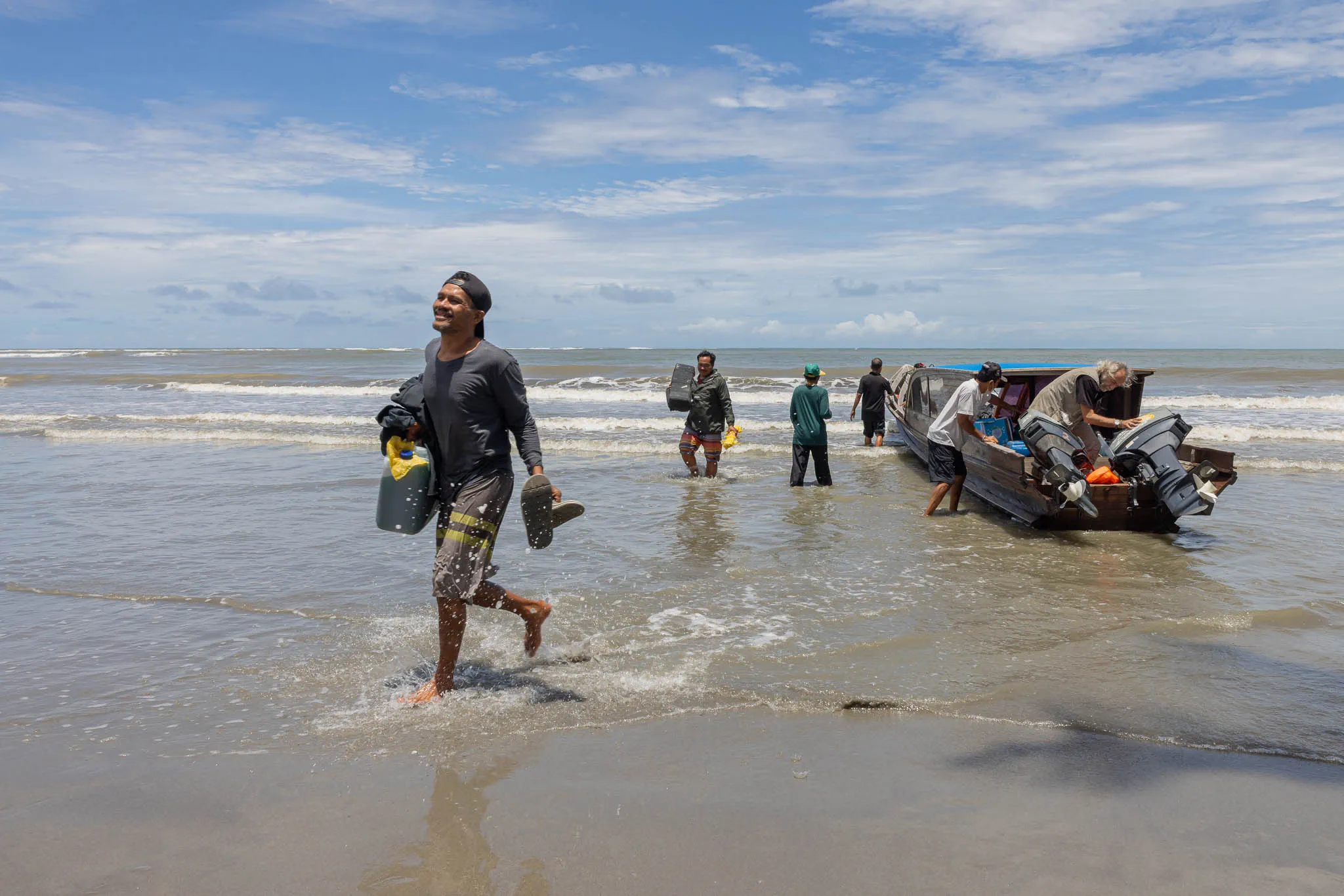
We departed from Muara Siberut, on the island’s southeast coast, and headed towards Sagulubbek Beach on the southwest coast. The journey took approximately four hours. There are no harbours along much of this coastline because the ocean is often too rough. Even reaching the shore by boat can be treacherous: boats must cross the often enormous surf before landing directly on the beach. We were fortunate that the sea remained relatively calm during our crossing.
Arriving at the beach near Sagulubbek
Foreigners are a rare sight in this part of the island, although the beach near Sagulubbek is regularly used by local people. Boats transport forest products such as coconuts and rattan to Padang, while during certain seasons fishermen catch substantial quantities of fish and lobster along the coast, which are also shipped to the mainland.
After landing, we arranged for our luggage and filming equipment to be transported by motorbike to the main village, about a kilometre inland. From there, we needed a large motorised canoe to continue our journey upriver. Finding a suitable boat took some time, as most boatmen were busy working, so we had lunch and drank tea with some of the locals while waiting.
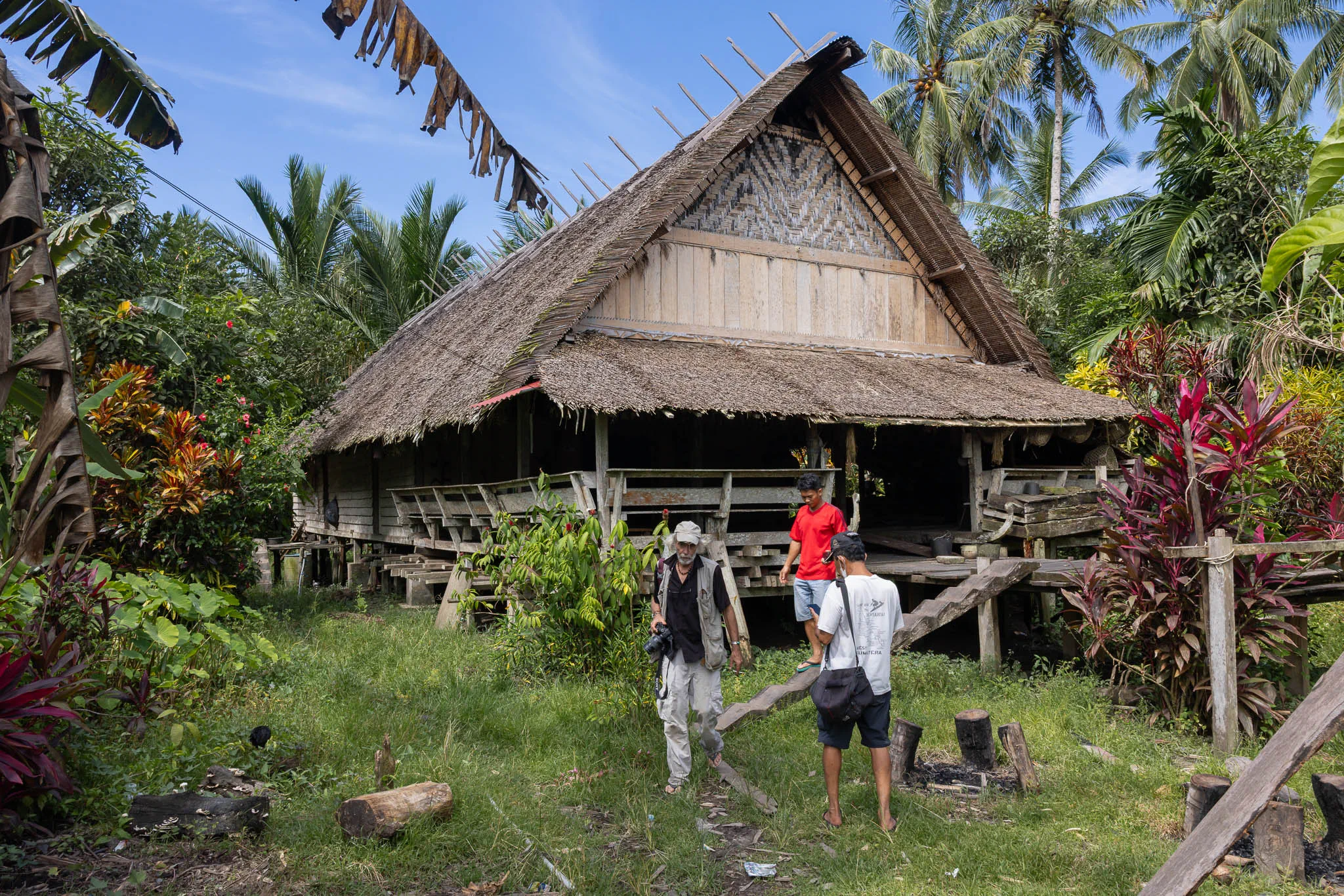
Checking out one of last remaining Uma in Sagulubbek itself.
The river connects scattered homes and settlements throughout the valley, providing access to the more remote parts of Sakuddei territory.
The journey upriver to the Sakuddei’s main uma generally takes around two hours, depending on water levels and currents. During our 2024 visit, several days of rain had left the river relatively high, although the current had already begun to weaken. Our canoe could travel at full speed, making the journey smooth and relatively quick.
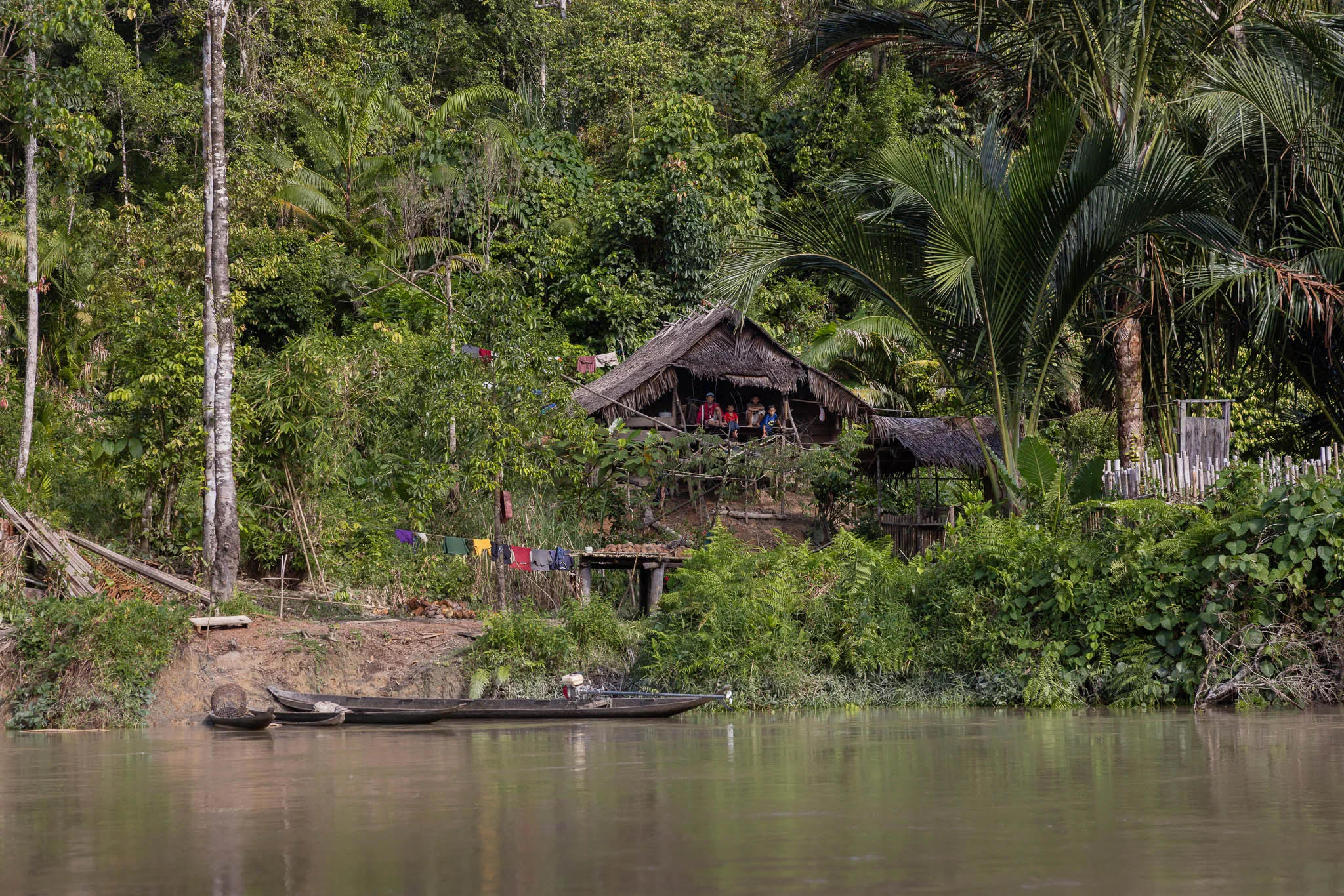
As we travelled inland, we passed small traditional houses and field huts along the riverbanks. The initially flat landscape gradually gave way to rolling hills, and coconut and sago plantations became increasingly interspersed with dense rainforest. Along the way, I spotted kingfishers and a couple of hornbills, birds that have become rare sights in eastern Siberut.
A field house on the Kuddei river bank
Eventually, we passed the last small social village and entered the traditional territory of the Sakuddei. A familiar sense of belonging came over me: it felt like coming home. The scenery was just as I remembered it from my first visit thirty years earlier. Another ten minutes upriver brought us to the clan’s main uma.
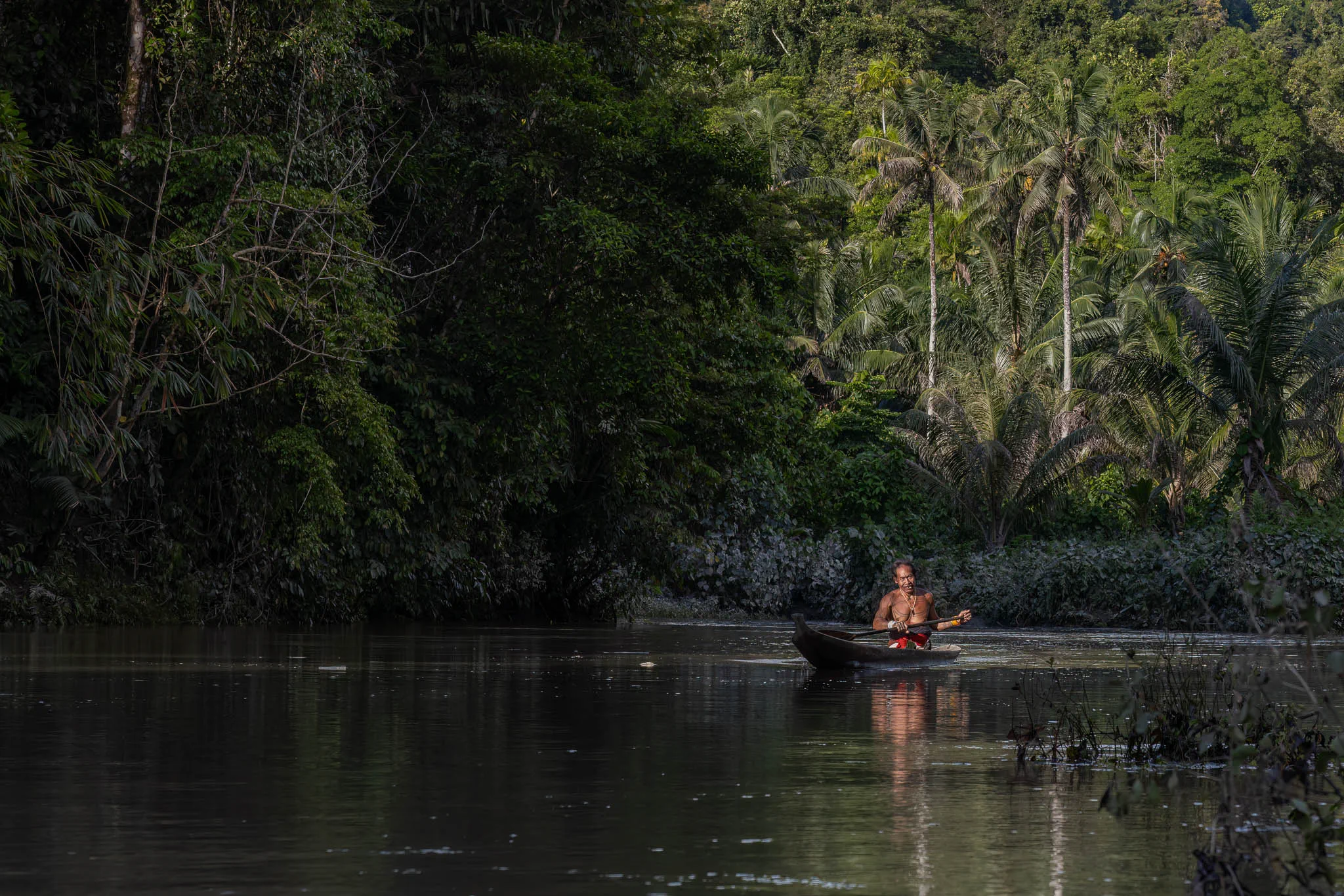
We had informed the Sakuddei of our intended visit about ten days beforehand, although we couldn’t specify exactly when we would arrive. Remarkably, Aman Raiba, who lives in the uma, arrived in his canoe from further upriver at almost exactly the same time as we did.
Aman Raiba, rowing back from a visit to one of his upstream field houses.
This wasn’t the first time I had experienced such uncanny timing. In the early 1990s, my late Mentawai father would often know exactly when I was about to arrive at his uma, even when it was impossible to notify him in advance. I still remember those moments with a sense of wonder!
The Sakuddei Uma
When I first visited the Sakuddei in 1995, their uma stood on the opposite side of the river. It was massive, the largest and tallest uma I had ever seen. Several families lived together under one roof, spanning at least three generations and numbering a few dozen people.
The Sakuddei Uma, in 1995.
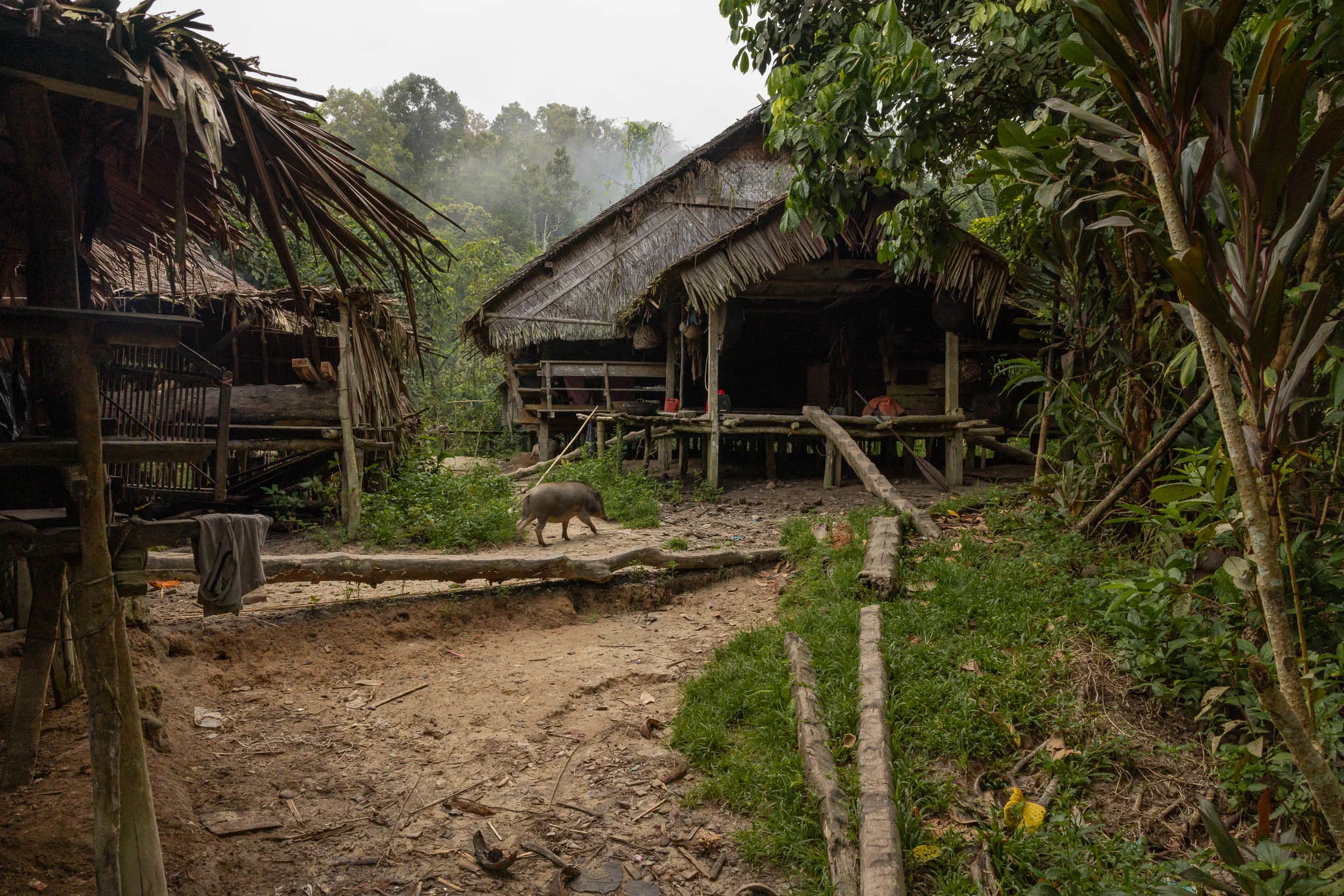
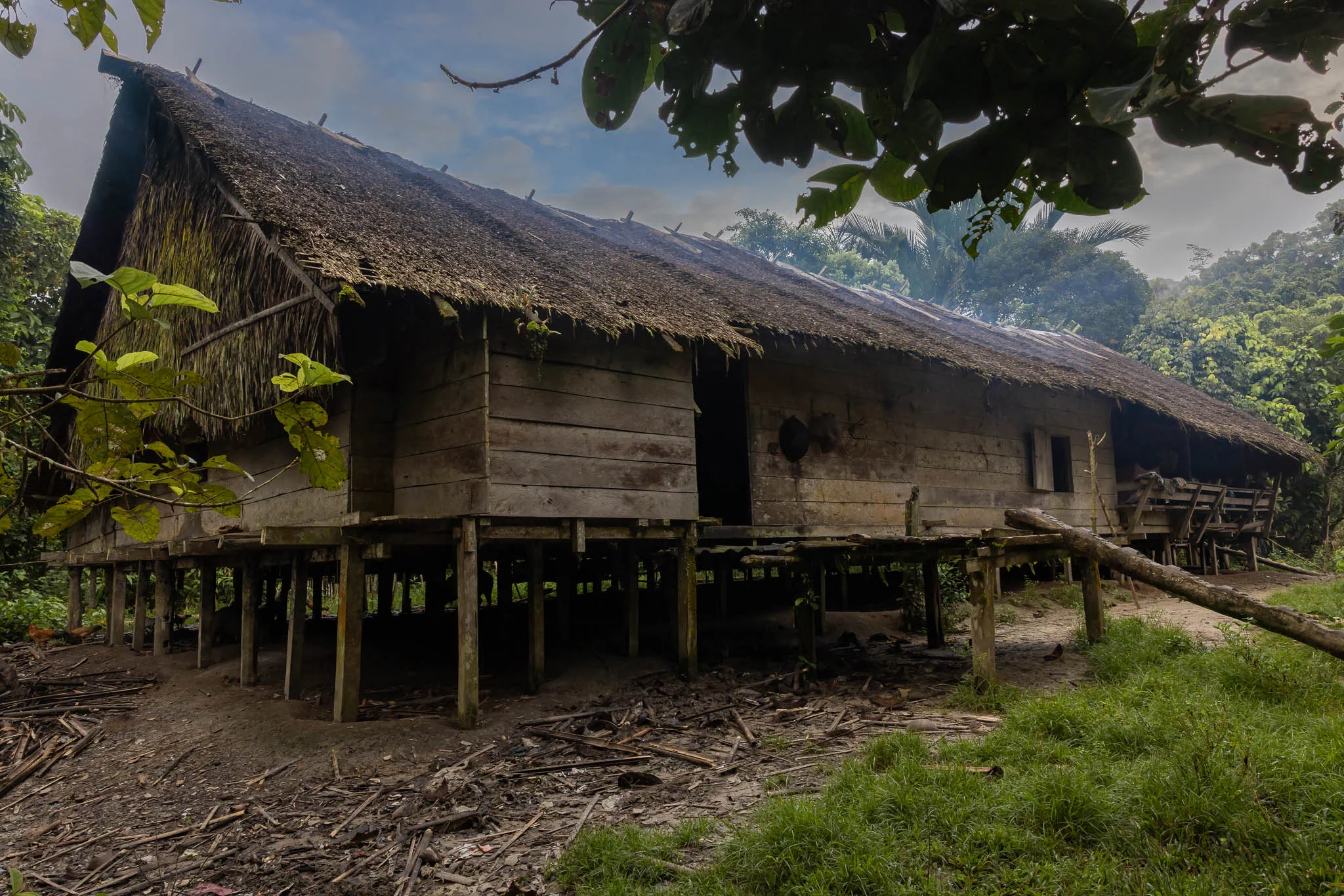
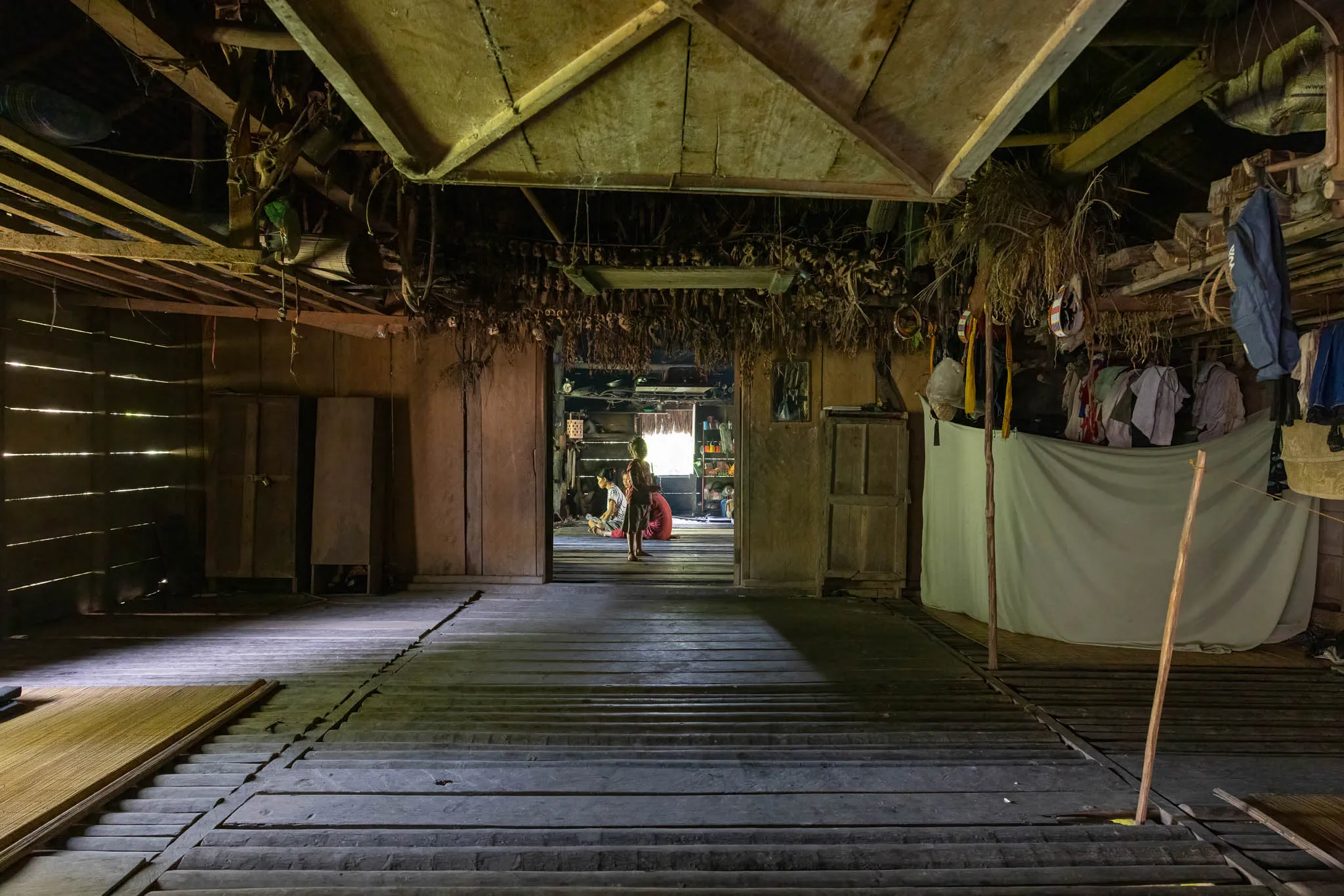
The uma I returned to in 2024 was considerably smaller and lower. The main uma belongs to Aman Raiba, who lives there with his two wives and children. His nephew, Aman Jagaumanai, and younger brother, Aman Tukulu, have their own smaller traditional houses beside it. Bali also had her own house a little further away, although by my return in 2025 she had moved into Aman Jagaumanai’s sapou, closer to the family. Two other nephews, Aman Gabari Kerei and Aman Etteu, live further downstream, although Aman Etteu had moved to the nearby social village.
The main uma of the Sakuddei today.
The main Uma, seen from the back side.
The arrangement has changed, with individual families now occupying separate houses rather than everyone living together in one large longhouse. Yet the main uma remains an important gathering place for the clan.
Two smaller family houses are located adjacent to the main uma.
The first inner room of the current Sakuddei uma.
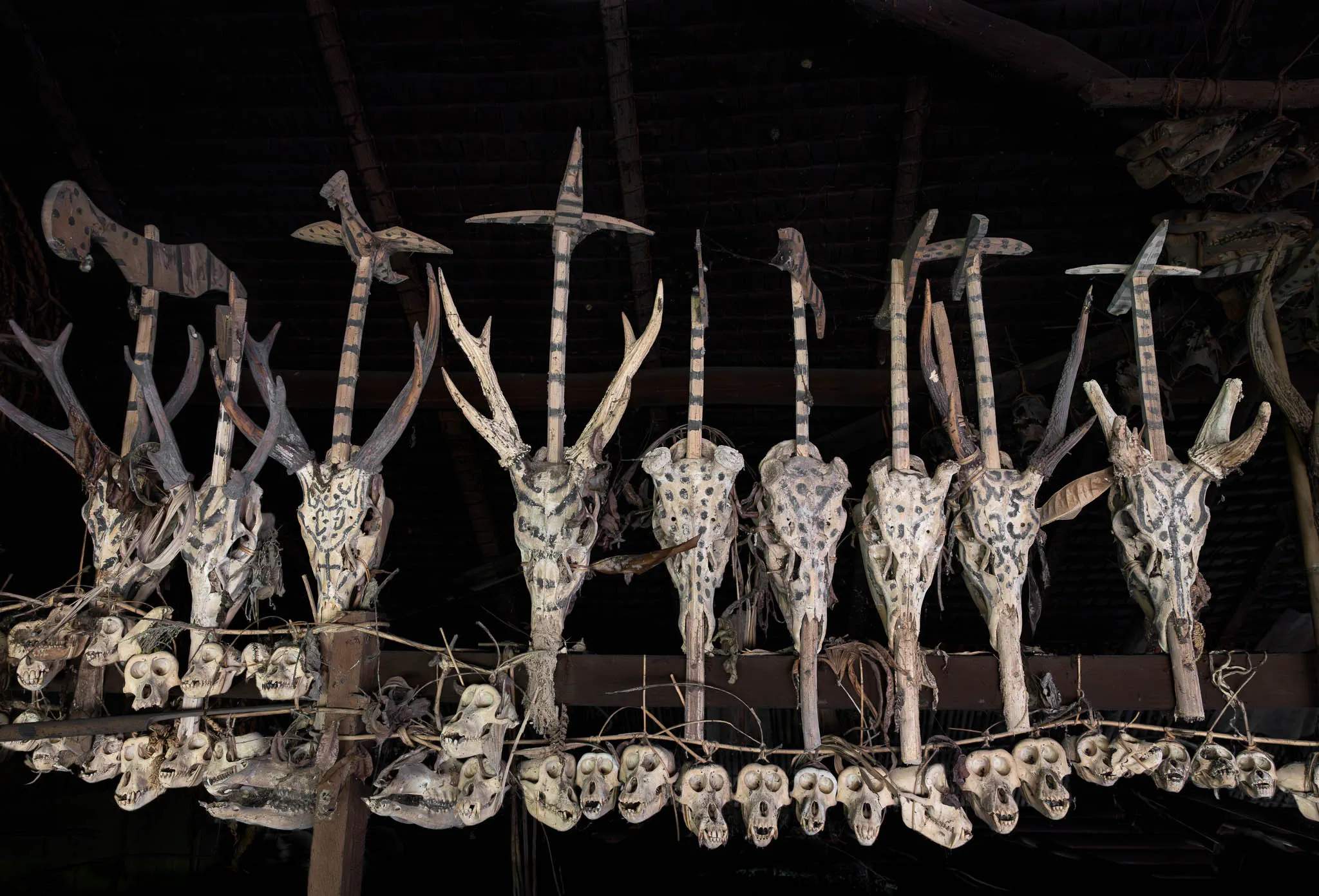
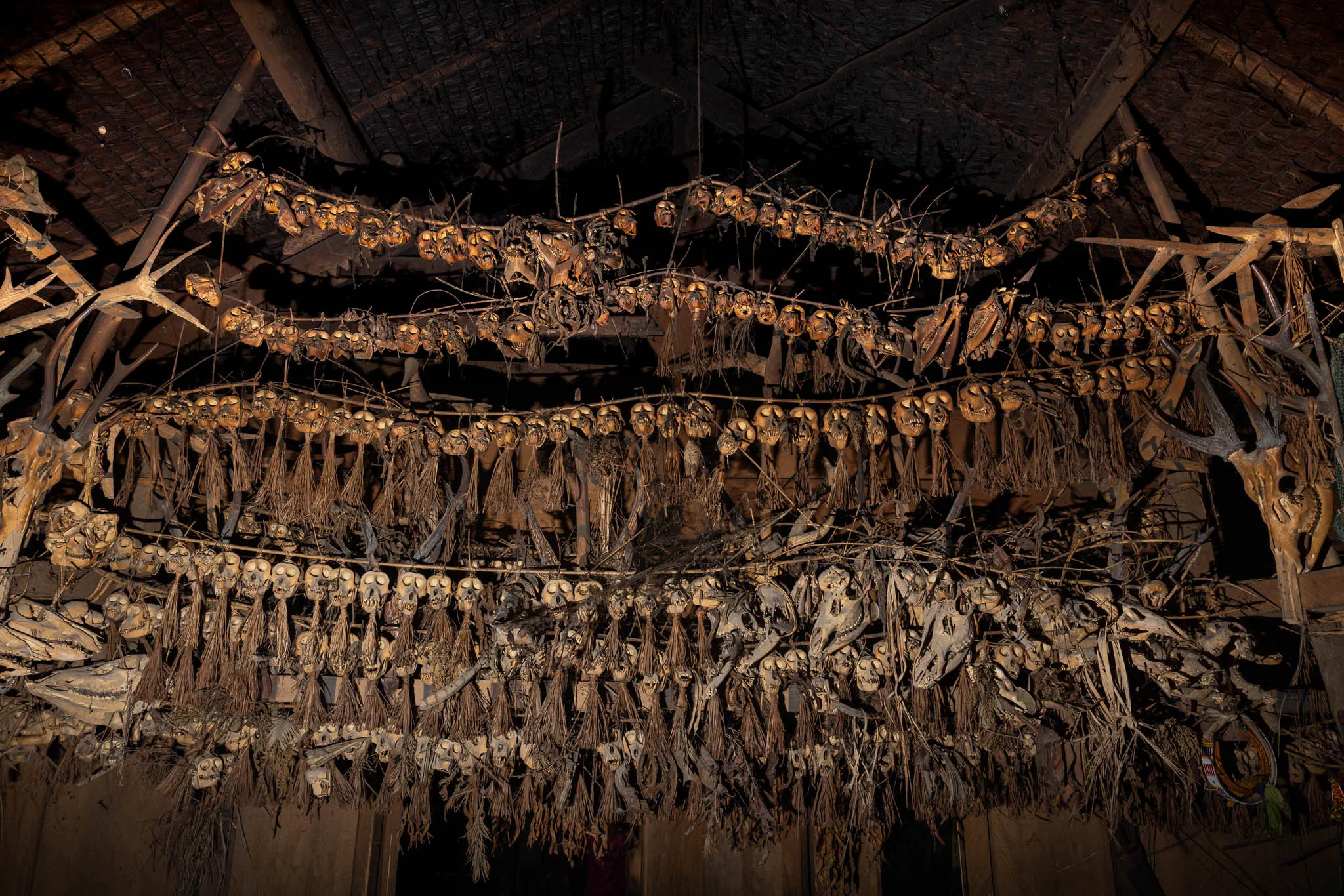
Inside, one of the most striking sights is the enormous display of animal skulls. There must be more than a thousand, from sacrificed semi-domesticated pigs and cows as well as animals hunted in the forest, including deer, bokkoi macaques, wild boar and hornbills. Many are decorated with dried young palm leaves and sometimes feathers. Some deer skulls also bear carvings of birds or other animals.
Deer with carvings, some cows and bokkoi macaques.
These skulls are more than trophies. They have spiritual significance and play a role in ceremonies, connecting the community with animal and ancestral spirits.
The different shades of the skulls tell a story of their own. When a community moves to a new uma, skulls from hunted animals are taken along and displayed again, while the skulls of domesticated pigs are left behind. The older skulls in the current uma are dark brown from years of smoke from the central fire pit in the previous house. The newer skulls are much lighter, as there is no fire pit in the central room of the present uma.
The darker skulls from the previous uma are displayed higher up; the lighter skulls below are more recent.
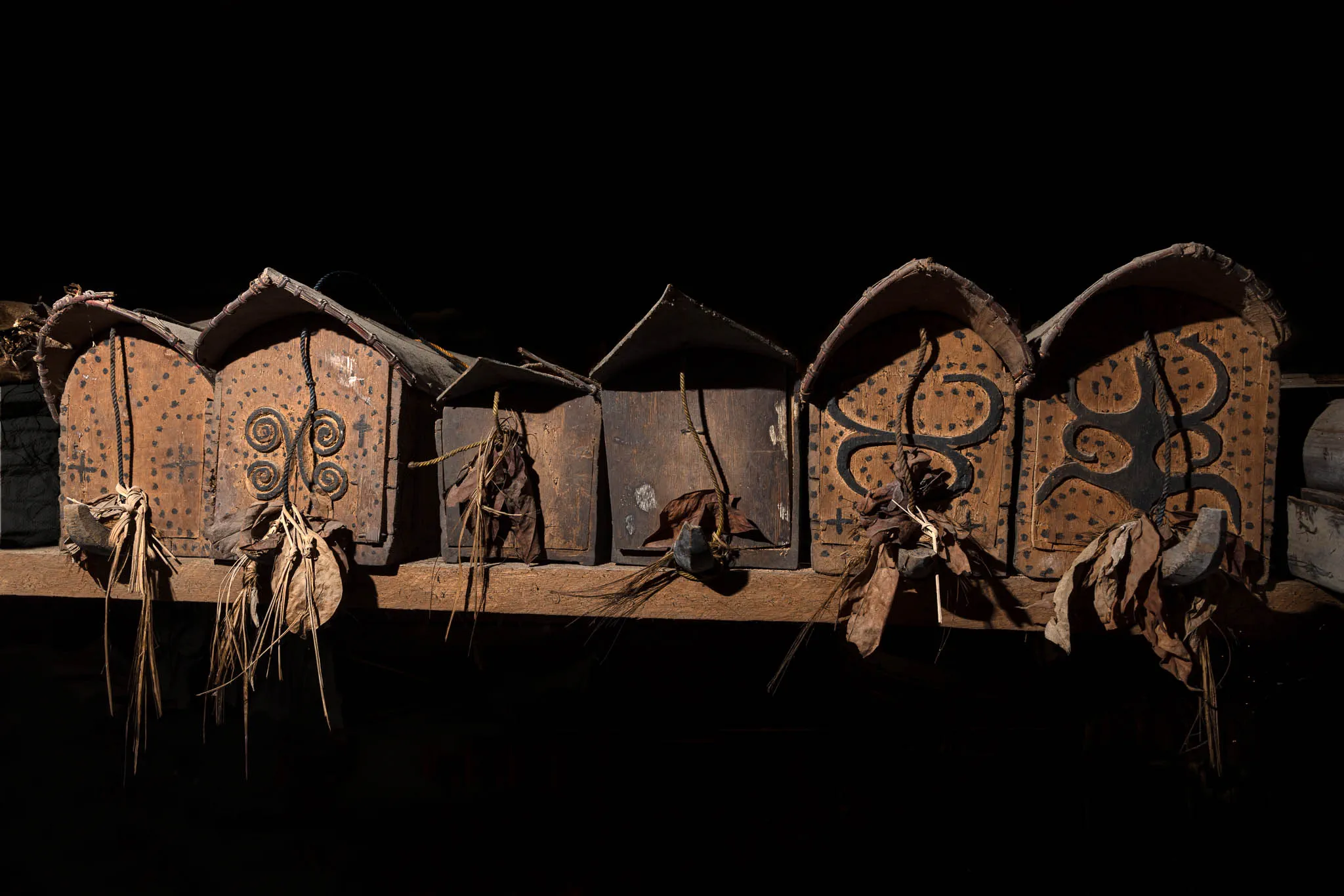
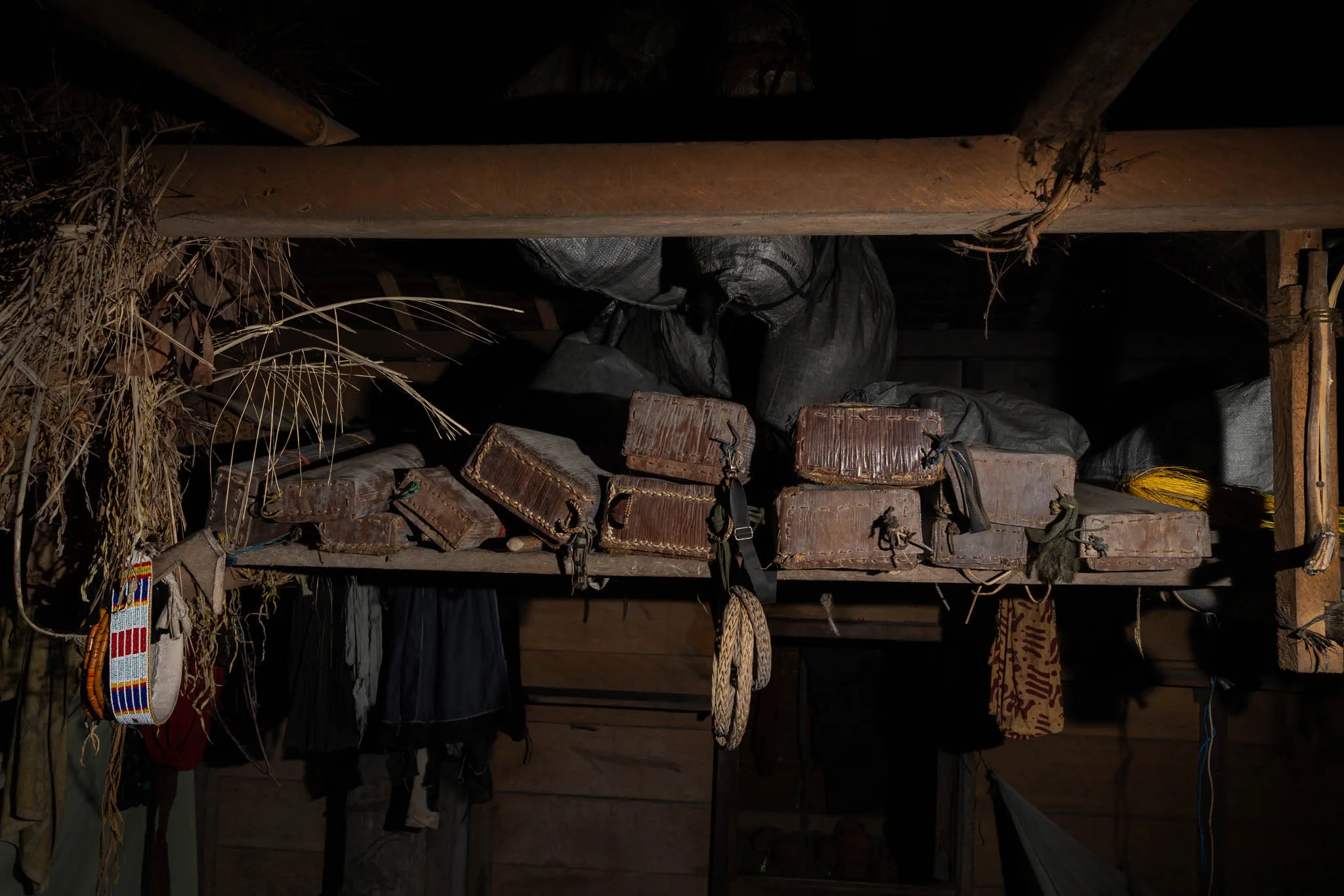
I was also interested in seeing traditional objects associated with Sakuddei shamans. The salipak is a sacred wooden box used to keep important items, including fetishes and necklaces, as well as bones, claws and feathers from spiritually significant animals used in healing. In the past, these boxes also held small carved figures representing ancestral spirits or protective beings. Many of the older pieces have since been taken away by collectors and anthropologists.
Salipak: the sacred boxes of the shamans.
Another traditional object is the bakulu, a kind of shaman’s suitcase made from the sheath of a sago palm leaf. It holds ceremonial clothing and accessories, including feathers, beads, necklaces, skirts and headdresses.
Bakulu, traditional suitcases of the Mentawai.
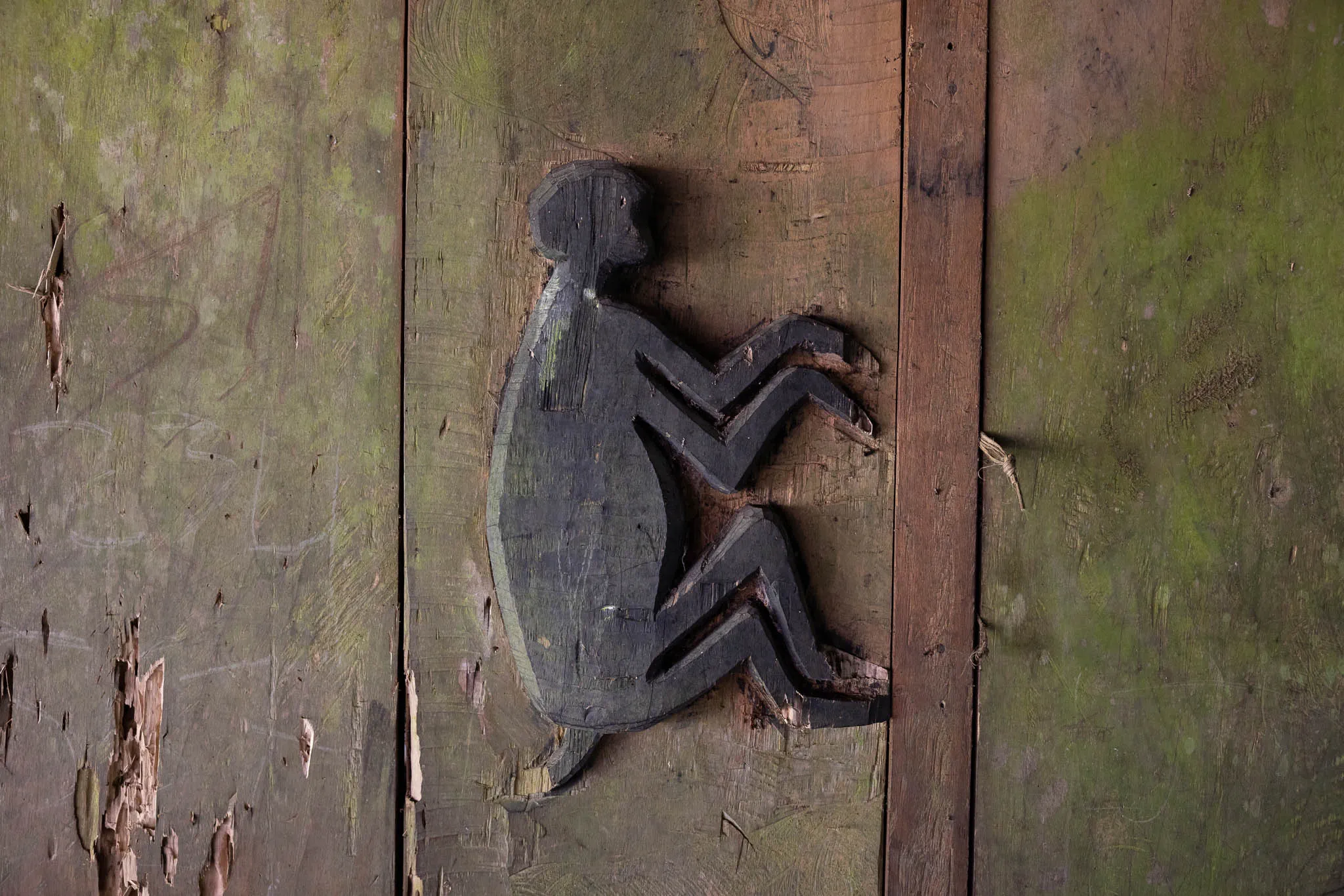
Animal carvings were once much more common in the wooden panels of an uma. Today, they are relatively rare, and the carvings I saw were generally less elaborate than older examples. These details offer a glimpse of traditions that remain present, even as the physical surroundings and everyday lives of the Sakuddei change.
A monkey woodcarving inside the uma.
Life Along the River
The main uma is only one part of Sakuddei life. They are among the few Mentawai clans where individual families still commonly maintain several rusuk, traditional fieldhouses situated further upriver or downriver from the main uma.
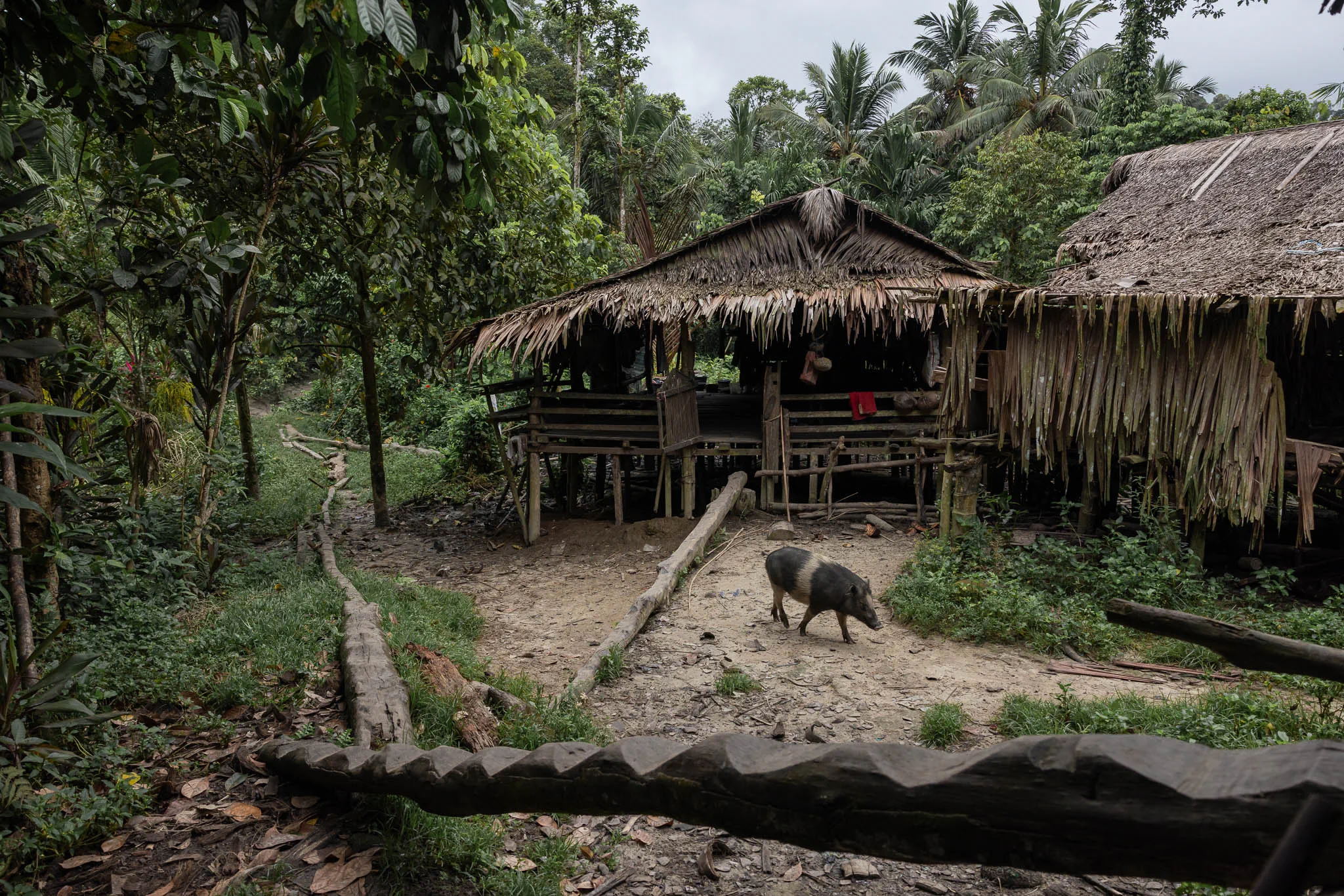
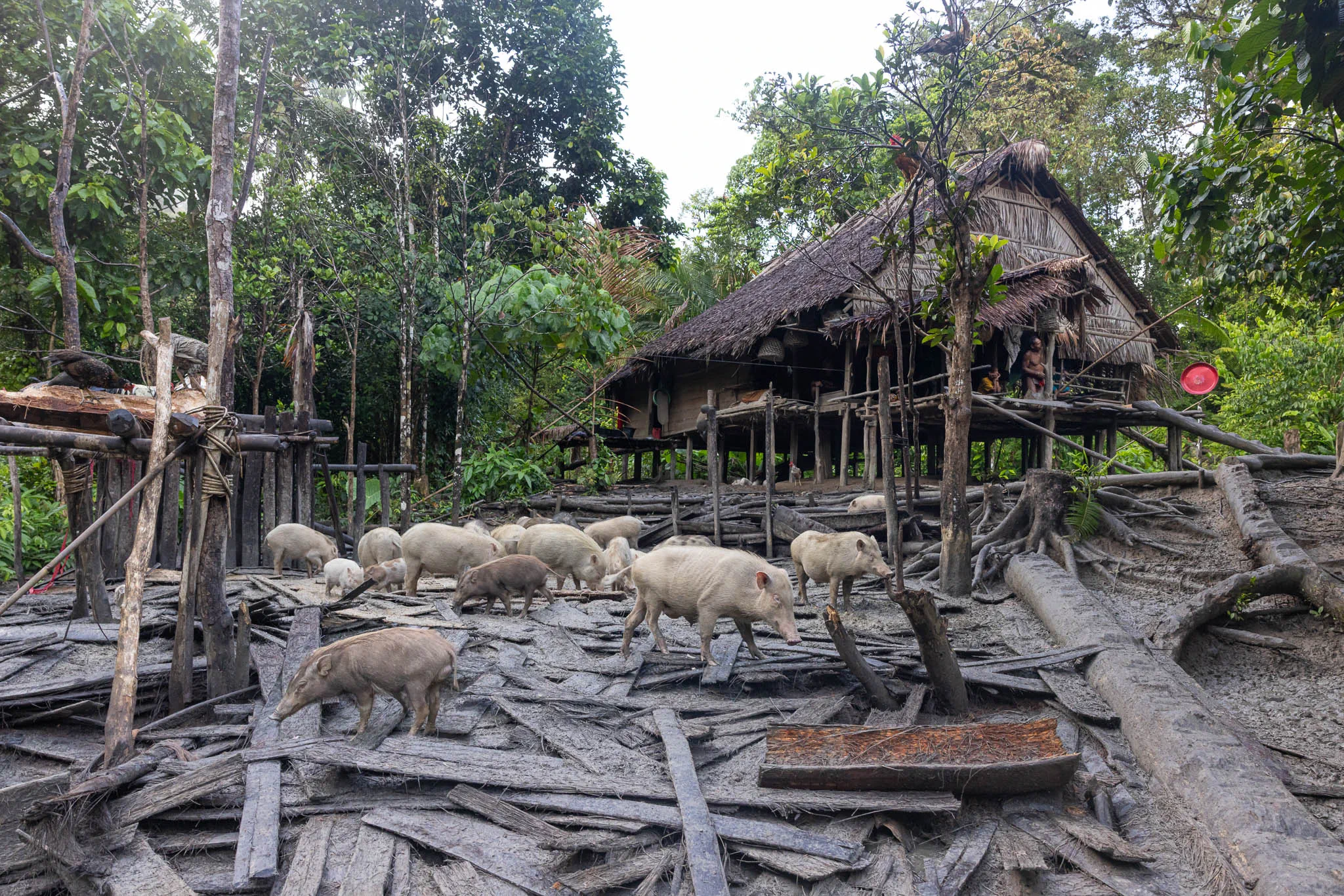
These fieldhouses are important partly because of the Sakuddei’s remarkable enthusiasm for pig breeding. While many Mentawai families keep pigs, the Sakuddei are particularly keen breeders, and some families own hundreds. They also keep chickens at their rusuk, visiting the fieldhouses daily to feed their animals.
A rusuk: one of the fieldhouses of Aman Raiba, where he raises pigs and chickens.
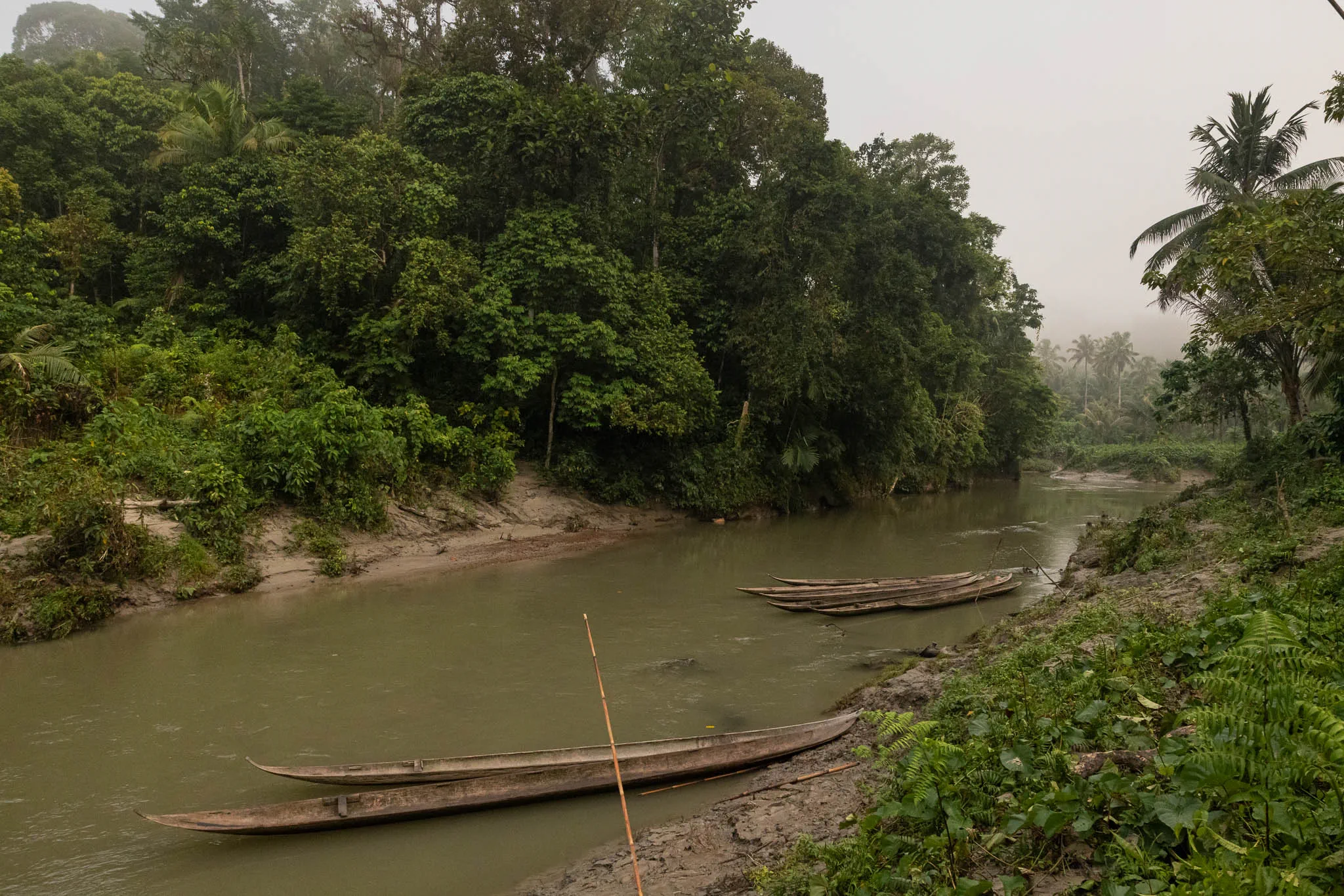
The Sakuddei own many canoes, which are essential for travelling between their houses and fieldhouses. They use engines when travelling to the coast, but for shorter journeys along the river they generally paddle when the water is high or use a long bamboo pole to propel the canoe when the water is low. Watching them travel this way, it is easy to understand why Sakuddei men often have such strongly built upper bodies. In the southeast of Siberut, where men traditionally travel mainly on foot, this is much less characteristic.
Canoes in the Kuddei river, in front of the uma.
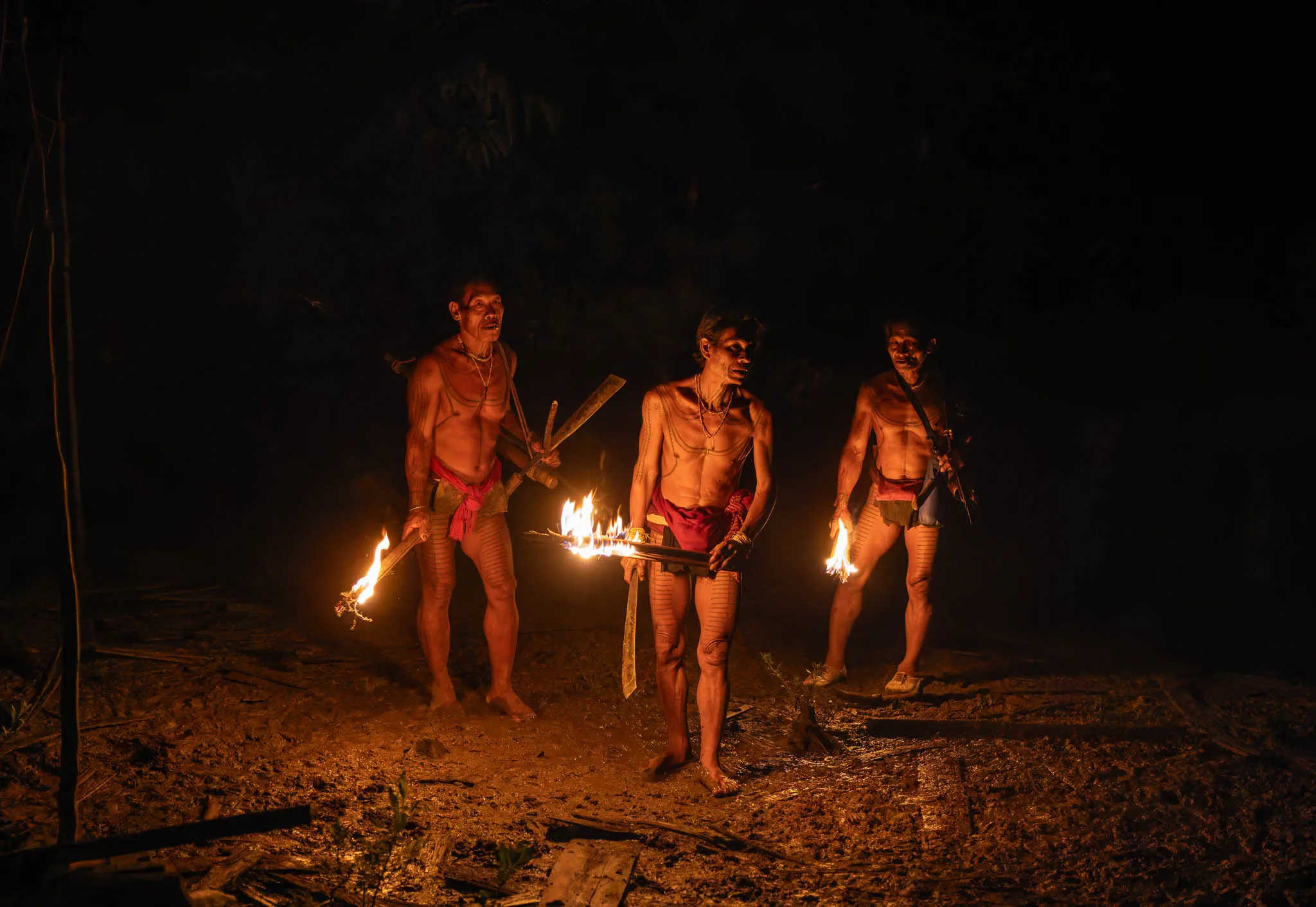
During my visit in October 2025, we took the opportunity to visit one of the rusuk and spend the night there. Western Siberut still has plenty of monkeys, and the shamans sometimes use the early morning for hunting. The following morning Aman Raiba, Aman Jagaumanai and Aman Tarik went on a hunt for monkeys, an experience that offered another glimpse into everyday life beyond the main uma.
Preparing for the hunt, before dawn.
wood carving
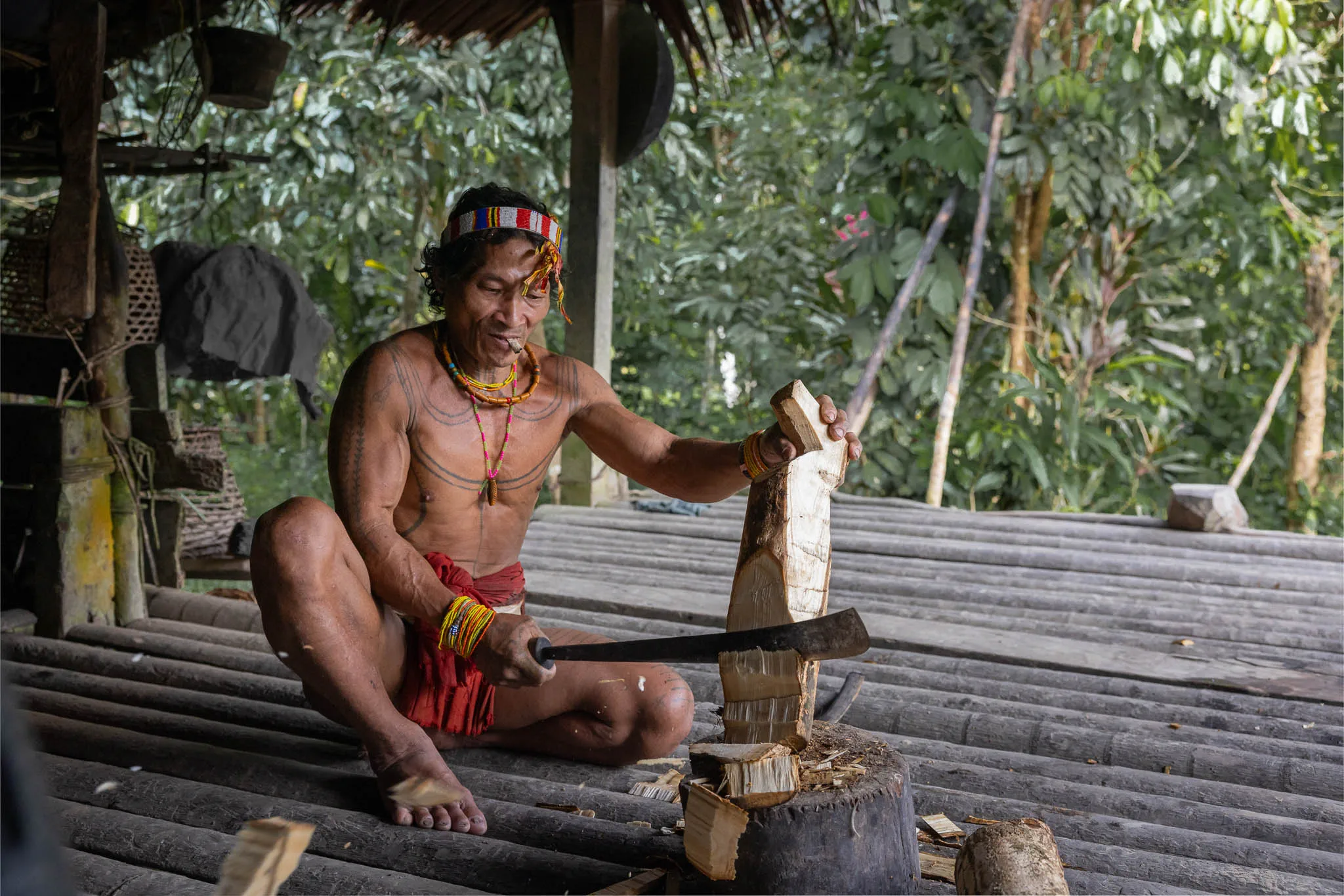
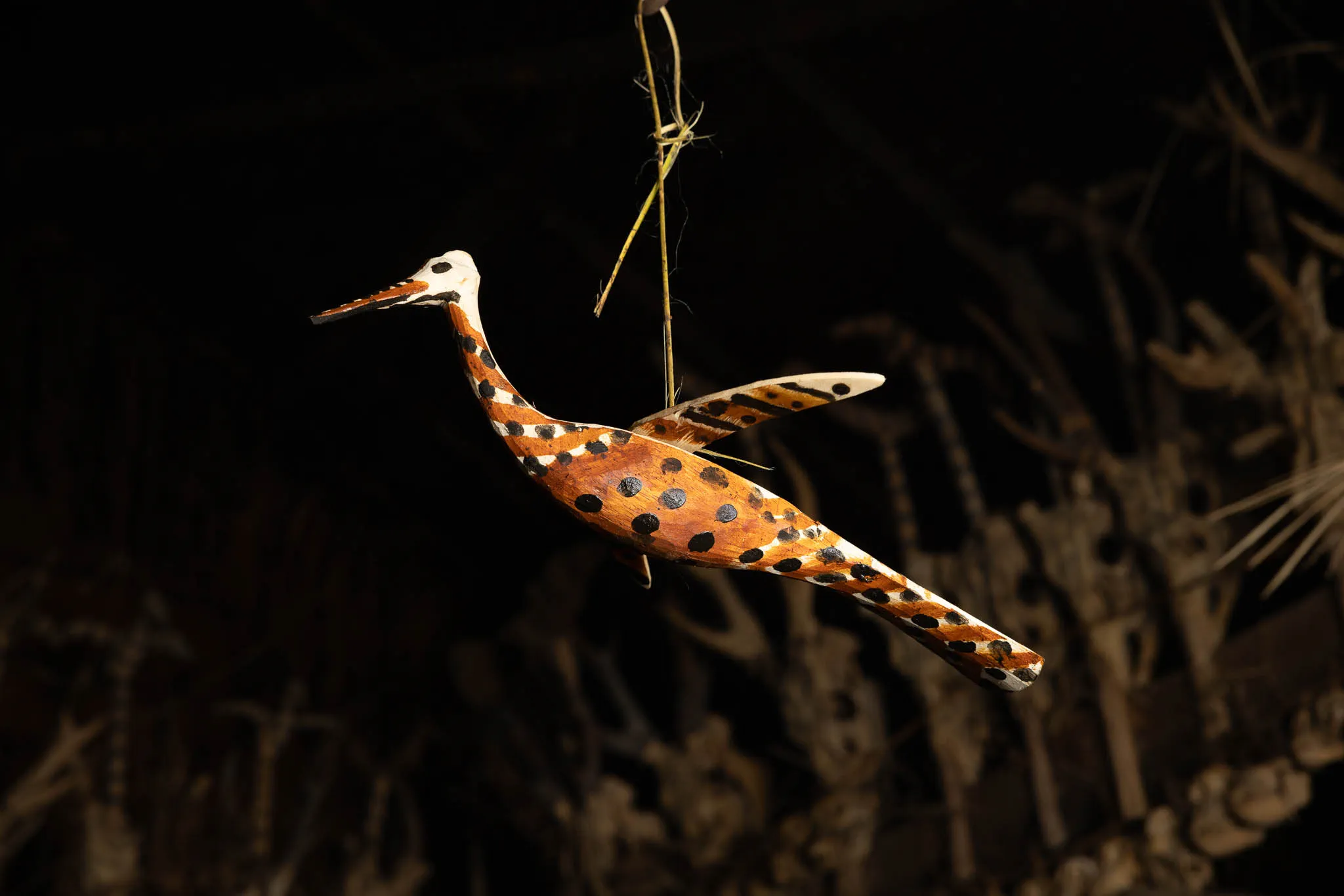
During both my visits, in 2024 and 2025, Aman Jagaumanai demonstrated his woodcarving skills by making a bird. He selected a fresh piece of relatively soft wood, studied its shape, and began working with his machete. One part of the wood became the bird’s body, while another was set aside for its wings. I was impressed by the precision of his cuts and how quickly the shape began to emerge.
Aman Jagaumanai starting a woodcarving.
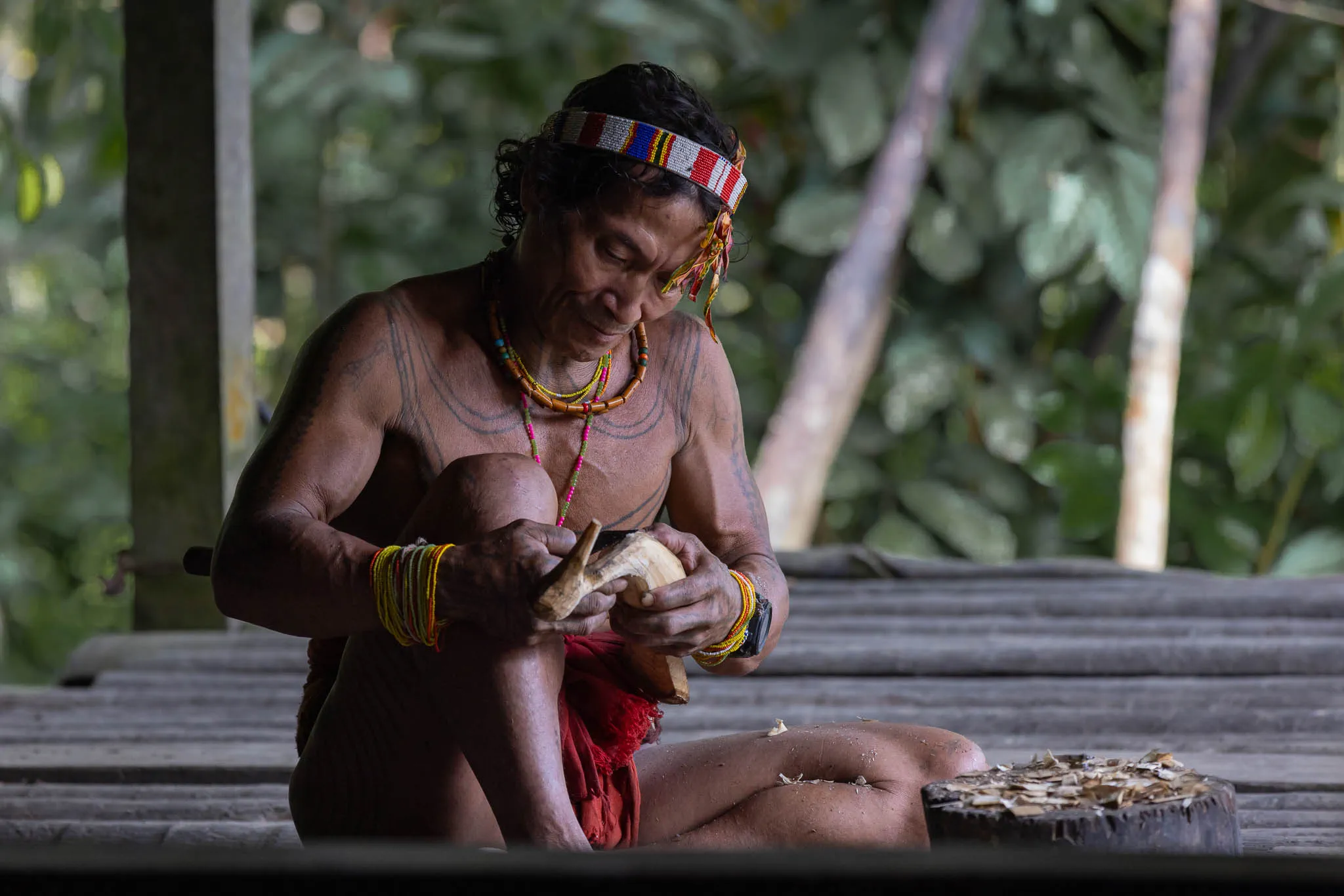
Once the basic form was ready, he switched to a traditional Mentawai tool called the balugui: a short, sturdy blade attached to the end of a slightly bent piece of rattan. With this, he carefully refined the bird’s head, neck, tail and wings before attaching the wings to its body.
Aman Jagaumanai is using a balugui knife for more refined carving.
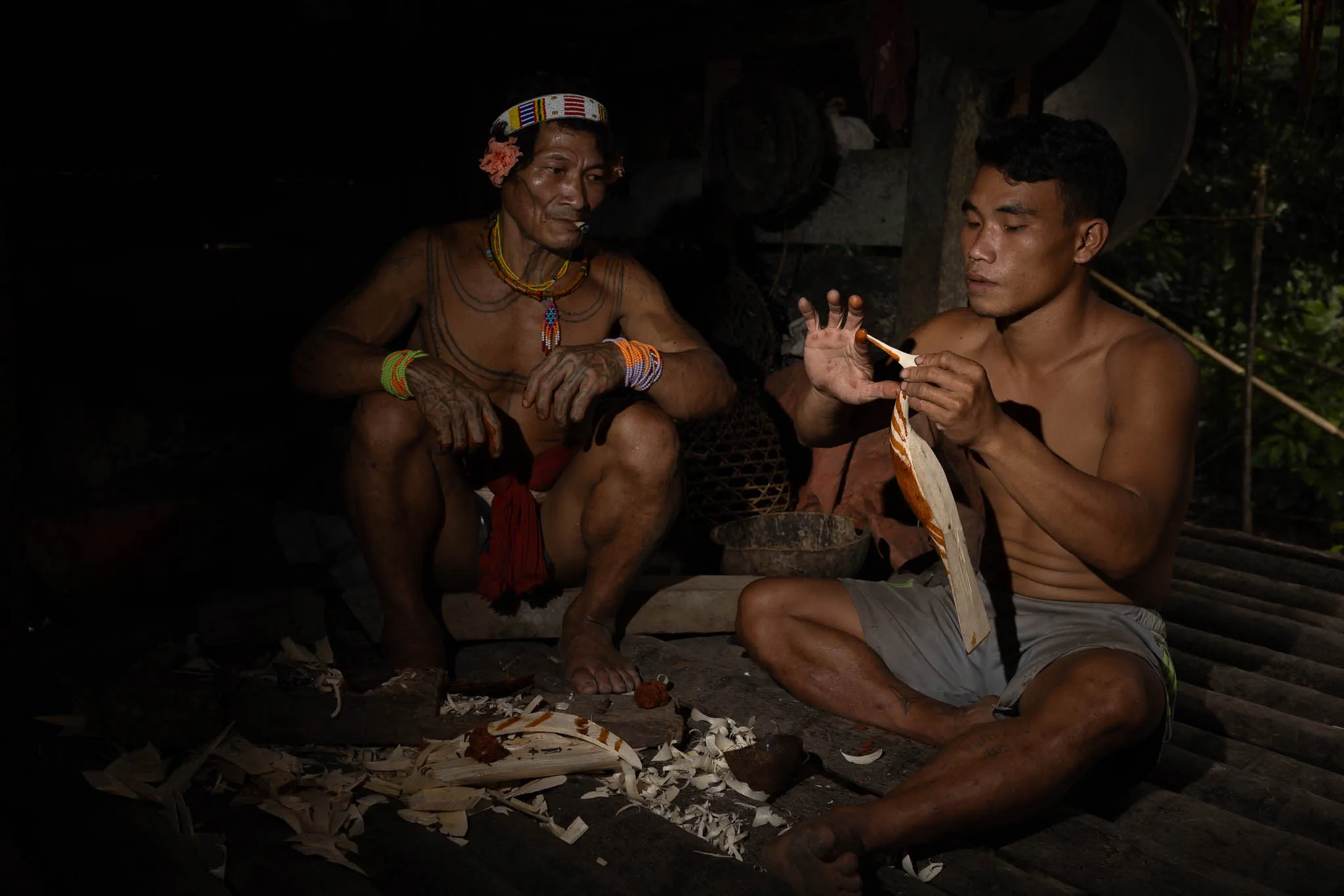
During my second visit, one of Aman Jagaumanai’s sons painted the finished carving, using yellow turmeric and black paint made from soot mixed with oil. I particularly enjoyed seeing father and son working on the bird together. In just a couple of hours, a piece of wood had been transformed into a beautifully detailed carving, with each contributing to the finished work.
The son of Aman Jagaumanai is painting the bird woodcarving.
The finished woodcarving: umat simagere, a toy for the souls.
bali - elaugege
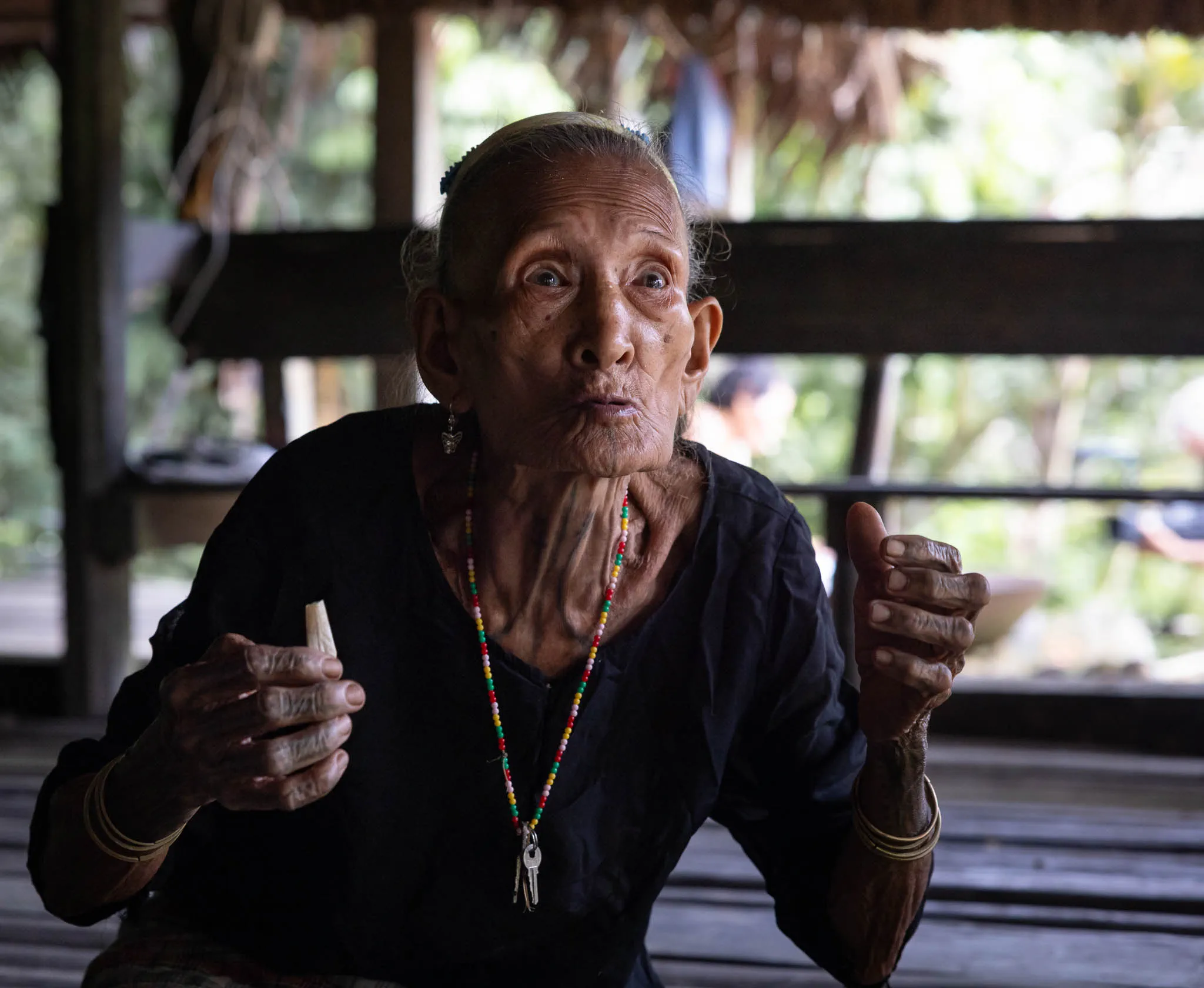
One of the highlights of my return to the Sakuddei was meeting Bali again. She is the oldest member of the clan, a remarkable woman with a sharp sense of humour and seemingly endless energy. Even in her old age, she remained active in her daily life, looking after animals and paddling her canoe along the river.
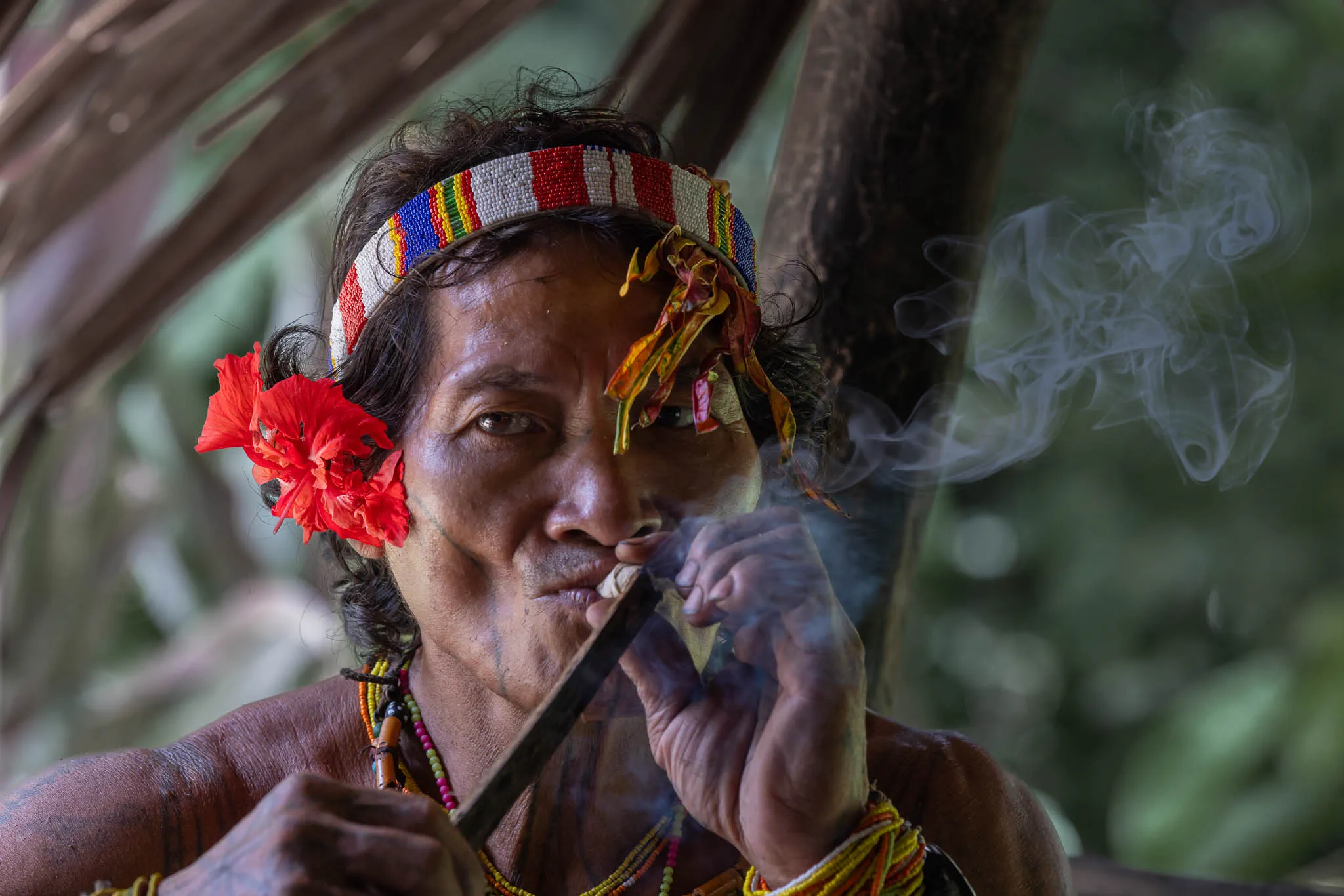
What a character! Still so strong, with a witty sense of humor and never without a traditional smoke...
Our conversations also led to an unexpected discovery: I realised that I had met Bali, under her former name Elaugege, during my first visit in 1995. Finding her name in my old field notes brought a personal connection across the thirty years between my visits.
Her remarkable life and memories of the Sakuddei’s past deserve a story of their own.
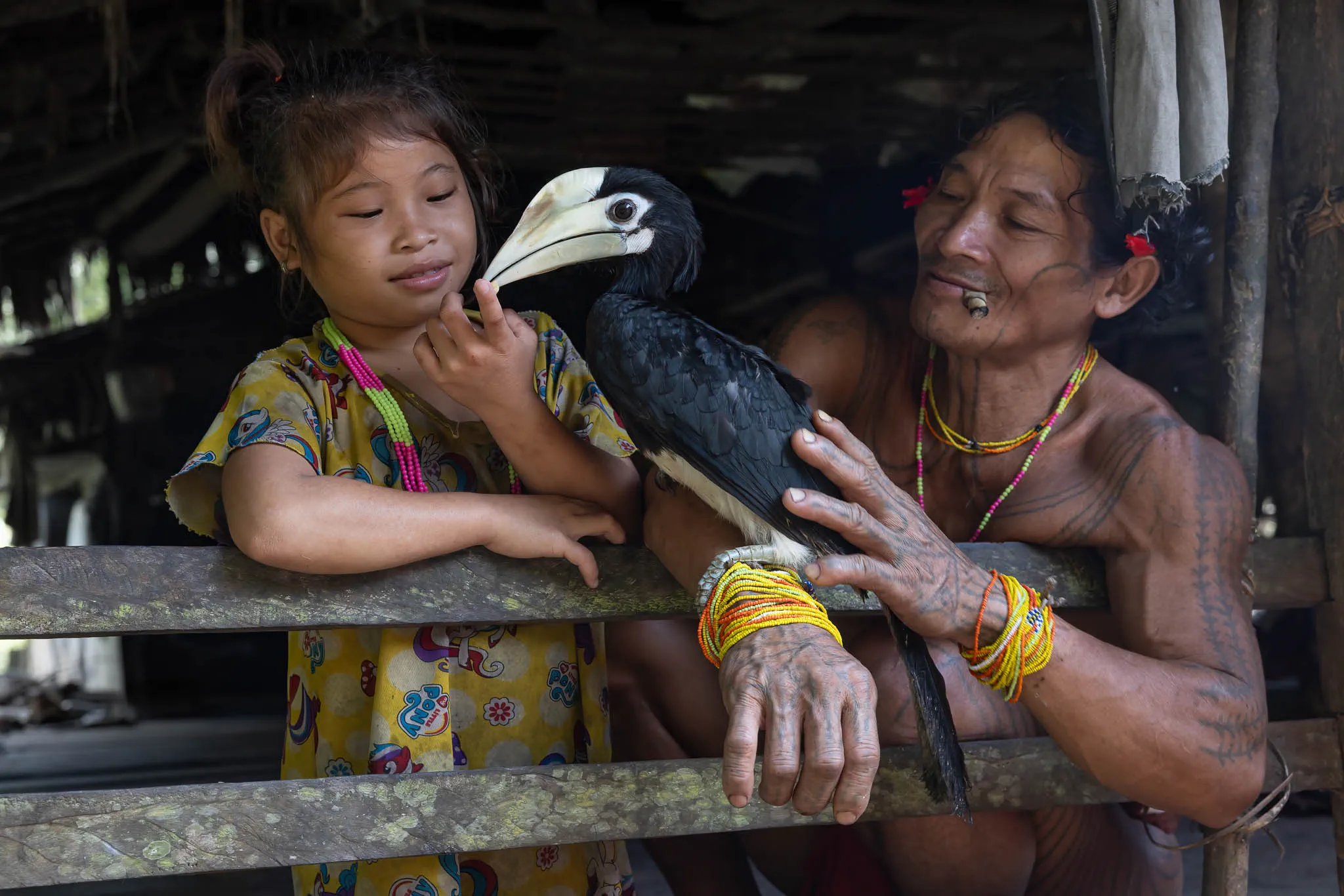
When I visited the Sakuddei in 2024, I noticed that Aman Jagaumanai kept a hornbill in a small cage. Although hornbills are protected, they are sometimes hunted by the Mentawai, and their distinctive bills can be found displayed inside an uma, alongside the skulls of other animals. I had never seen one kept as a pet before.
Aman Jagaumanai explained that he had found the bird as a chick years earlier and decided to raise it. They named it Palu, and the bird had become remarkably tame. It was often allowed out of its cage, and one of Aman Jagaumanai’s daughters loved playing with it and even cuddling it.
Aman Jagaumanai with his daughter and her pet hornbill, Palu.
It was an unexpected sight in a place where hornbills are also part of the hunting tradition, and a lovely glimpse of the bond that had developed between Palu and Aman Jagaumanai’s family. Sadly, when I returned in 2025, Palu had died.
Until we Meet Again
Returning to the Sakuddei after thirty years was a special experience. It was wonderful to reconnect with Aman Raiba and Aman Jagaumanai, and to meet the younger generation growing up around the uma. Much has changed since my first visit in 1995, but the close family ties and communal life I remembered are still very much present.
The changes are visible in everyday life. Women and children now wear shirts and shorts, and some shamans no longer wear traditional loincloths in their daily lives. Children attend school, but they also remain involved in the work and responsibilities of the community. To me, these changes do not mean that Mentawai culture has disappeared. Culture is not frozen in time, and wearing modern clothes does not erase a person’s identity or traditions.
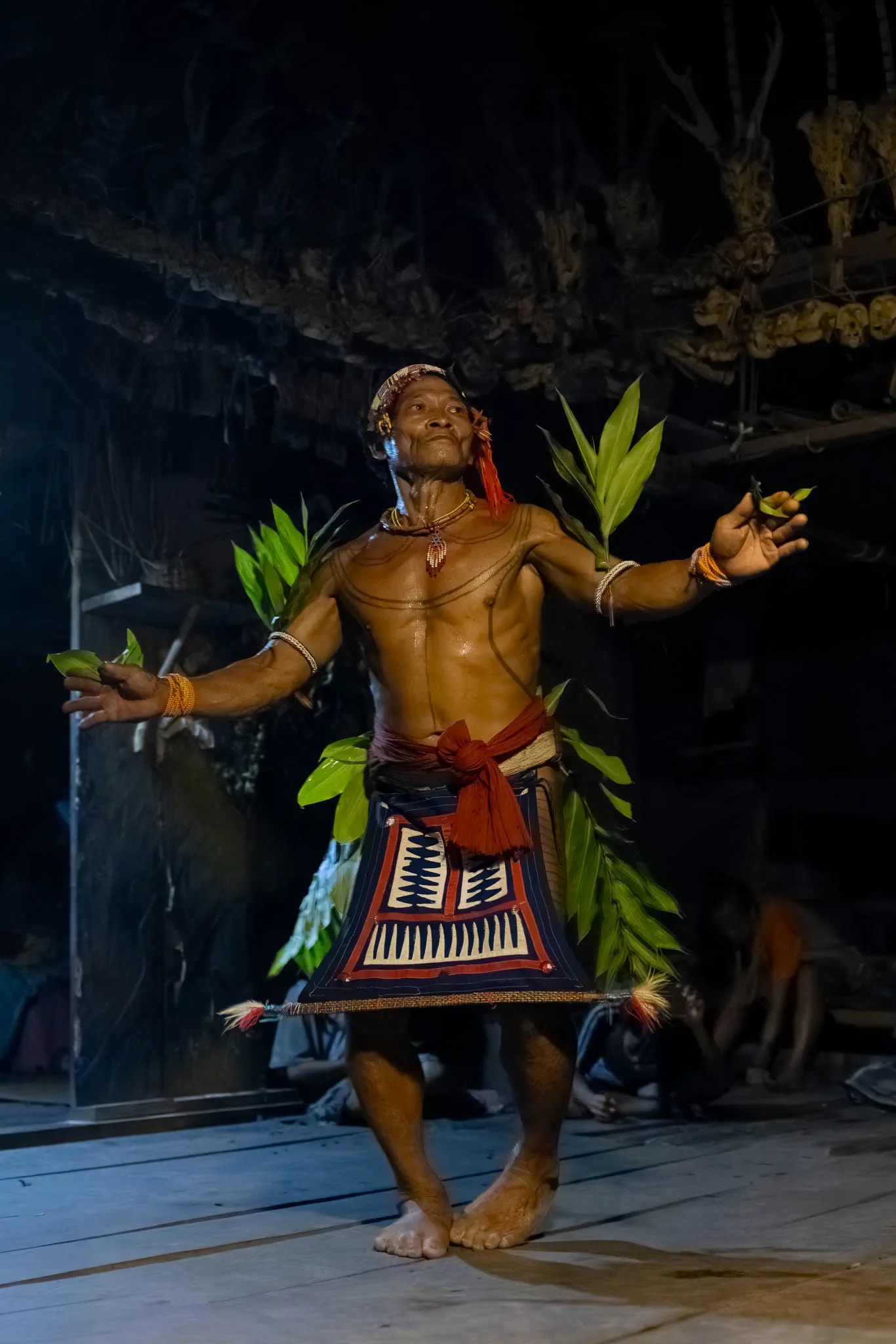
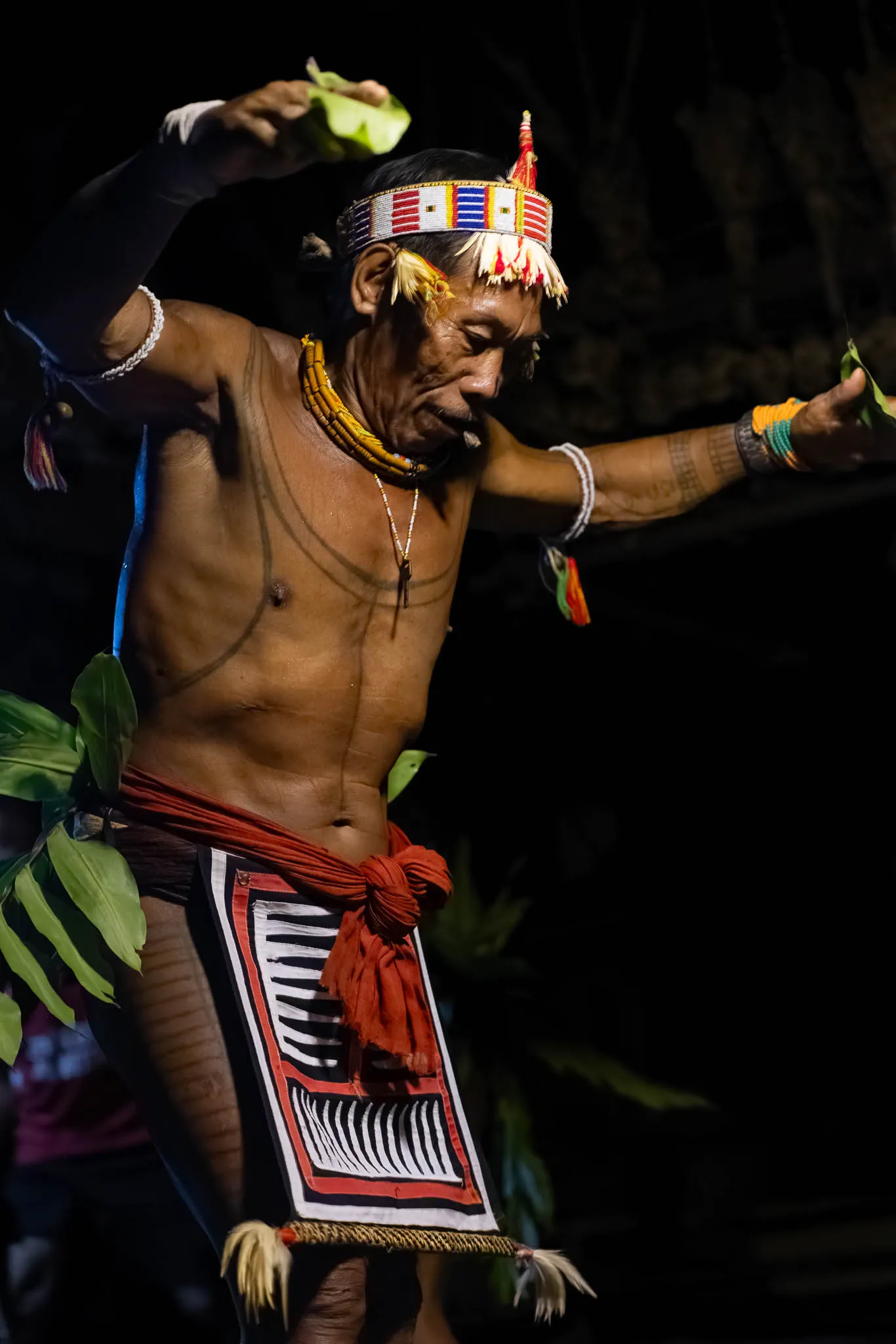
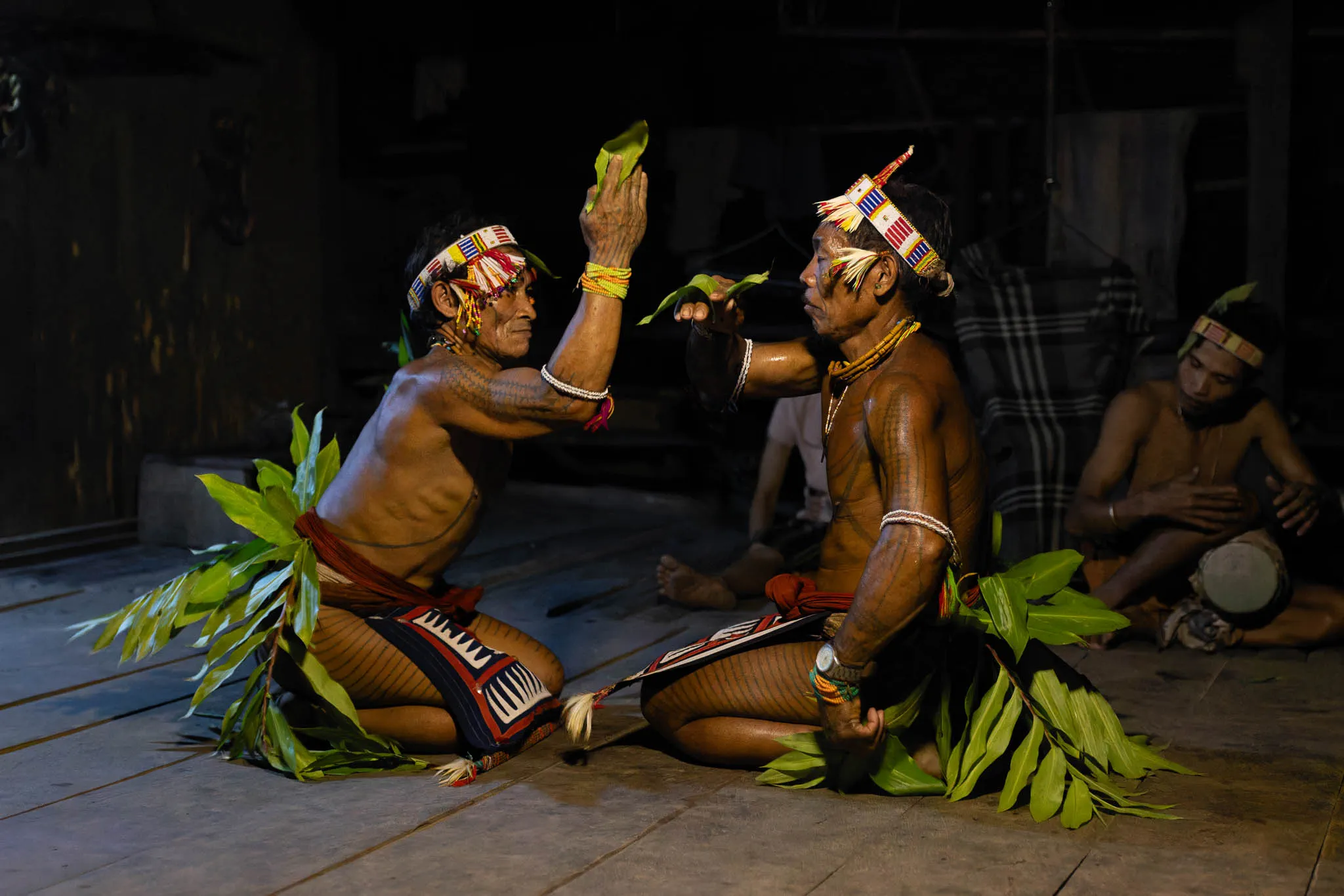
When I returned in October 2025, I was fortunate to experience another side of Sakuddei life. An evening of turuk dances was arranged to honour our visit, after I had expressed my wish to see traditional Mentawai dances. Aman Raiba and Aman Jagaumanai performed, and it was absolutely awesome!
Aman Jagaumanai and Aman Raiba performing a turuk dance about a chicken fight.
I left with a renewed appreciation for the Sakuddei and their way of life. Returning after so many years was special in itself, and the turuk dances made my 2025 visit particularly memorable. There is still much I would like to learn and experience.
I hope to return one day to attend a traditional ceremony and witness the community coming together on such an occasion. But that will be a story for another time!
As I said back in 1995, I’ll be back… and I have been! I returned in 2024 and again in 2025, and I hope there will be more visits to come.
Thanks, Aman Raiba and Aman Jagaumanai, it was awesome!