Why this Website Exists
Mentawai – A Living Spiritual World
SIBERUT ISLAND, INDONESIA
"I made further discoveries in these islands, where I found a population more likable still and, if possible, still more ingenuous.
If I continue in this direction, I may expect somewhere to find the "Garden of Eden", and descendants of our first parents."- Sir Thomas Raffles, 1821
Two centuries later, this is how that world is lived from within.
For more than thirty-five years,
I have lived in close relationship with a Mentawai family on Siberut Island.
I was welcomed, adopted,
and raised into their uma — their community —
not as a visitor,
but as family.
The Mentawai of Siberut Island are one of the world’s last Indigenous communities to maintain a living forest-based culture — a way of life shaped by balance, ritual, and deep reciprocity with both the natural and spiritual worlds.
For generations, their identity has been forged in the rhythm of the rainforest:
in the flow of rivers,
the pulse of the uma,
and the guidance of ancestors who remain present in every ceremony, every hunt, and every healing.
This website is a journey into their world —
a world where humans and their souls, the spirits, and the forest are inseparable;
where tattoos mark identity;
where shamans dance to restore harmony;
where the forest provides medicine;
and where community is carried not by possessions, but by kinship, memory, and story.
Through intimate photographs and carefully woven narrative, The Mentawai offers a rare inside view of a culture that has endured for thousands of years, even as modern pressures steadily reshape the island.
It’s About Time
My own connection to the Mentawai began in 1990,
when I first travelled deep into the rainforest and was welcomed into an uma that would become my second home.
Over time, the late shaman Aman Patre and his wife Bai Patre adopted me as family —
a bond that opened doors into ceremonies rarely witnessed by outsiders,
and allowed me to learn the language, daily rhythms,
and spiritual foundations of Mentawai life.
For a long time, I didn’t see the point of writing about it.
Those who mattered already knew the stories.
Others might never truly understand them anyway.
But today, the Mentawai stand at a crossroads.
Life is changing fast — faster than ever. What once evolved slowly over generations is now shifting within a single lifetime. Younger Mentawai look outward, drawn by education, opportunity, and the pull of a modern world. Elders hold knowledge shaped by forest, ritual, and community — a way of life that has endured for thousands of years, but now risks slipping away.
This space exists to share their world as it is lived from the inside.
Not as nostalgia.
Not as anthropology.
But as relationship.
This is a story of belonging — and of what it means to remain human in a world that is changing too fast.
Belonging Comes with Responsibility
I am no longer only a witness to this change.
I am part of it.
I was adopted into the uma by the late shaman Aman Patre more than thirty years ago. I am considered a full blood-relative — because in Mentawai culture, belonging is defined by relationship, not origin.
As a member of their family, I am being asked questions — by parents, by children — about the future. Questions without easy answers. Questions that carry hope, fear, and responsibility.
What can we hold on to?
What can change?
And what must not be lost?
The thought that traditional Mentawai culture — shaped over thousands of years — might disappear within just two generations breaks my heart. Writing this brings tears. But I cannot pretend to stand outside it.
I belong to their uma.
And the uma comes first.
Giving Something Back
So I have chosen not to step back, but to continue contributing — as they expect me to, now more than ever.
I owe this to my Mentawai father, the late shaman Aman Patre — a great kerei, but above all a remarkable human being. I owe it to his wife, Teteu, my Mentawai mother, who raised six children after his passing. And I owe it to my brothers and sisters: Aman Manja, Aman Sasali, Bai Jalamati, Bai Baguli, Lily, and Kakui.
What they have given me has shaped who I am.
The photographs and stories presented on this website are the result of a relationship that began in 1990 and continues today. Many of the children who appear in my earliest photographs are now parents themselves. The people featured throughout this website are not subjects encountered during a brief visit, but family members, relatives, and individuals I have known for decades.
This website is both a tribute and a record — a visual and cultural archive for the Mentawai themselves, and an invitation to encounter a people whose wisdom continues to illuminate what it means to live in balance.
It seeks to document Mentawai life respectfully and honestly, including aspects of daily life, traditional clothing, ritual practice, and spirituality that may differ from modern Western norms. Not as a culture frozen in time, but as a living society navigating continuity and change.
This is not only a story about the past.
It is also a story about what we choose to carry forward.
I want my Mentawai family to speak about the challenges they face today. About how they see the changing world. About what they hope for their children.
This is their story —
and the story of generations to come.
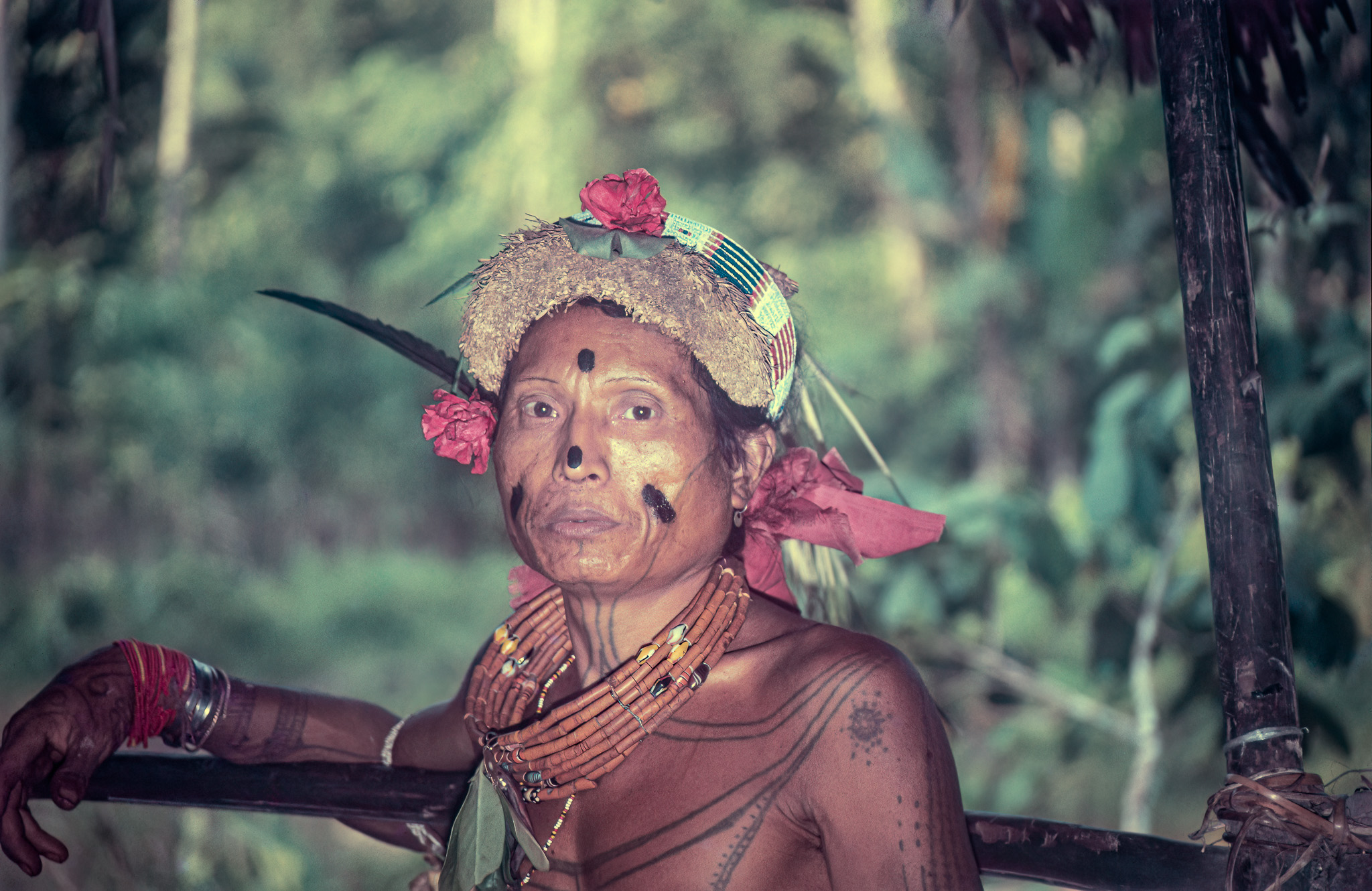
Masura Bagatta – Thank You !
Toine IJsseldijk
Adopted member of a Mentawai uma, Siberut Island