The Rhythm of Ritual Life
Ceremony as the Pulse of Community Life
Ceremony is the heartbeat of Mentawai society.
While daily life sustains the body, ritual sustains the relationships that make life meaningful — between humans, ancestors, forest spirits, and the many unseen forces that shape existence. Ritual is how imbalance is corrected, how gratitude is expressed, and how harmony is restored when it falters.
Every significant moment in life calls for ceremony.
A child’s first clothing, the union of two families in marriage, the building of a new uma, the healing of illness, the initiation of a shaman, or the farewell given at death. Some rites are small and intimate; others unfold over days or weeks, drawing entire clans or whole valleys into shared celebration, sacrifice, song, dance, and reconciliation.
Ceremonies are not events outside daily life — they are woven into its rhythm.
They renew connections between people and spirits, strengthen the social fabric of the uma, and ensure that the living world remains aligned with the invisible one.
Every ceremony begins with the same essentials.
The spiritual world must be informed, the uma must be cleansed, and taboos must be observed. Only then can ritual unfold safely, supported by both human and spiritual participants.
Participation is collective.
Shamans chant and mediate with the unseen; women prepare food and offerings; men tend the pigs; elders uphold tradition; children watch and learn the forms they will one day inherit. Ritual is not performed for the community but by the community — a shared act of continuity.
Above all, Mentawai ceremonies express reconciliation.
Between body and soul, between humans and spirits, between the present moment and ancestral memory. Through ritual, relationships are renewed, balance is restored, and the pulse of the community continues strong.
Puliaijat — The Great Ceremonies
Ceremonies of Restoration, Renewal, and Reconciliation
The most important communal rituals are known collectively as puliaijat — great ceremonies performed to restore harmony between humans, ancestors, forest spirits, and the unseen forces that shape life.
Whether addressing misfortune, celebrating prosperity, healing illness, or marking major life transitions, puliaijat are the central mechanism through which balance is renewed and relationships are reset.
Although the purpose of puliaijat varies, its structure is remarkably consistent. Every great ceremony begins and ends in the same way, following a sequence that anchors the ritual in ancestral order. Even the complex ceremonies of shamanic initiation follow this same structural logic: cleansing, informing the spirits, observing taboos, offering sacrifices, calling souls, and reaffirming harmony with the forest.
Preparation
Days or weeks before a puliaijat begins, the entire community enters a period of taboo: keikei. Non-essential work stops. No one may travel far, build houses, or clear new gardens. Work must not “pull the soul away” when ritual concentration is required.
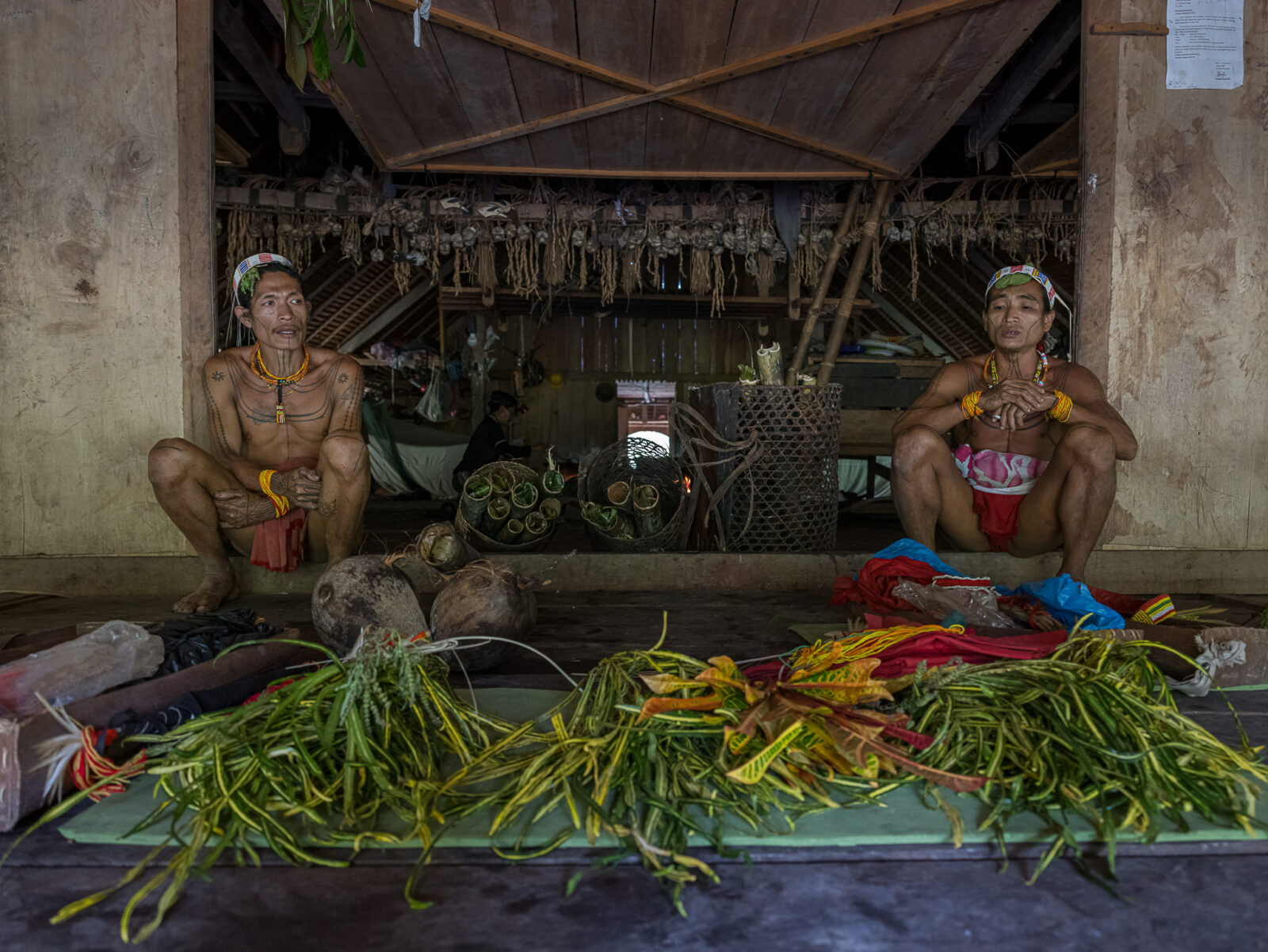
Families prepare great quantities of sago flour, bamboo containers for cooking, firewood, pigs and chickens for sacrifice, and assemble ceremonial attire and adornments.
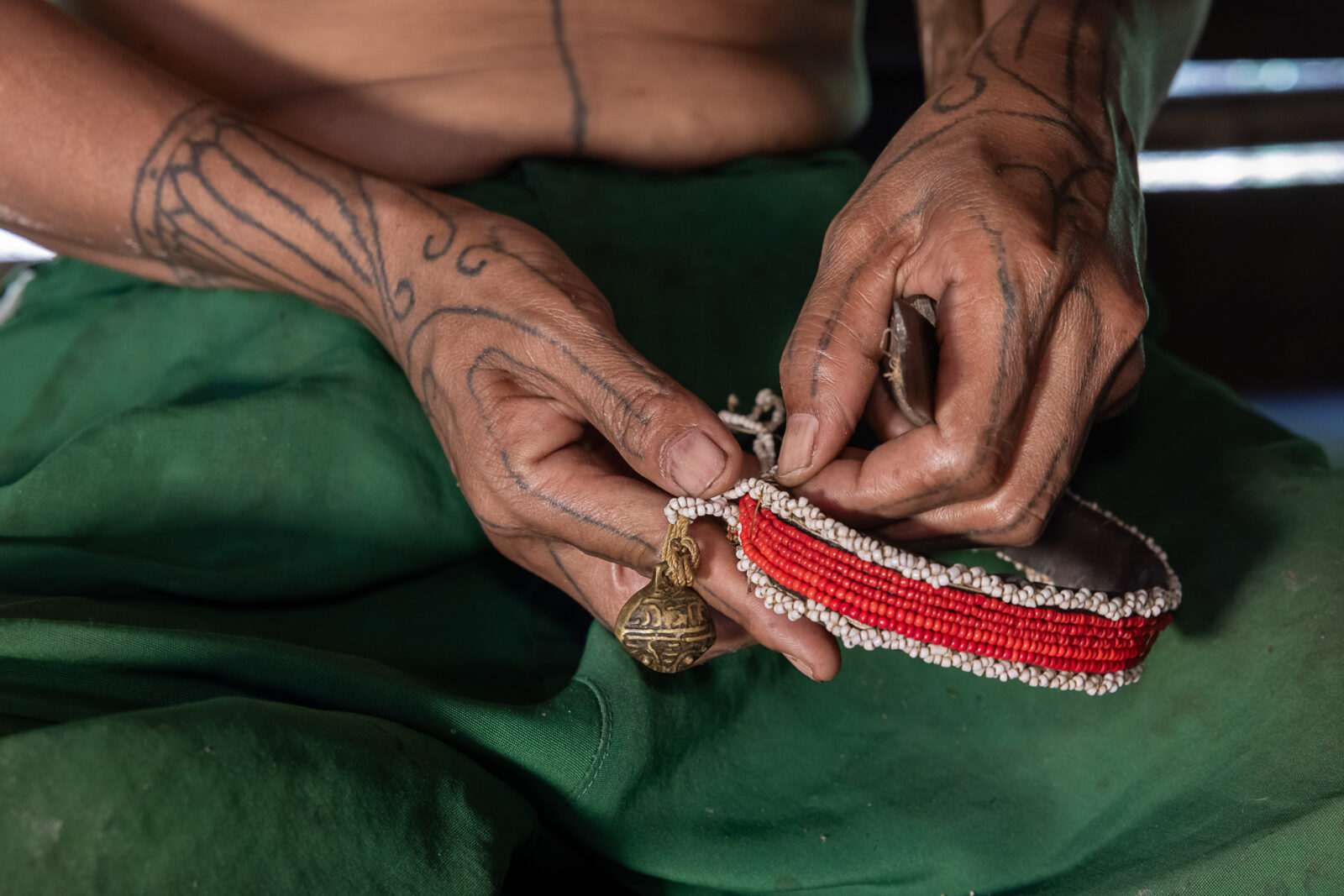
These preparations are not logistical alone — they are spiritual groundwork, ensuring abundance, focus, and readiness for the ritual ahead.
Informing the Spirits
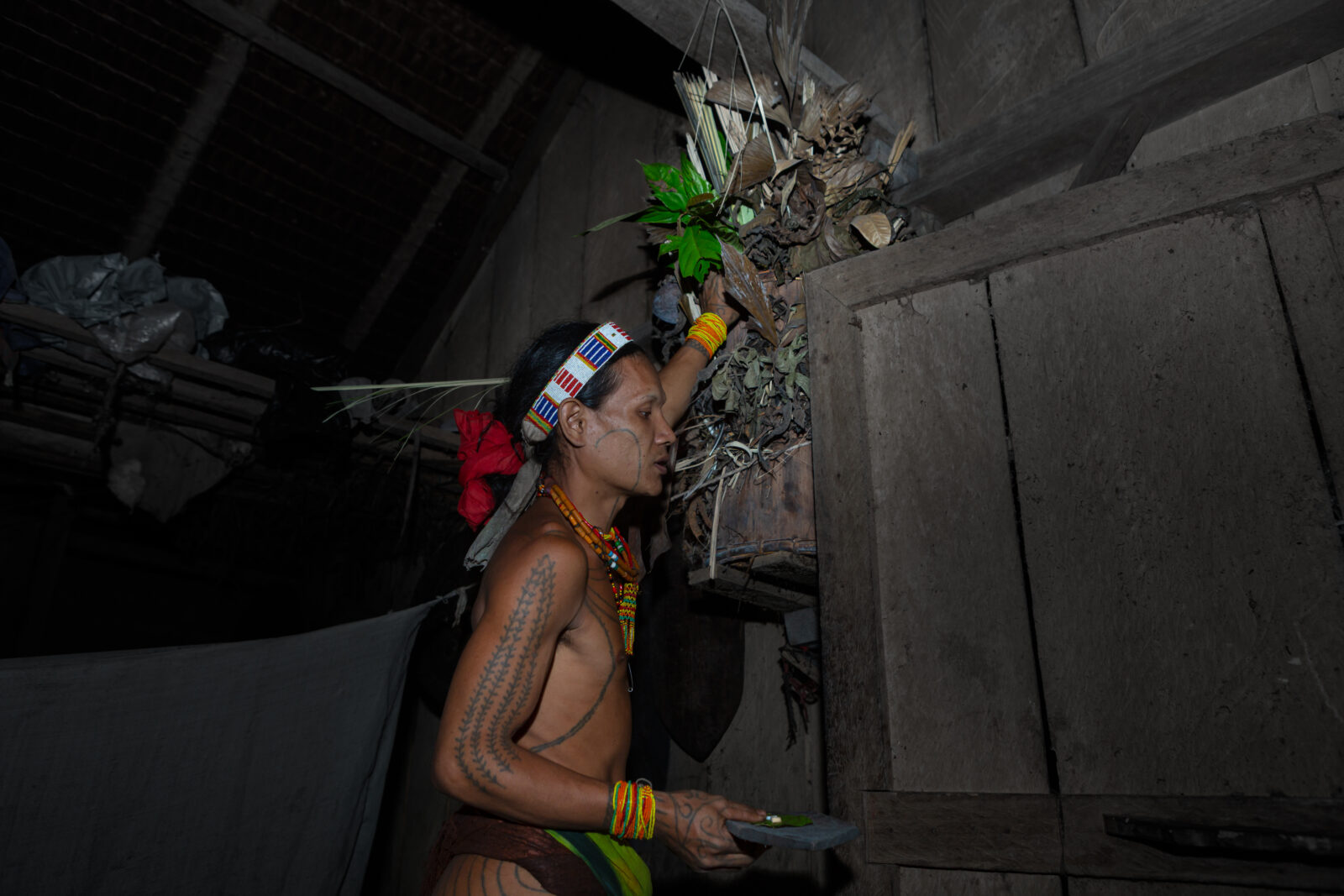
Before anything begins, the rimata prepares an offering plate and addresses the bakkat katsaila, the sacred leaf-filled basket tied to the main pillar of the inner chamber. Here he announces the purpose of the ceremony, the taboos to be observed, the ritual that will be performed, and he requests approval and protection.
At the core of puliaijat lie two complementary forms, each addressing a different movement of cosmic balance.
E’eruk — Reinforcing the Good (si maeruk)
Ceremonies of Affirmation, Gratitude, and Welcoming
E’eruk ceremonies are performed when life is good — or when the community wishes to ensure that it remains so.
They affirm the positive forces that protect the uma, strengthen relationships within and between clans, and welcome ancestral and forest spirits into a state of mutual goodwill.
E’eruk includes the full sequence of ritual acts:
Pasibitbit, the ritual cleansing of the uma;
Lajo Simagere, the calling and gathering of souls;
Turuk, traditional shaman dances;
Offerings and blessings;
Pululak, ritual meal of shamans and their wives;
Urourou, communal hunt;
Through E’eruk, harmony is reinforced, benevolent forces are invited close, and the community celebrates its connection with both ancestors and living kin.
Pa’eruk — Driving Out the Bad (si katai)
Ceremonies of Expulsion, Protection, and Rebalancing
Where E’eruk welcomes and affirms, Pa’eruk confronts and corrects.
Pa’eruk rituals are performed when imbalance threatens — illness, repeated misfortune, conflict, or signs that harmful forces have entered the community.
These ceremonies aim to drive out the bad and seal the uma against further intrusion.
Pa’eruk includes:
Pasibitbit, the ritual cleansing of the uma;
Turuk, traditional shaman dances;
Offerings, blessings, and chants to expel harmful forces;
Prayers to restore protection and harmony;
Lajo Simagere is not performed during Pa’eruk, as this is not a time to call souls close, but to strengthen barriers and clear the path for renewed stability. Pululak and a communal hunt are usually optional, depending on the rimata‘s interpretation of the proceedings of the ceremony.
Core Rituals Within Puliaijat
Regardless of whether a ceremony is E’eruk or Pa’eruk, every puliaijat begins with essential rites that prepare the uma and its people for spiritual work.
Pasibitbit — Ritual Cleansing of the Uma
Purifying the House, Opening the Ritual Space
At the beginning of any major ceremony, the uma must first be ritually cleansed — safeguarding its people and ensuring that the ritual unfolds smoothly and with success.
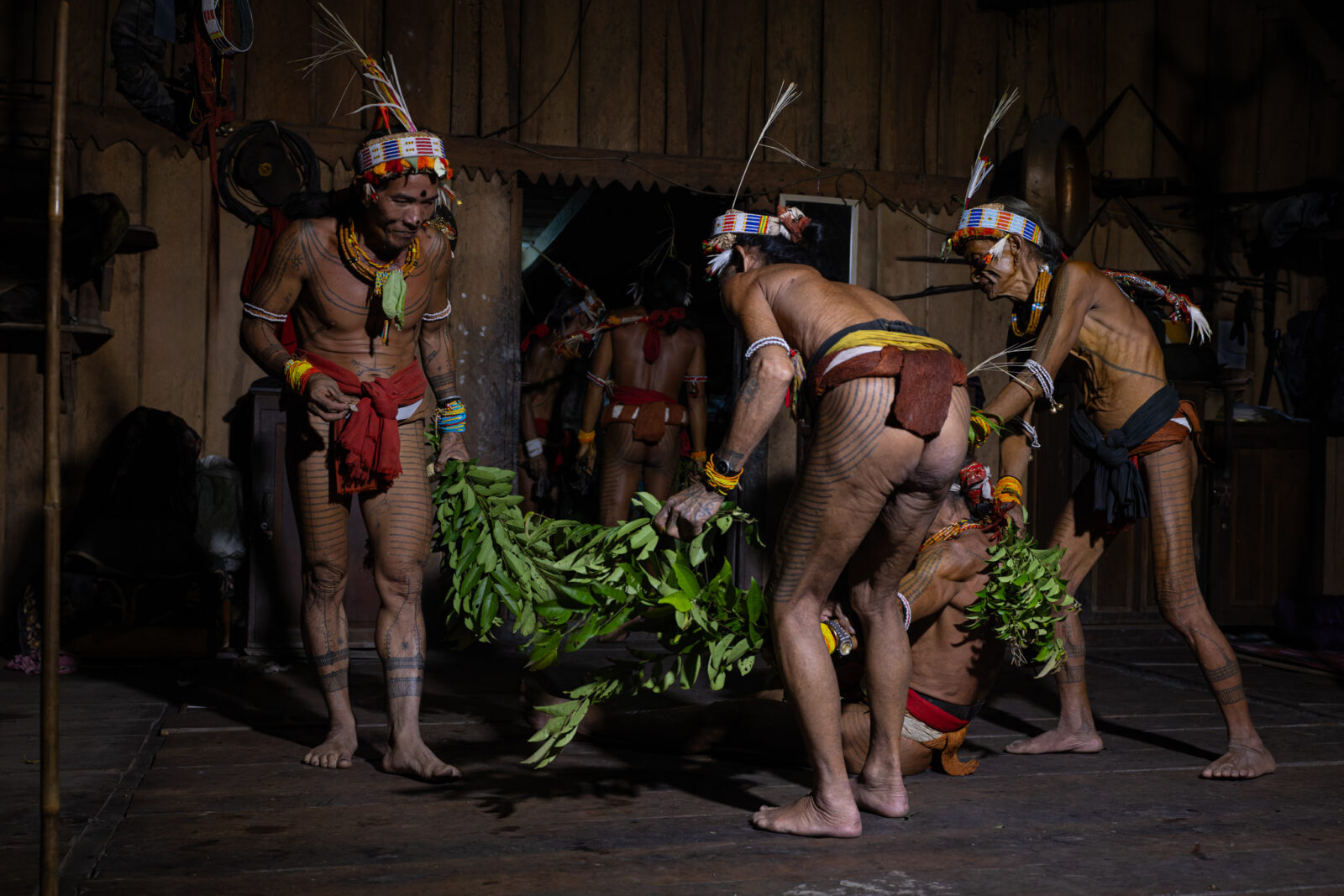
The kerei begin at the rear chamber — witnessed by the bakkat katsaila — waving a bitbit, a fan, of leafy branches dipped in water or herbal mixtures while chanting and ringing their jejeneng, the shaman bells. Their voices call upon the community’s souls and ancestral souls to witness the cleansing. Moving back and forth with increasing intensity toward the front porch of the uma, they sweep away harmful forces and invite benevolent ones to enter.
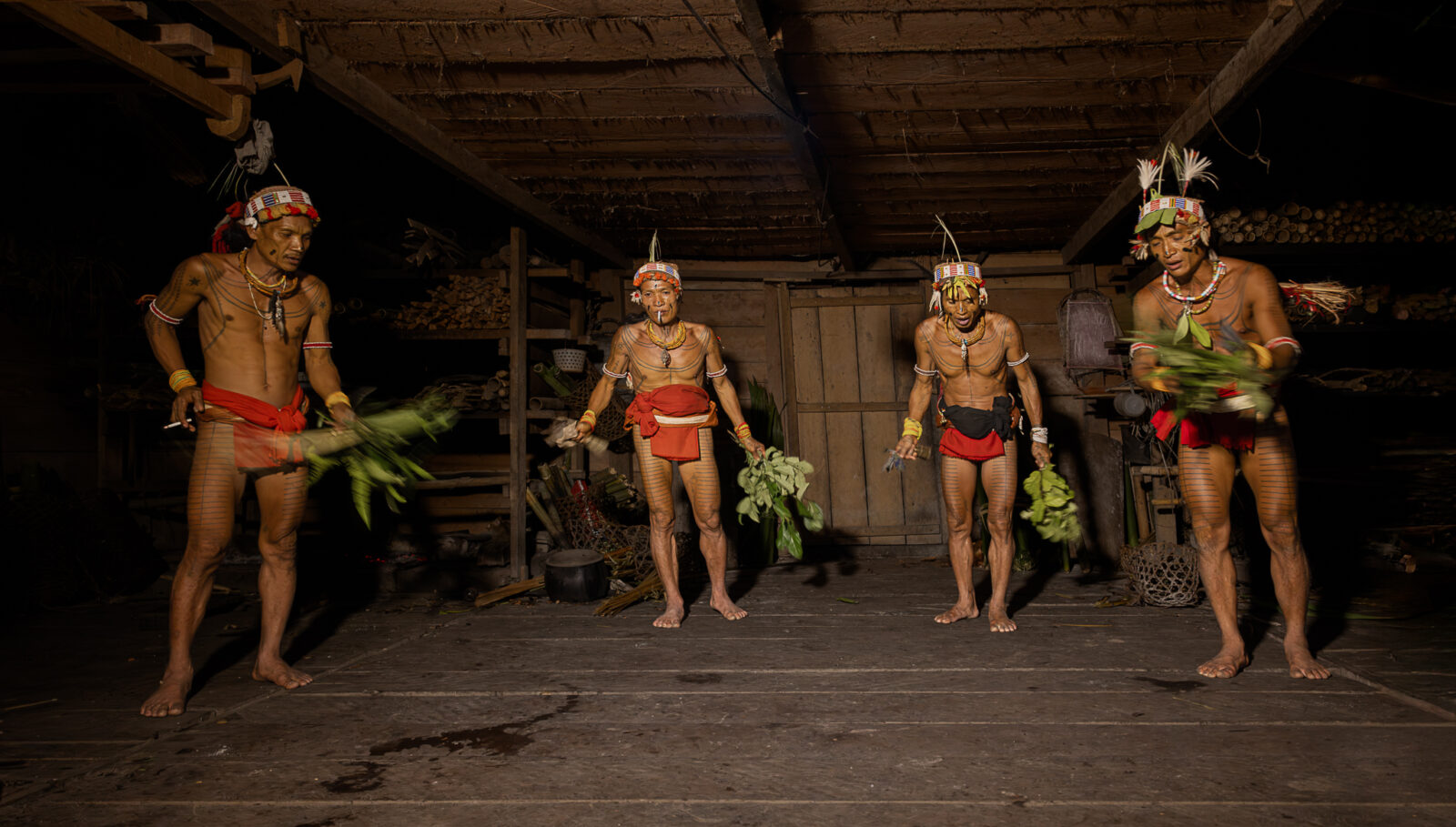
During this process, shamans often perceive harmful spirits within the uma. While many are driven out through sweeping movements and chants, some resist. In such cases, the kerei strike them with their leafy branches. When struck, the spirit falls to the ground as physical matter, varying in form and color depending on its origin. The shaman then picks it up and throws it into the fire before continuing the cleansing.
As the rhythm of bells, breath, and movement intensifies, the kerei often slip into trance. Their bodies tremble, their voices shift, and their presence becomes charged — signs that their guiding souls and spirit allies have drawn close to lend their strength.
Once all harmful forces have been expelled, the shamans use leaves to sprinkle the uma with blessed water, then press them against the doorway and central posts, sealing the space.
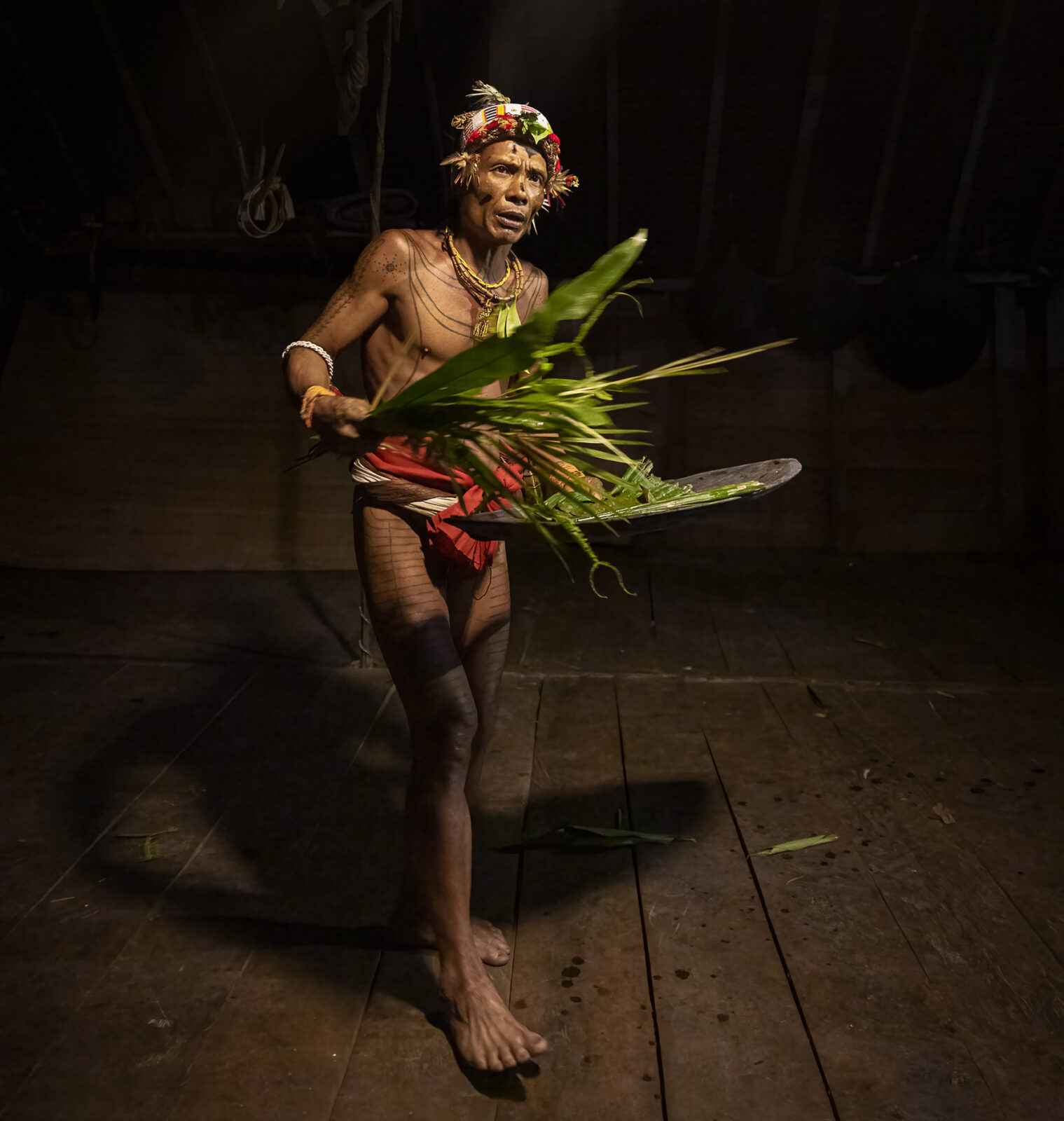
From that moment onward, the house is considered purified and spiritually fortified — ready for the ceremonies that follow.
Lajo Simagere — Catching Souls
A Moment of Reunion Between Body and Soul
Performed usually only during E’eruk, Lajo Simagere invites the souls of everyone present to gather and return.
The ritual begins with calling upon ancestral souls. The kerei make symbolic offerings and then gather around a bamboo container filled with carefully arranged colorful leaves — a powerful mediator and bridge to the spiritual world. They chant, invoking the souls of the living to assemble in the uma.
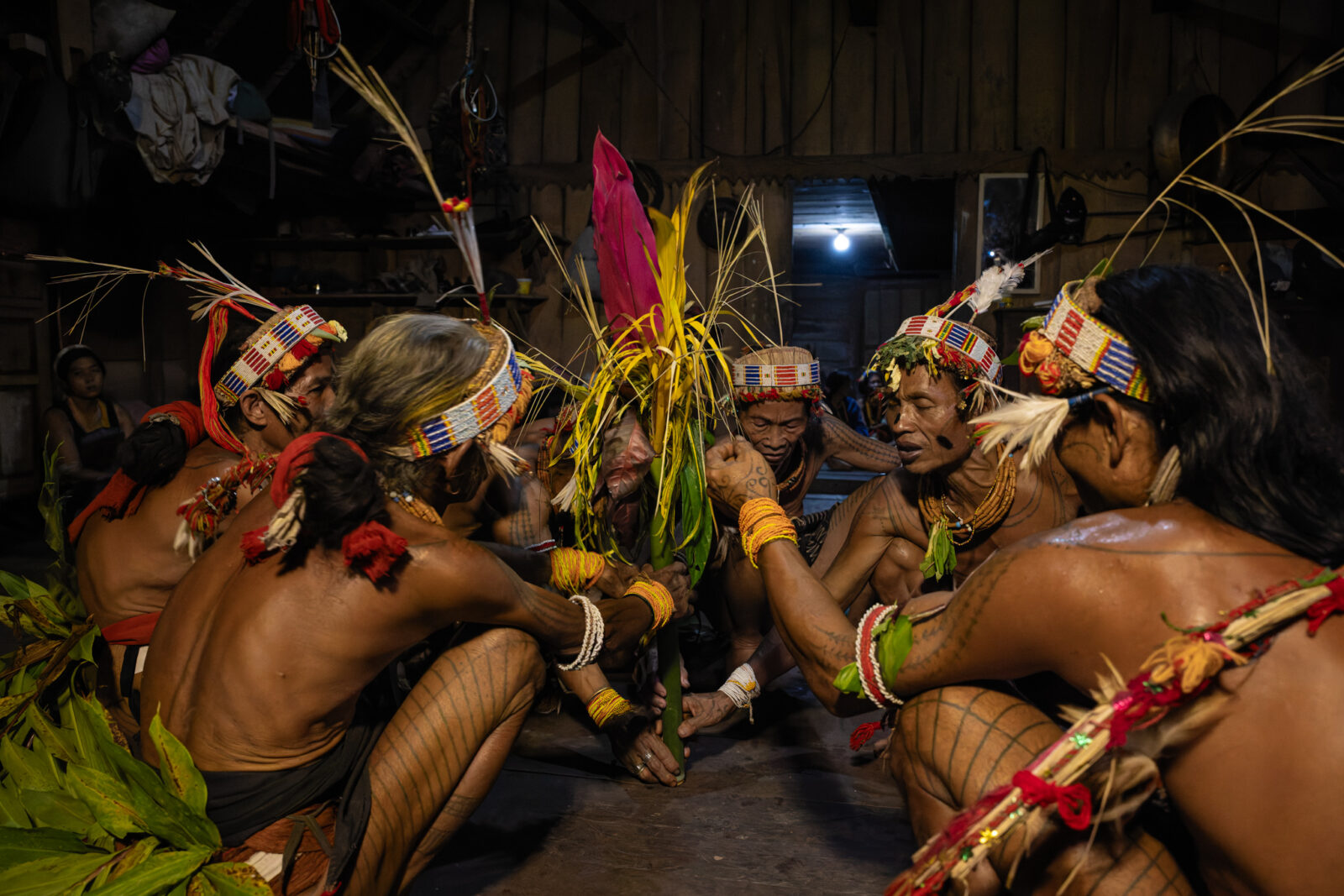
Once it is believed that all souls have arrived, the kerei take their bells and a plate prepared with decorated food as an offering. They move through the uma, searching for souls invisible to ordinary eyes. Through chanting, the ringing of bells, and controlled ritual gestures, they guide the souls gently, one by one, onto the plate, which serves as a temporary place for them during the ritual.
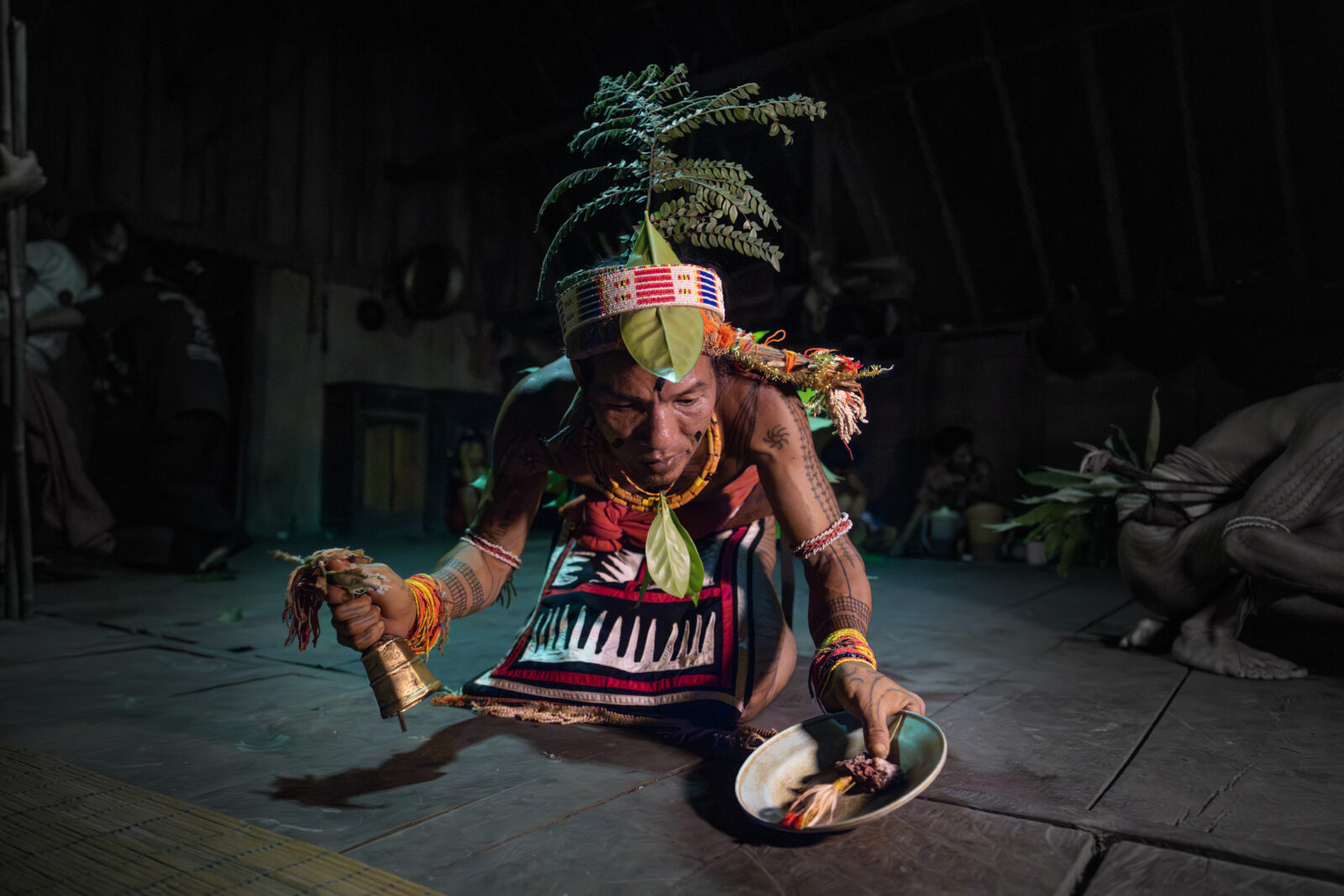
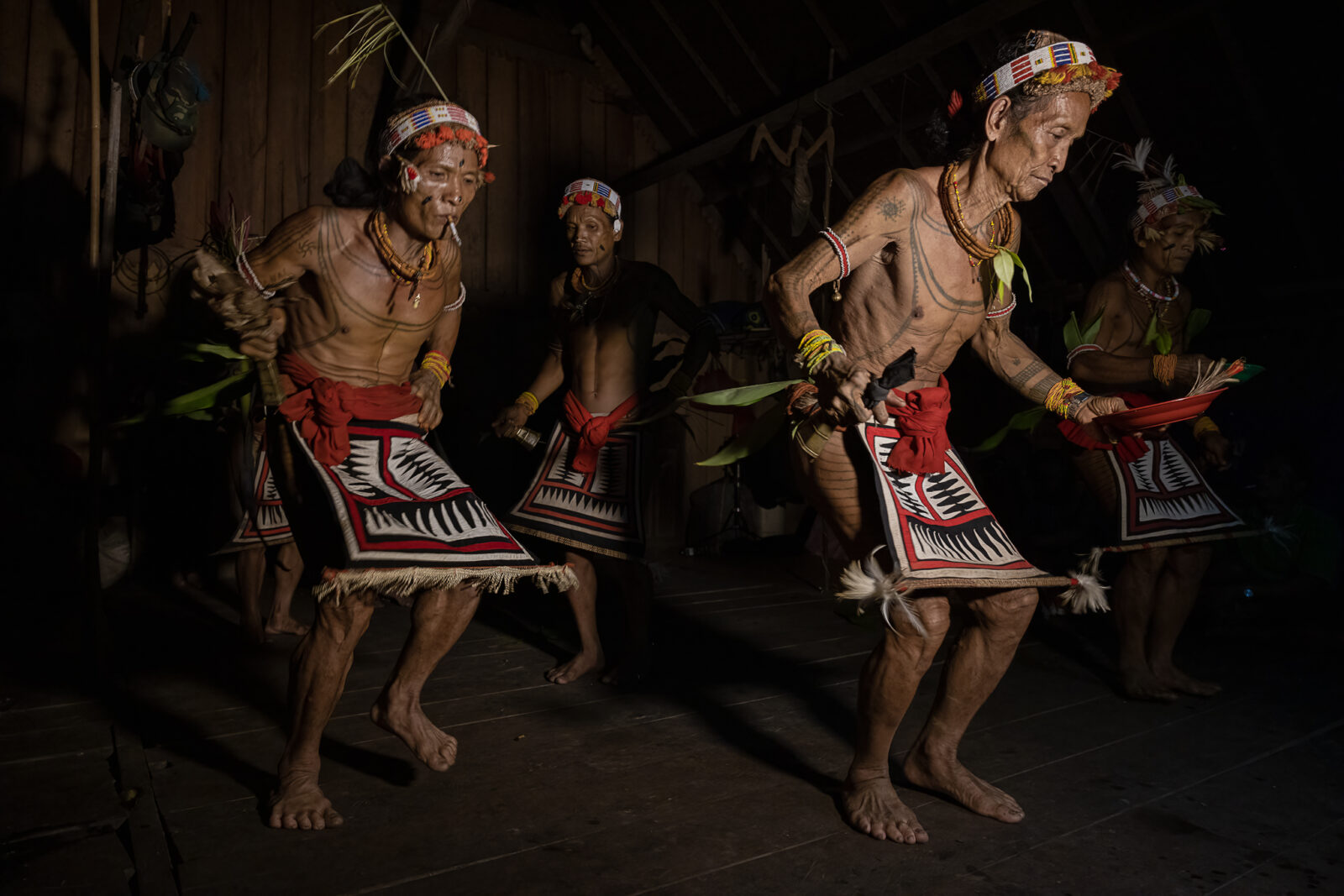
When all souls are gathered, the kerei circle around the ritual dance floor, swaying the plates with souls, chanting, and ringing their bells to the rhythm of the drums.
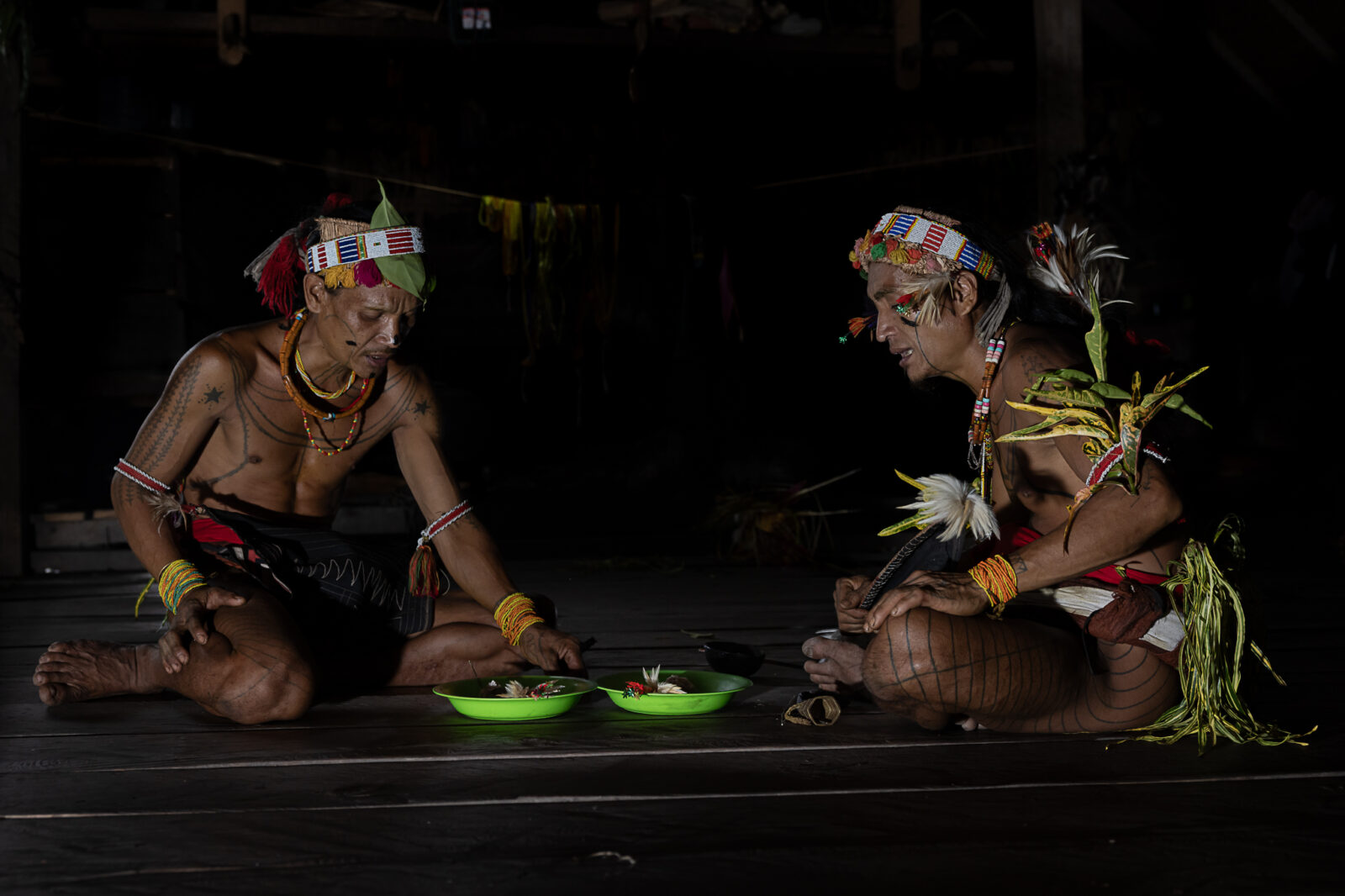
The shamans then sit together, plates before them, chanting to reassure the gathered souls that life is good and that there is no reason to drift too far into the unseen world.
Finally, the kerei move from person to person around the uma, lowering the plate to each forehead. Through chants and ringing bells, they guide the soul briefly back into its body.
For a moment, body and soul reunite — worlds are reconciled, and harmony is restored.
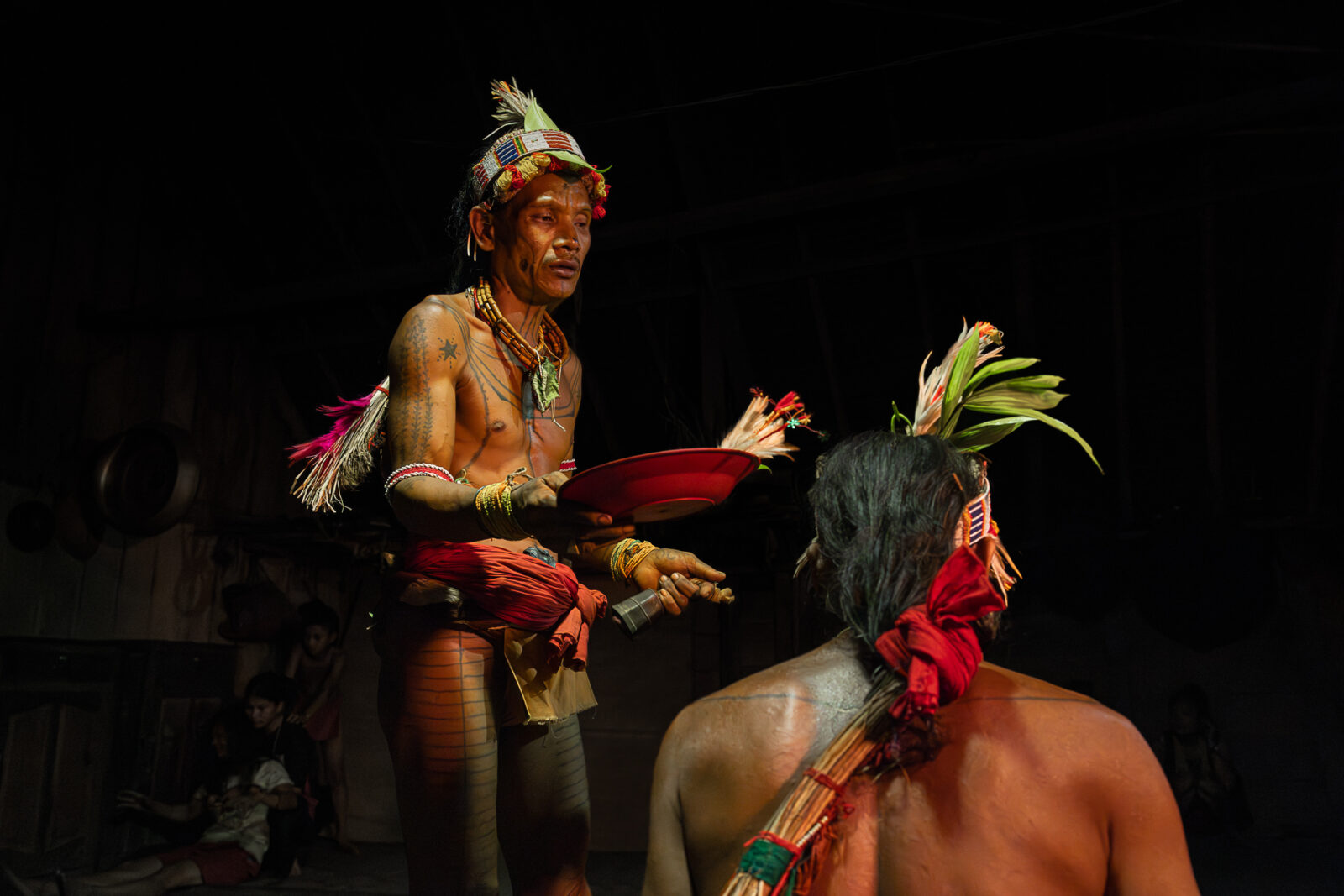
Lajo Simagere ensures that when an expansive or joyful ceremony unfolds, every soul is present, settled, and ready to participate fully in the communal renewal.
Ritual Dances — Lajo & Turuk
Invocation, Communication, and Celebration
Once the uma has been cleansed and the souls have been gathered and reunited with their physical bodies, the highlight of any puliaijat unfolds through dance — the language through which humans, spirits, and ancestors meet.
The shamans prepare themselves by adding leaves beneath their lekkau upper-arm bands and into their head piece. Long leaves from a plant of the ginger family are inserted at the back of their loincloths, bending downward in a manner reminiscent of a chicken’s tail feathers. They also put on the traditional shaman apron, known as sabo, made from black textile decorated with abstract red and white patterns and finished at the bottom with a woven rattan band adorned with feathers at its ends.
Lajo
Dances for the Spirits
Lajo are the first dances performed during a puliaijat ceremony.
They are not entertainment: they are acts of invocation, communication, and alignment with the unseen world.
Led by the kerei, each lajo embodies a specific intention.
Some honor ancestral spirits, others welcome forest beings, and others clear the way for harmony to settle over the uma.
The shamans move in circles across the dance floor, rattling their bells and singing ancient songs.
As their feet stamp the wooden boards — built as a great percussion instrument — the entire uma vibrates with power, inviting the spirits closer.
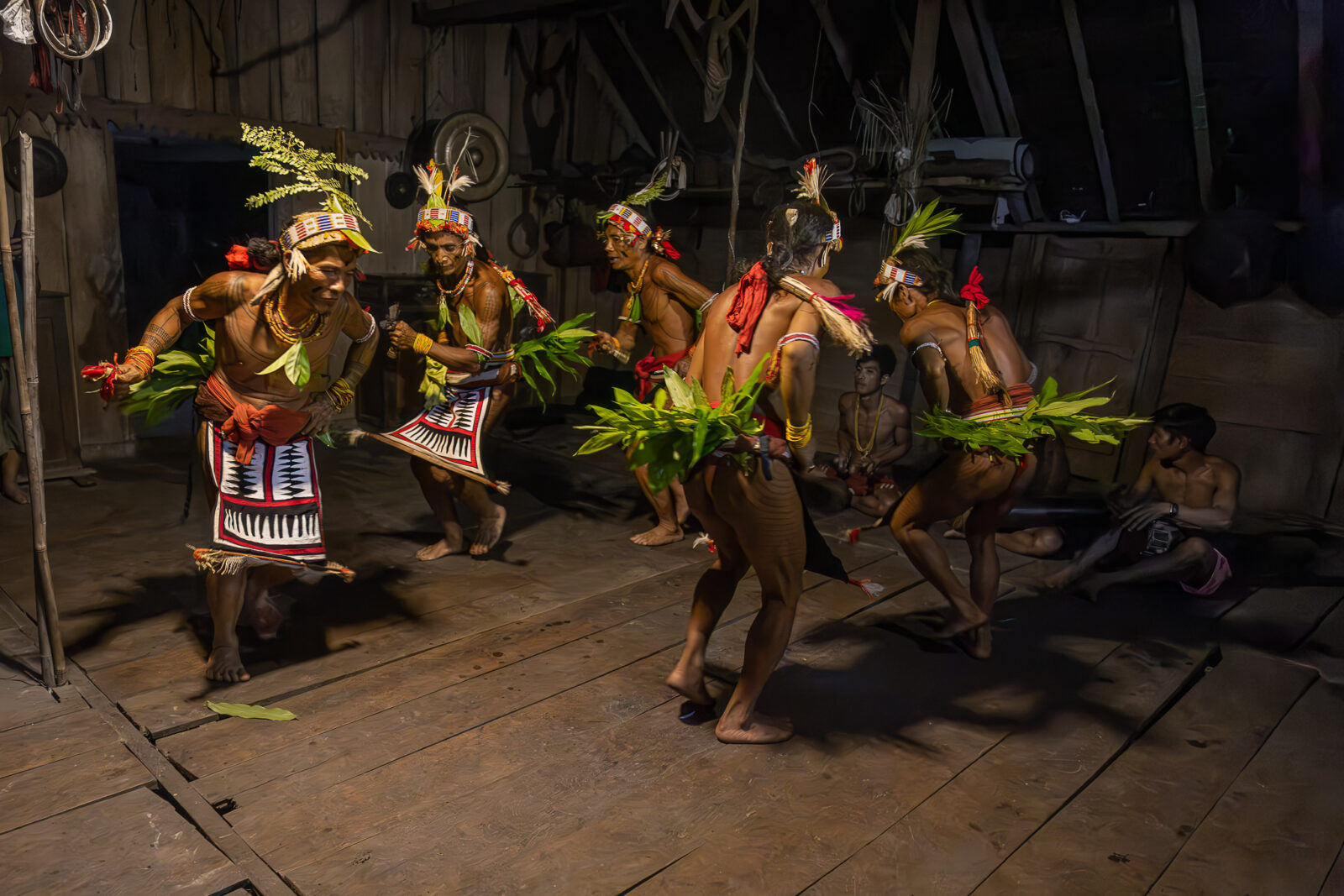
During lajo, the boundary between worlds grows thin.
Community members may feel the close presence of ancestral souls, and at times their bodies are overtaken by spirits.
They fall into trance, suddenly behaving like kerei, joining the dance floor with reckless movement and chanting in the ancient language usually known only to shamans.
Their voices shift, their gestures transform — the spirits speak through them.
Lajo continues until the kerei judge that communication with the unseen has been fulfilled and the community has reconciled with the spiritual realm.
Turuk
Dances of Play, and Joy
After the lajo dances, as the heavy ritual work settles, the mood changes. A communal meal is often shared close to midnight, and then the turuk begin.
Turuk are dances of imitation and delight. They celebrate the vitality of life — the movements of chickens, eagles, monkeys, and other animals whose spirits animate the forest.
These dances are performed primarily by the kerei, but members of the community often join, laughing, cheering, and encouraging one another.
This is also when young boys begin to learn the dances, following the steps of the kerei with careful attention.
Turuk strengthens bonds, releases tension, and fills the long ceremonial night with joy.
It continues until dawn.
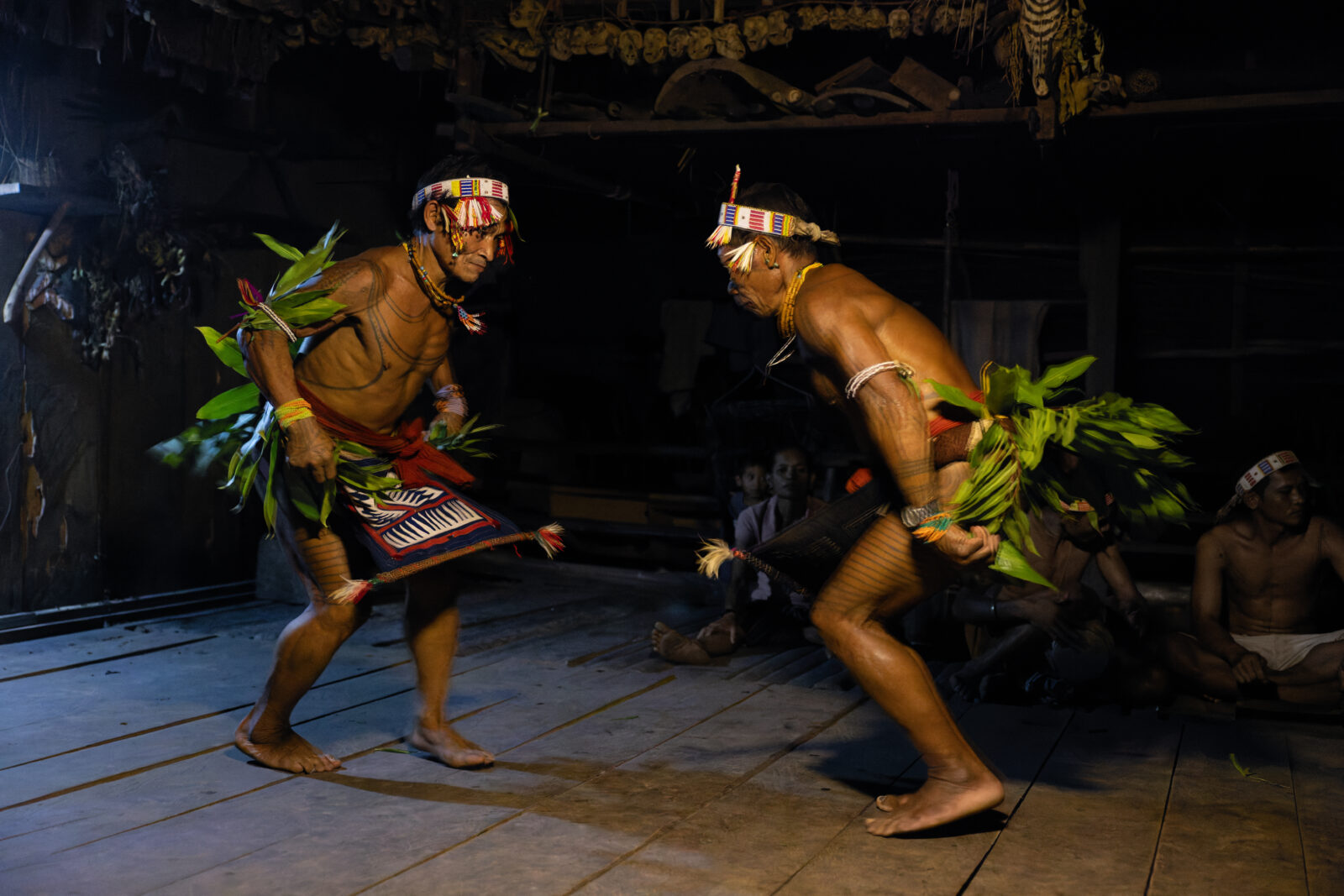
The alternation between lajo and turuk — solemnity and celebration, invocation and play — reflects the Mentawai understanding of balance. Spirits must be honored, and humans must rejoice. Both belong to the pulse of a puliaijat.
Pig Sacrifice
Offering, Protection, and Dialogue
The following morning, an essential ritual follows. A large pig — the most precious offering a family can give — is brought to the front of the central hall. The kerei gather behind the animal, facing toward the forest beyond the uma.
Here they bless the animal with chants and the ringing of bells, using leaves to sprinkle it with blessed water — acknowledging its role as mediator between humans and the unseen world, and sending their petitions into the spiritual realm.
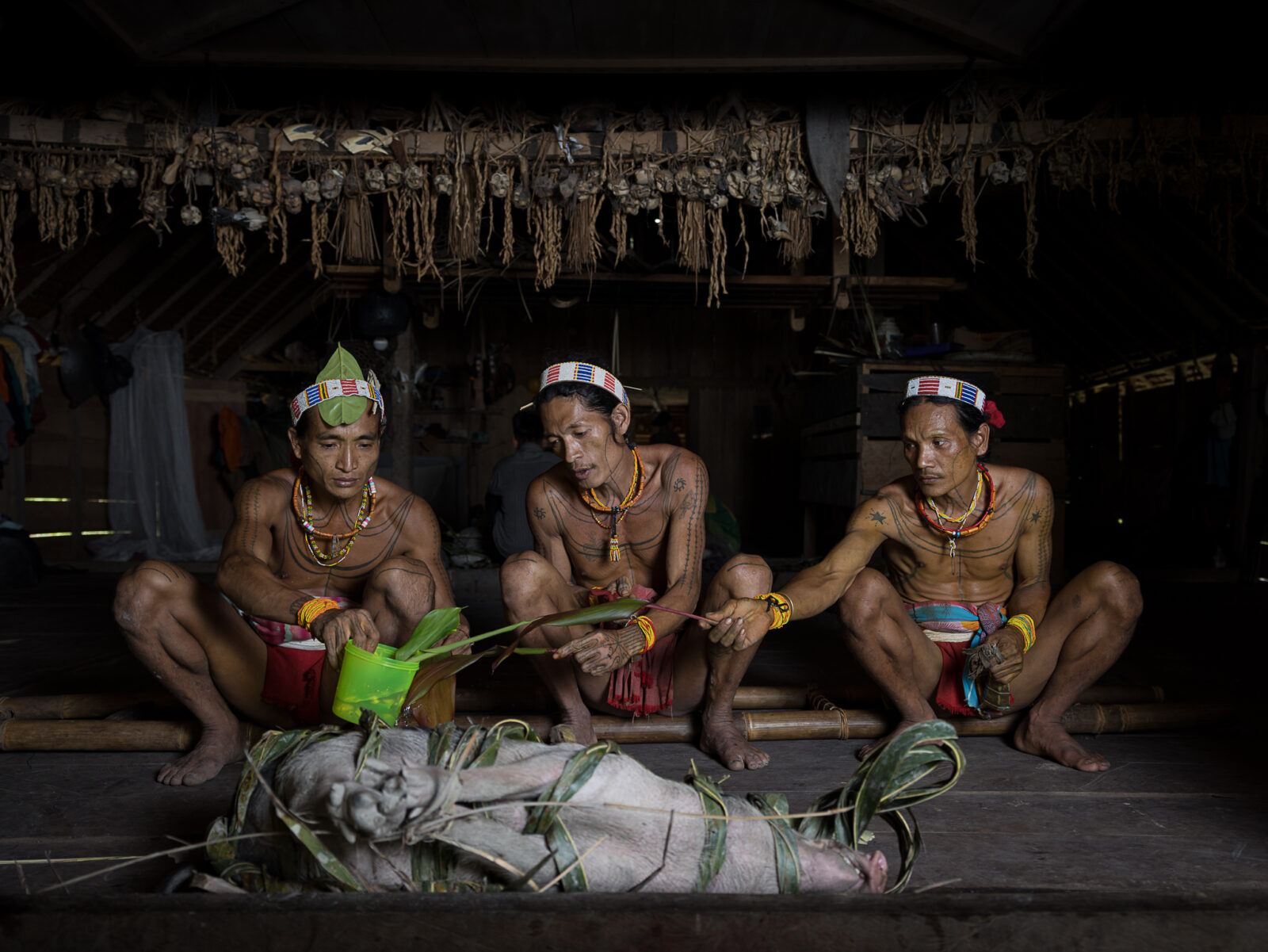
After the blessing, the pig is sacrificed on the veranda.
If there are infants in the uma, an abinen may follow: a short but powerful rite in which a newborn is blessed beneath the suspended carcass, symbolically protected and welcomed into the community.
Once the ritual is complete, the pig is cleaned and prepared. The meat is carefully divided and distributed equally among all households of the clan.
This equal sharing is essential — the offering reinforces unity, generosity, and the bonds that hold the community together.
Pululak
Respecting the Ancestors
The most important day of a Puliajat ceremony is the day on which the ancestral souls and the spiritual realm are honored.
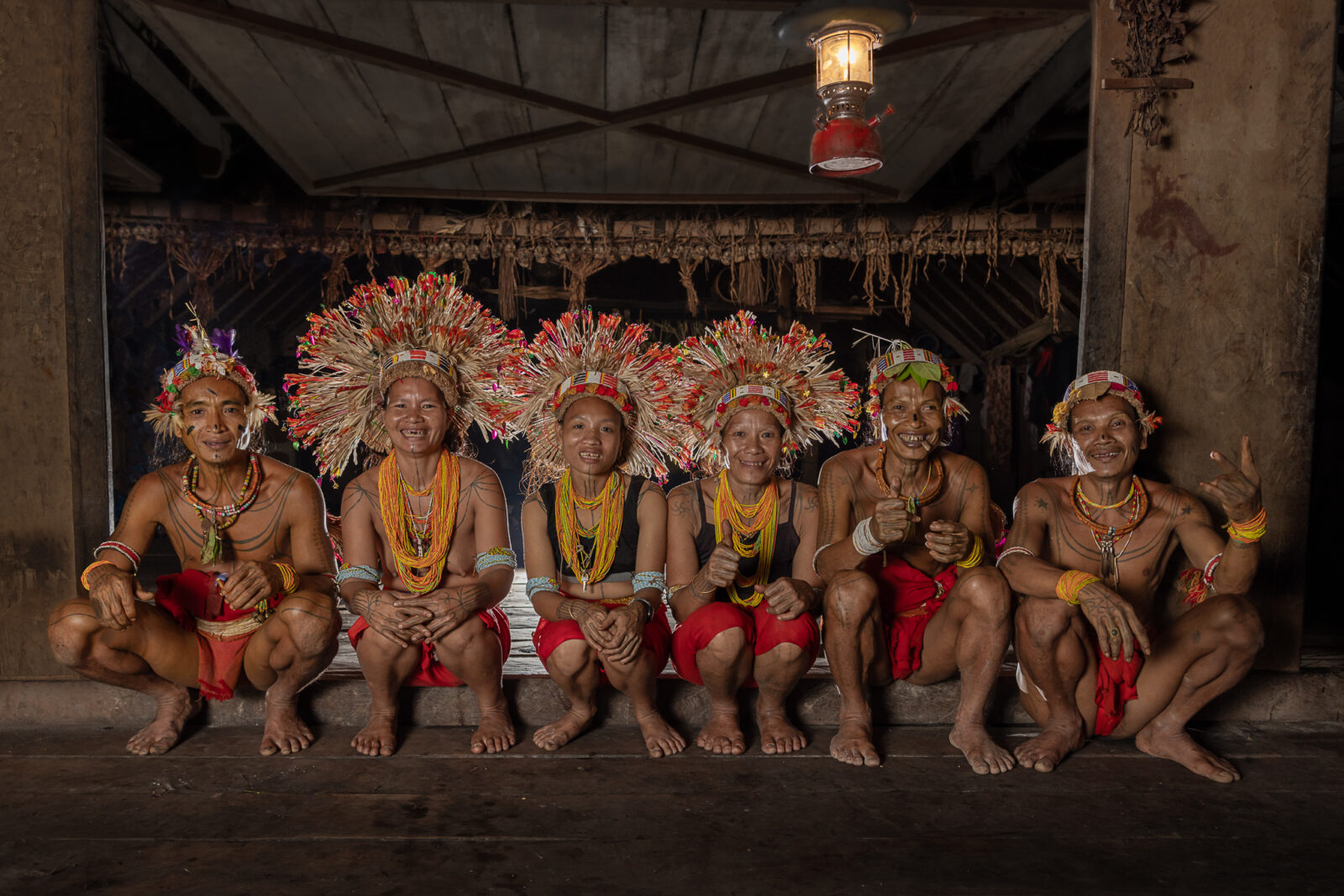
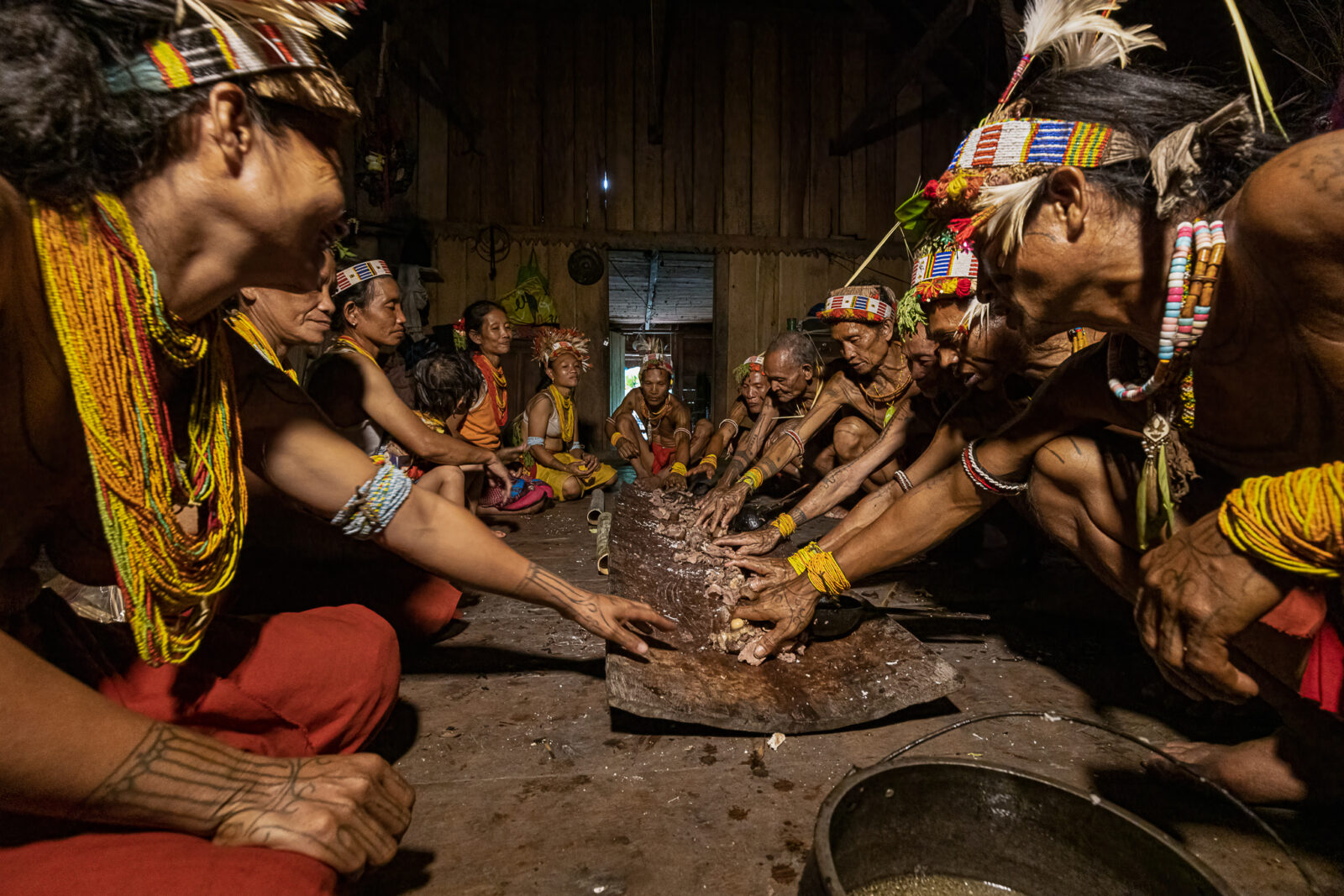
For the community, it is important to demonstrate that life is good and abundant. The shamans dress in full ceremonial attire, while their wives wear the traditional teteku head decoration, often together with the sinaibak traditional skirt. During the ritual pululak meal, the shamans line up along long traditional plates (lulak), with their wives seated opposite them. Before this symbolic meal, they thank the spiritual world for its support and abundance.
ClosURE
Lifting Taboos, Restoring Daily Life
When all core rites have been completed — cleansing, reconciliation with the souls, dances, sacrifices, blessings, and offerings — the puliaijat enters its final moment of closure.
The rimata returns to the bakkat katsaila, the sacred leaf-filled basket that has witnessed every ritual act since the beginning. There he announces that the ceremony is complete, thanks the spiritual world for its cooperation, and formally lifts the taboos observed during the ritual period.
With the pronouncement of closure, ordinary activities may resume:
gardens can be cleared again, journeys undertaken, construction restarted, and the house re-enters everyday time.
The boundary between ritual space and daily life gently dissolves, and the community steps back into its normal rhythm.
UROUROU: Ritual Hunt
Final Confirmation from the Forest
Many puliaijat — especially E’eruk, major shamanic ceremonies, and the consecration of a new uma — conclude with a ritual hunt, an act that carries deep cosmological meaning.
This hunt is not primarily for food.
It is a dialogue with the forest spirits.
Forest animals such as monkeys, deer, and wild boar are understood as the domestic animals of the ancestors. Their movements, their abundance, or their refusal to appear are read as messages from the spirit world. When game is plentiful and the hunt succeeds, it is taken as a sign that the ancestors approve of the ceremony. When animals evade the hunters, however, the spirits may be dissatisfied, or balance may not yet have been restored. In such cases, additional ritual attention may be required, through further offerings or a repeated hunt.
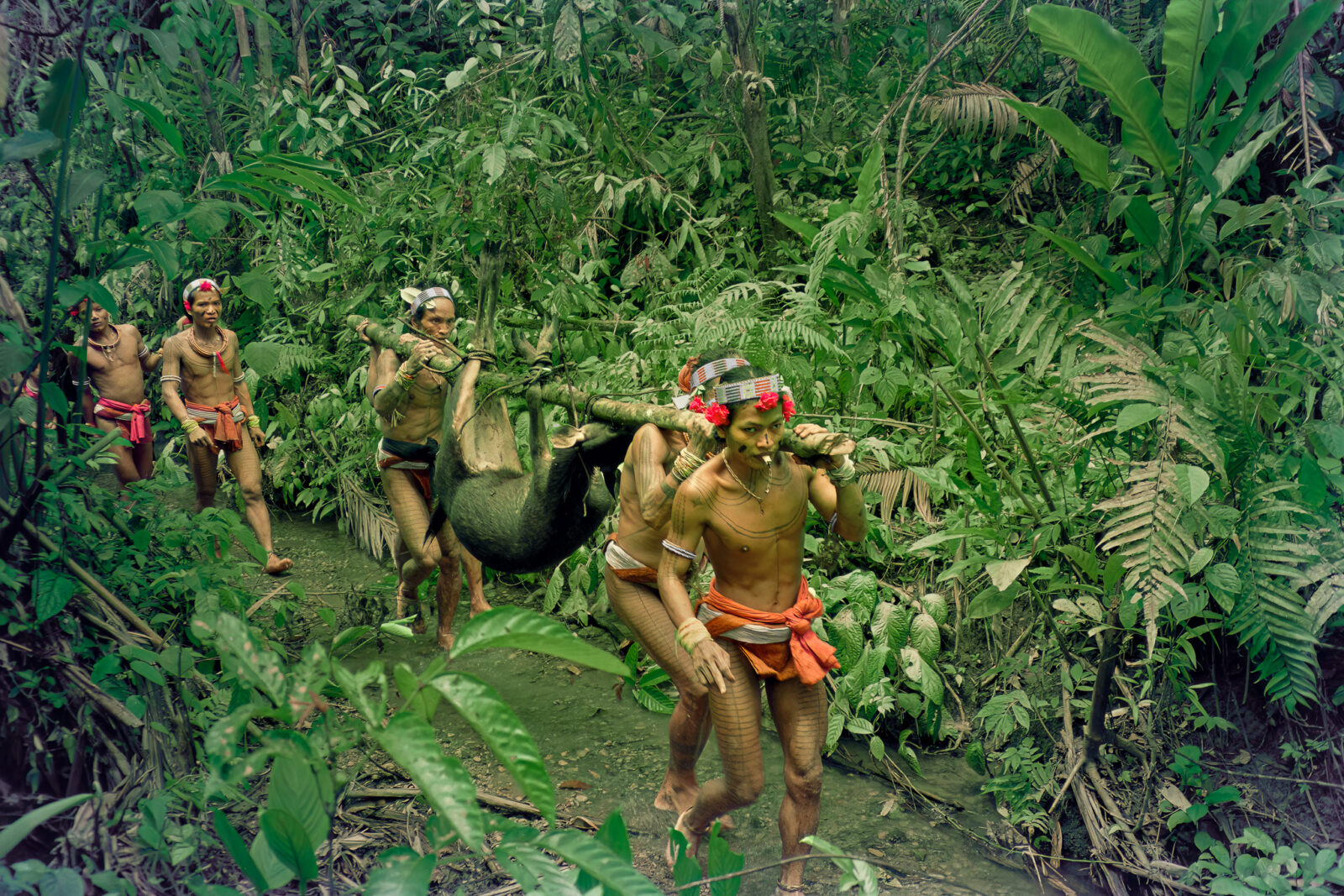
The ritual hunt reaffirms the reciprocal bond between humans, animals, and the unseen forces that animate the forest.
Through it, the puliaijat finds its final confirmation — and harmony between worlds is renewed.
Spiritual Possession
A Meeting of Worlds, Through Body and Voice
In Mentawai ritual life, the boundary between humans and spirits is thin. During the great ceremonies — especially puliaijat and shamanic rites — the presence of the unseen world draws close. This proximity is not abstract or distant; it often becomes physical, immediate, and felt in the body.
This is gobbok — spiritual possession.
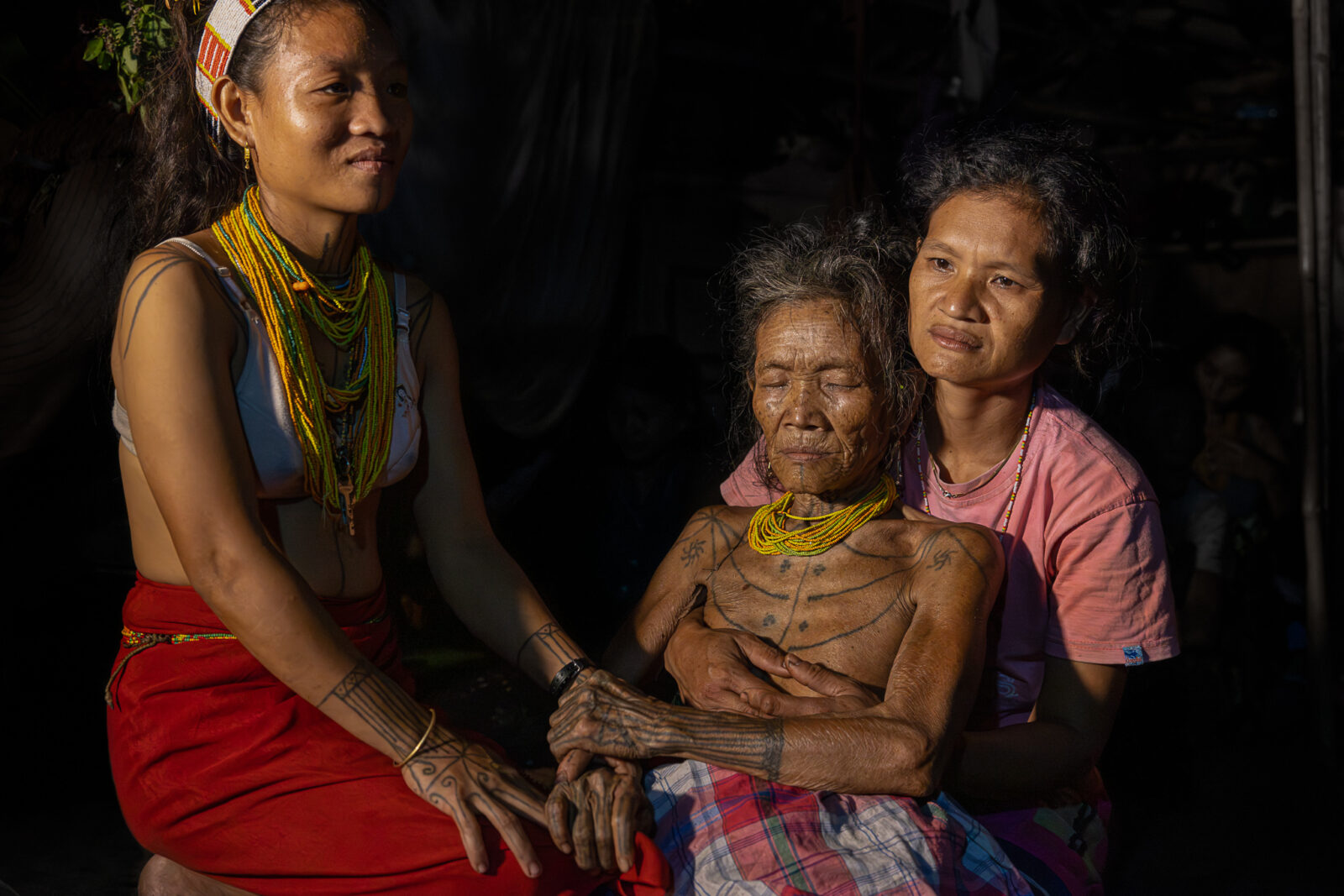
Possession arises most vividly during pasibitbit and the lajo dances performed by the kerei. As the shamans stamp the dance floor, ring their bells, and chant the ancient songs, the uma becomes charged with spiritual intensity. Ancestral souls are believed to enter, drawn by the rhythms, offerings, and the communion between humans and the unseen.
Possession Among the Kerei
For the kerei, such moments are an extension of their calling. Possession allows them to mediate between the human world and the unseen, conveying warnings, blessings, or instructions. The voice of the spirit speaks through the shaman, and the community listens with reverence, knowing that these messages arise from the deeper fabric that binds human and spirit life.
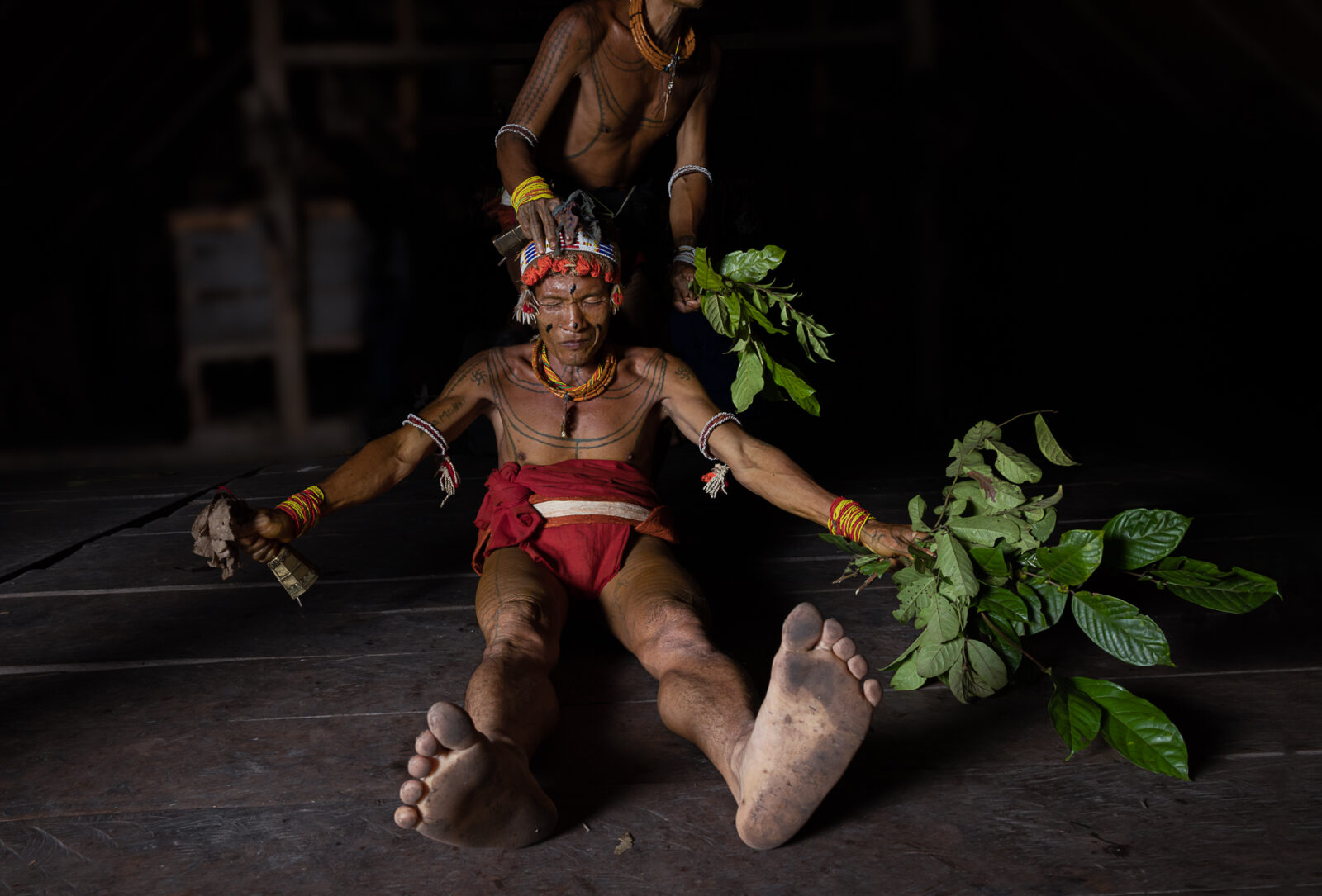
The shamans do not resist these moments. Trance is understood not as loss of control, but as a sacred encounter — a sign that the spirits have drawn near and accepted the ritual dialogue.
Possession Among the Community
Spiritual possession is not limited to shamans. During powerful lajo dances, community members sometimes feel the sudden weight or cold of ancestral presence and fall into trance themselves.
A person might tremble, fall to the ground, or rise with sudden force. Some begin to speak in patterns of language known only to the kerei — believed to be the voices of ancestors or forest spirits using their bodies to communicate. Others imitate the movements of animals, swaying like birds or calling out like monkeys, as if the boundary between human and spirit has briefly dissolved.
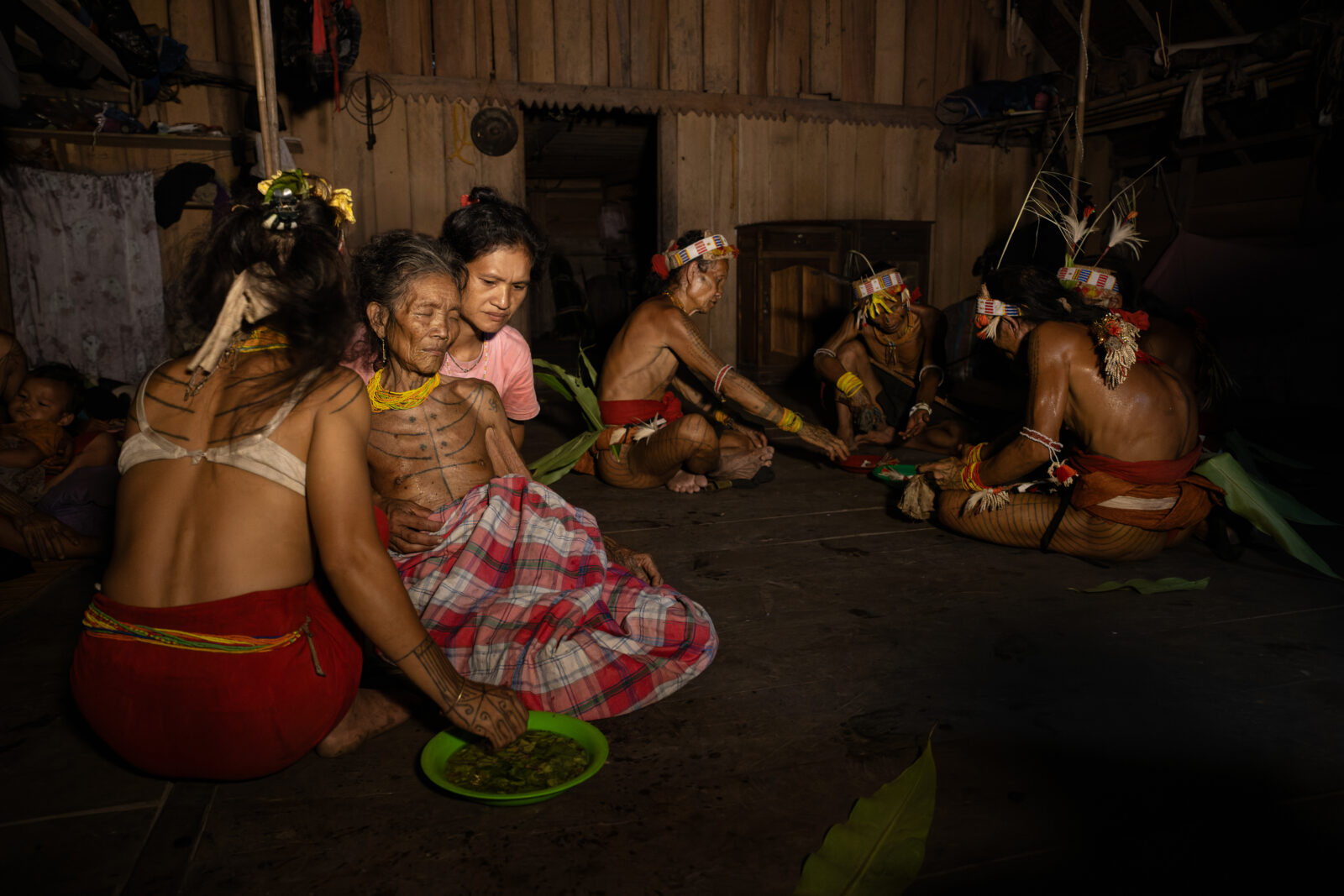
These states are not feared. They are recognized as sacred encounters: moments when the spirit world draws close to express care, presence, or concern.
The Role of the Kerei
Throughout these episodes, the kerei remain alert. They move quickly to support the possessed person — chanting, ringing bells, and guiding the presence so it does not overwhelm or remain too long. They speak directly to the presence within the person, addressing it with respect, asking why it has come and what it needs.
Through this gentle dialogue, they lead the spirit toward a peaceful departure, helping the host’s body settle again into the physical world.
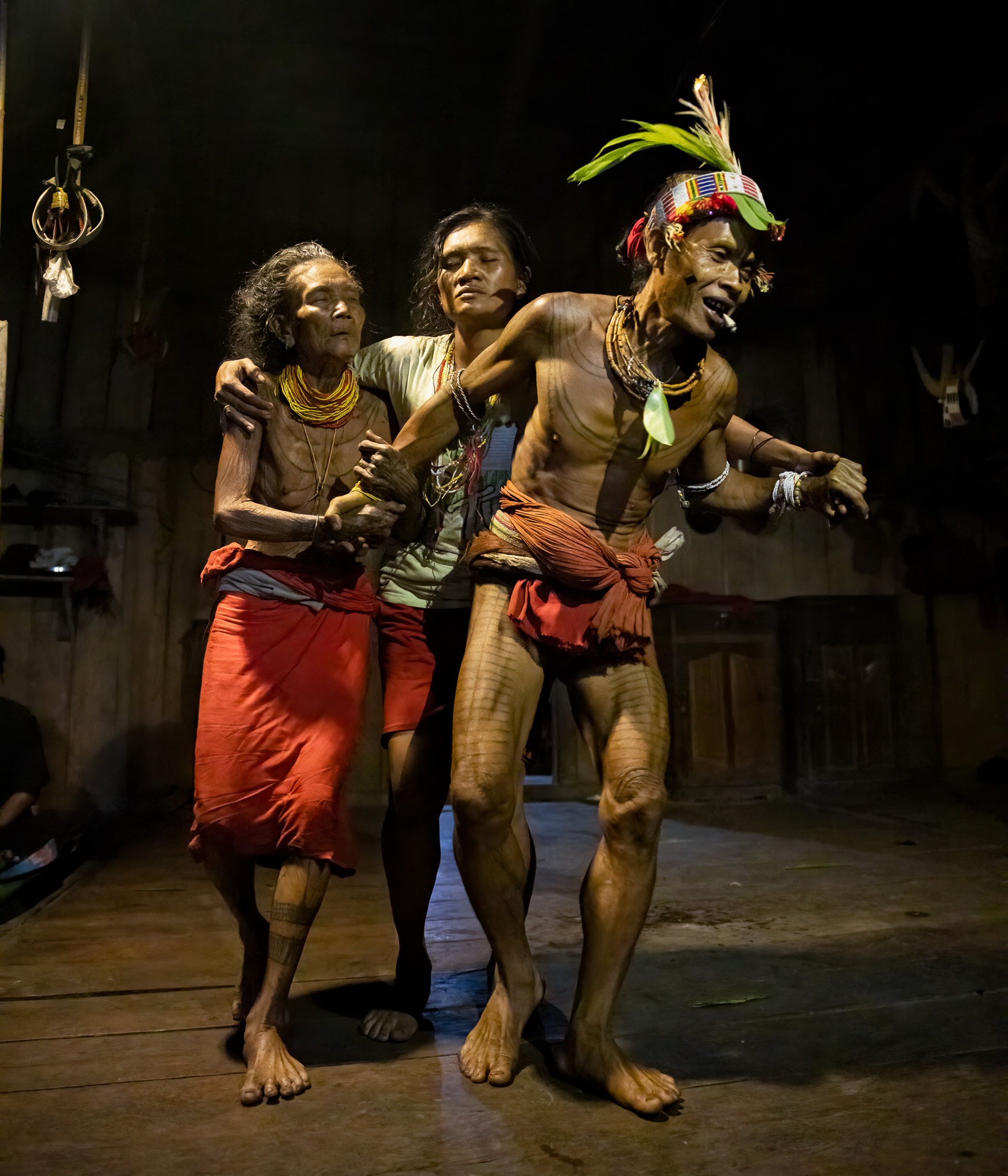
When the presence withdraws, the possessed person often feels weak, empty, or disoriented. The kerei help them recover, fanning them with leaves, offering water, and performing short chants to call their own soul fully back into the body.
Meaning and Purpose
In Mentawai understanding, possession is not an anomaly but a natural expression of the relationships that bind humans, ancestors, forest spirits, and the unseen. Through these moments, spirits reaffirm their presence, offer guidance, reveal imbalance, or extend protection and healing.
Possession reminds the community that the world is layered and alive — that the boundary between seen and unseen is porous, dynamic, and deeply relational.
When a person enters trance, their body becomes a vessel through which invisible voices speak. In this shared moment of presence, connection is renewed, responsibilities are remembered, and the reciprocal bond at the heart of Mentawai life is strengthened once more.
Birth and Early Life Rituals
The Ceremonial Welcome of a Newborn
Birth takes place in the bat sapou of the uma. Other women assist with the delivery, while men are not allowed to be present and usually spend the day away from the uma in a sapou.
For the first few months, the mother devotes herself entirely to caring for the newborn and observes numerous taboos. The father also follows many taboos during this period, and his daily work is limited.
Over the course of roughly half a year, at least six individual ceremonies are held for the newborn.
Pangabella Tasulek
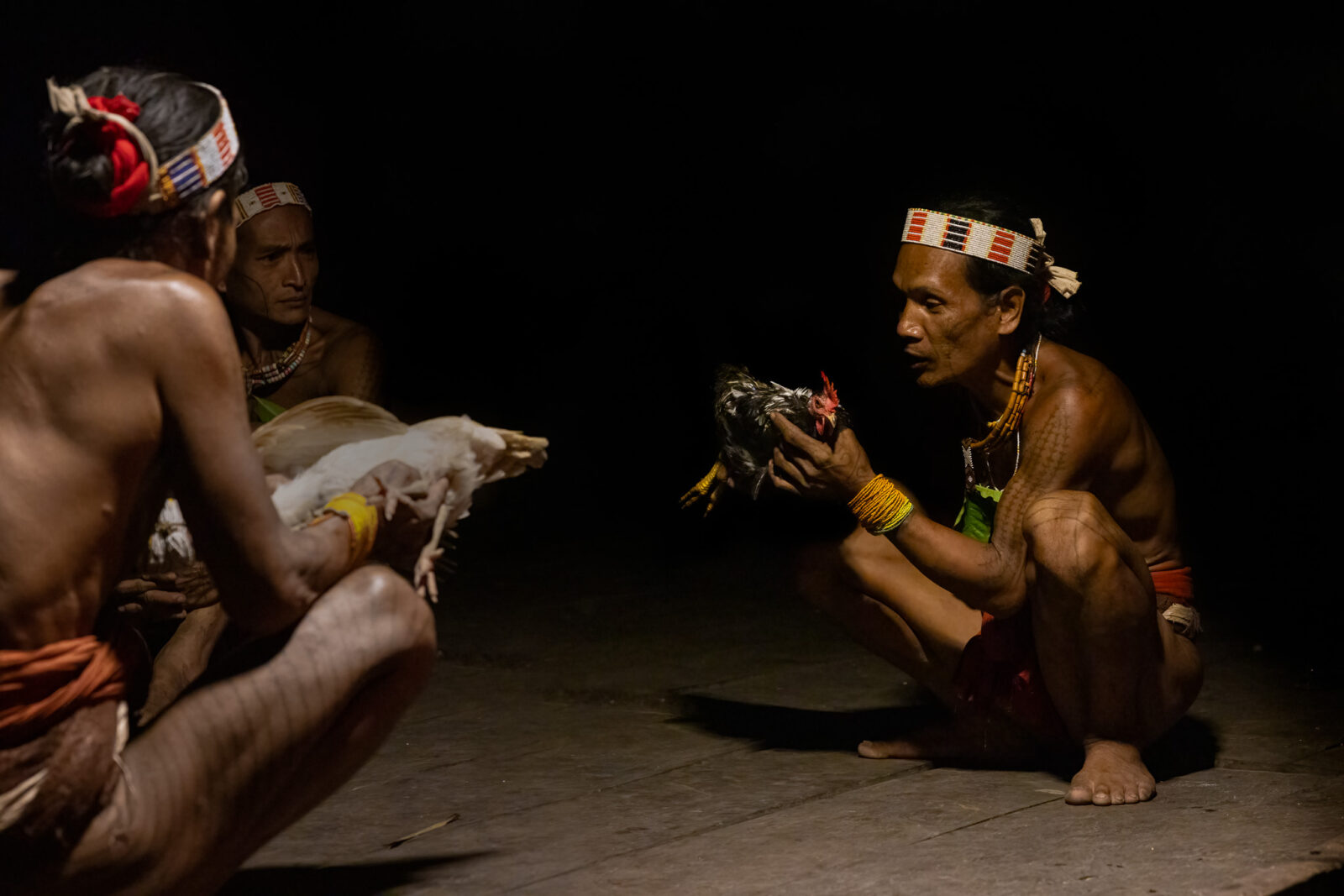
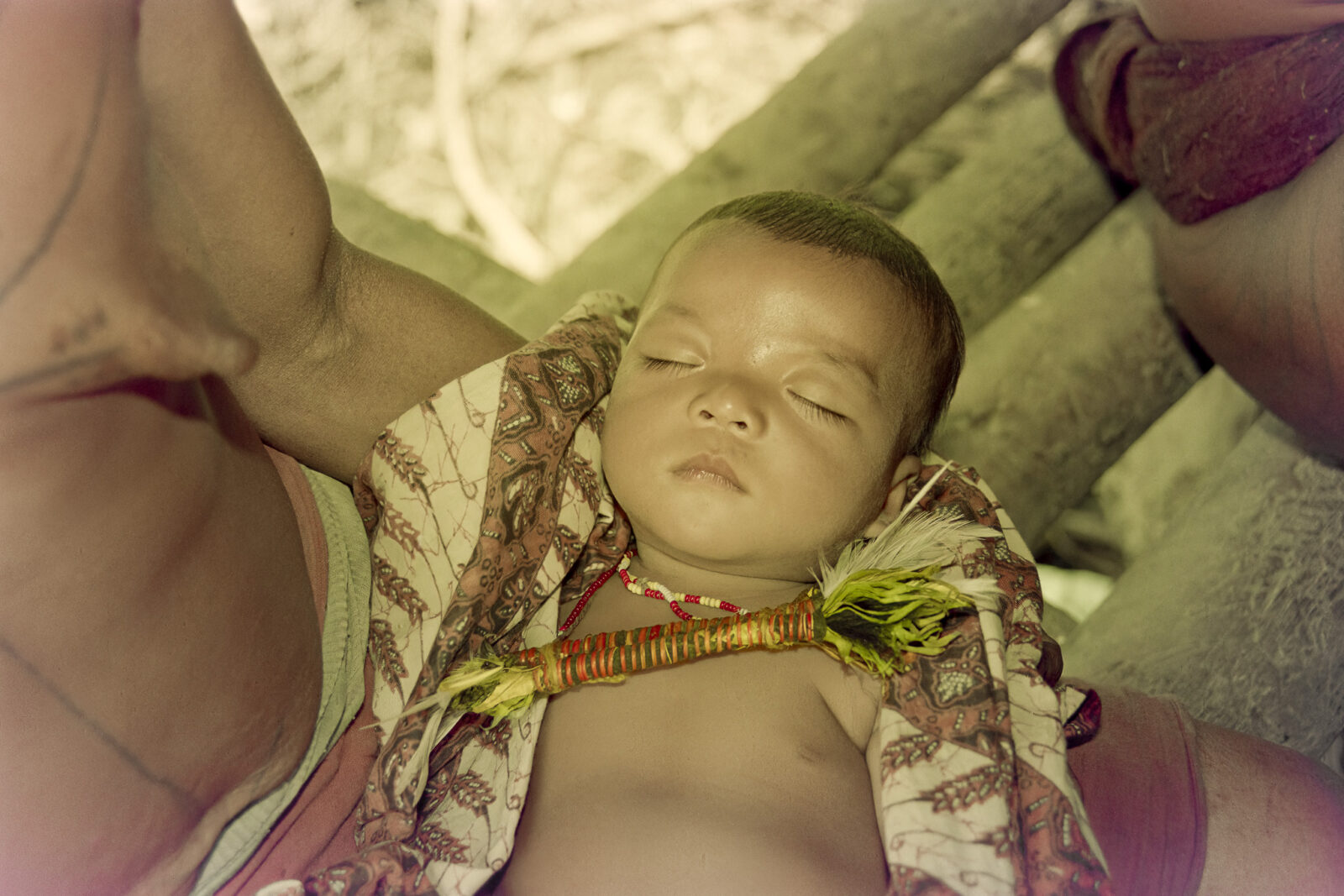
About a week after birth, the newborn is taken out of the bat sapou for the first time. The rimata of the uma leads a small ritual at the bakkat katsaila, sacrifices a chicken, and introduces the infant to the spiritual world. The baby receives a protective fetish necklace and is then taken outside the uma and brought straight to the river for its first bath.
Pangambok
Two days later, the infant is formally given a name. A shaman gently brushes the baby with a chicken while calling out the chosen name, after which the chicken is sacrificed. Acceptance of the name by the spiritual world is then sought through an oracle read in the vein patterns of the chicken’s intestinal membrane. If the signs are unfavorable, the name is rejected, a new one is chosen, and the ritual is repeated.
Abinen
Abinen is held when the child is two to three months old, and marks a child’s first formal step into Mentawai society — the moment they receive their first garment: a loincloth for boys, a tiny skirt for girls. More than a practical introduction to clothing, abinen is a rite of belonging. It welcomes the child into the human world, affirms their place within the uma, and asks the ancestors to guide and protect them as they grow.
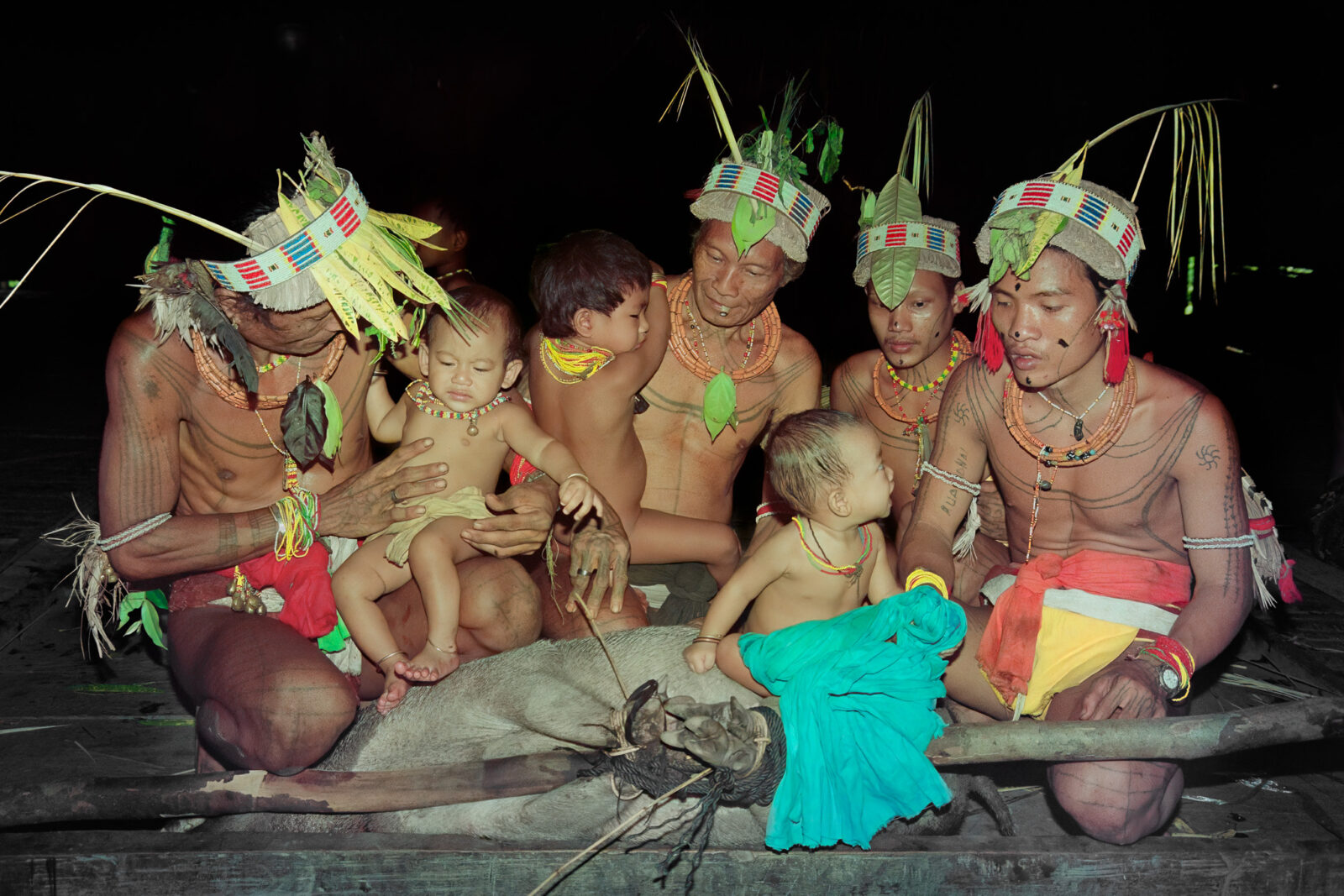
The ritual requires the sacrifice of a pig — a precious offering made so that the child may enter life under spiritual protection. After the animal is sacrificed, members of the community hold its body on a pole above the entrance to the uma’s central hall. A kerei — often the father or an uncle — carries the infant beneath the suspended carcass, together with the small garment. Passing under it symbolizes crossing a threshold: from vulnerability into protection, from newborn solitude into communal life.
The pig is then laid on the floor as a sacred platform. The infant and their garment are placed upon it while the kerei chants, calling the ancestral souls to bless the child with strength, clarity, and a safe, steady passage into the world of humans.
Through Abinen, a newborn becomes not only clothed, but recognized — by family, ancestors, and the unseen realm that shapes each Mentawai life.
Sogune Tasulek
After Abinen, another ritual is held to release the mother from the obligation of devoting herself exclusively to the newborn, lifting some taboos, and allowing her to resume normal daily tasks.
This ritual takes place on the sacred dance floor of the uma. It is followed by pagisou, traditional fishing, especially for a baby girl, with part of the catch shared with the infant.
A traditional hunt, dourou tasulek, follows. Hairs from the animals caught are used to make a new protective fetish necklace for the infant.
Pangekket Siagau Rao
Usually this newborn ritual takes place when the child is about five to six months old, although there is no fixed timeline and the ritual may also be held before Abinen.
As part of the ceremony, a wild bird must be caught using latex from a specific tree as a natural adhesive. The sticky latex is applied to a small baited branch, and when a bird is caught, it is boiled. Some of the cooking water is then given to the infant to drink and is also used for a symbolic bath. Once this act is completed, the father is free to fully resume his work, and most remaining taboos are lifted.
Pasi Leilei
The last ritual involves a traditional hunt, during which a joja langur must be caught. Hair from the monkey is added to a protective fetish necklace made for the child, and for a boy, a small bow and arrows are also crafted. A celebration follows, marking the completion of the infant’s ceremonial arrival as a full member of the uma.
Pangurai: Wedding Ritual
A Union of Hearts, A Bond Between Clans
Marriage among the Mentawai begins with personal choice. A young man and woman decide for themselves whom they wish to marry, and only then do their families join the process. What follows is not a transaction but the weaving of relationships between clans.
Once the couple expresses their intention, the groom’s family visits the bride’s uma to discuss the surat mone — the agreed exchange of gifts that honors the bride’s lineage. These offerings typically include fruit trees, sago patches, pigs, and cast-iron pans — symbols of generosity, respect, and a commitment to long-term connection.
In the days before the wedding, rituals unfold in both uma. Ancestors are informed, and taboos are observed to ensure harmony for the couple’s transition. On the wedding day, the groom, his mother, and the bride — their bodies painted with yellow turmeric (kiniu) — are adorned with necklaces of glass beads, fresh flowers, the luat – the shaman head-band – and a striking plant-fiber headdress dyed bright yellow.
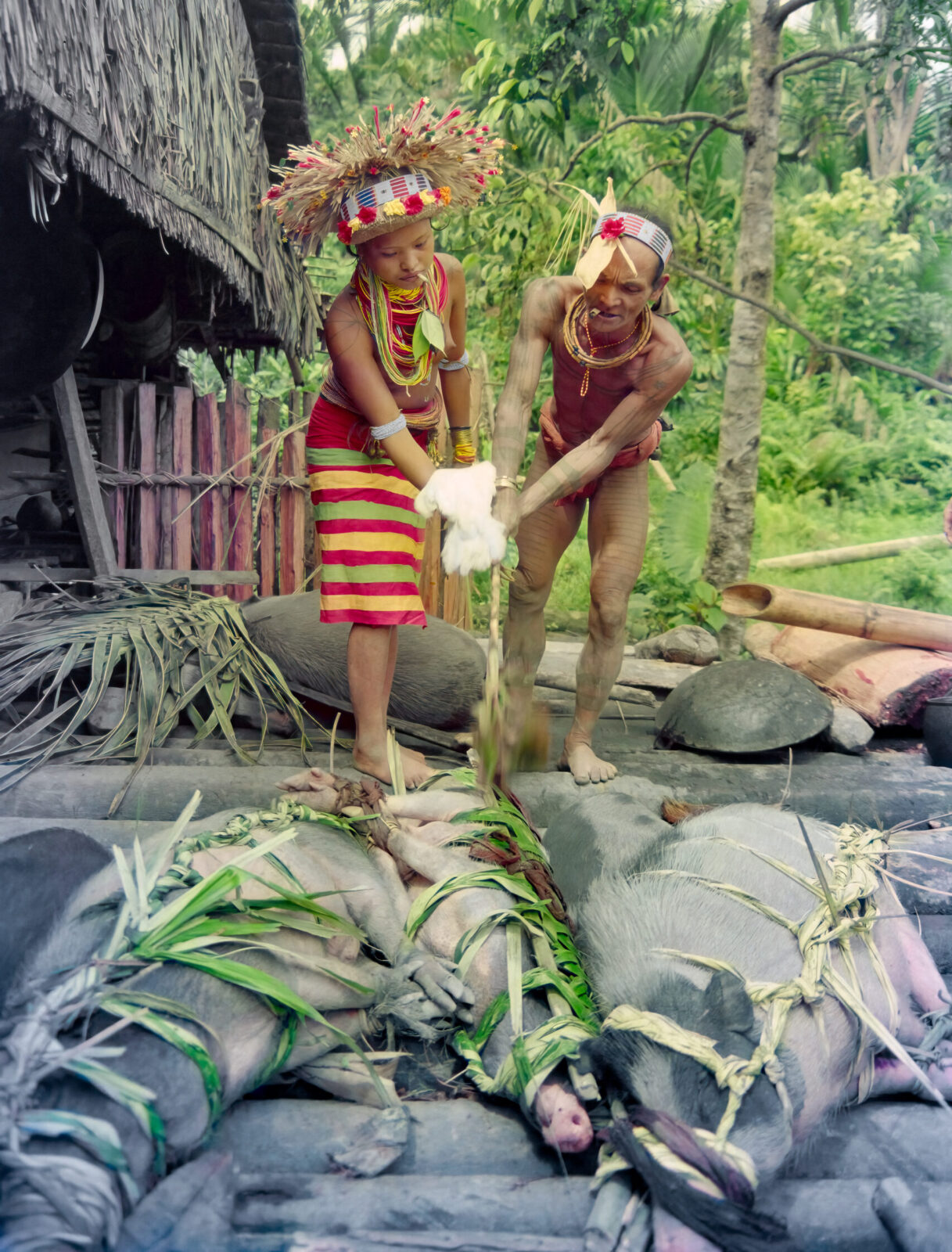
At the heart of the wedding lies the sacrifice of pigs. With the guidance of the rimata, the bride and groom bless the animals, asking the spirits for approval and protection. Their shared offering demonstrates unity, responsibility, and readiness to stand together before both the human and unseen worlds.
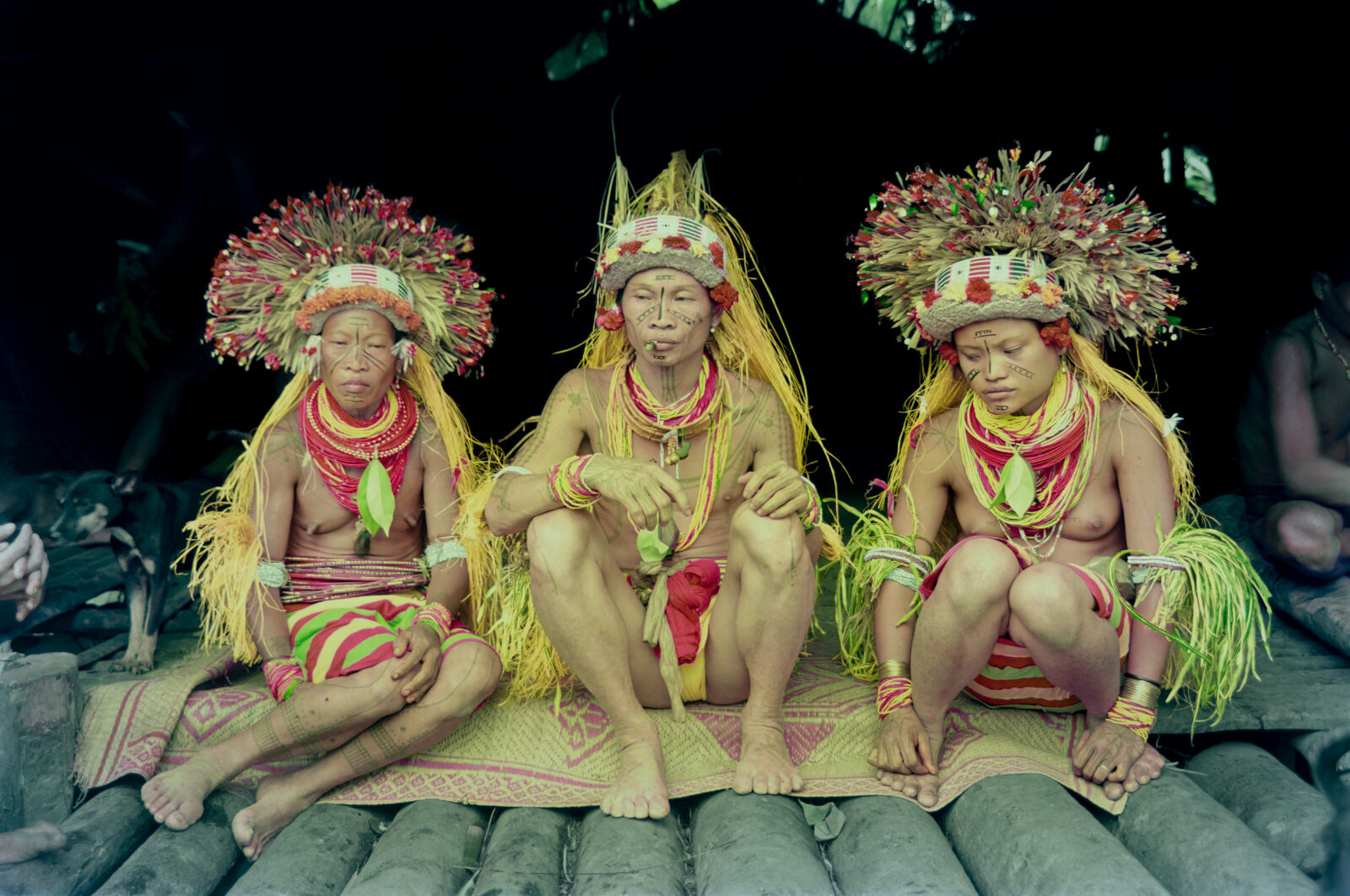
After the sacrifices and blessings, the bride leaves her family’s uma in a celebratory procession, with the bride, groom, and his parents each carrying a live chicken. Walking with her husband and his kin to her new home signifies not only the joining of two hearts, but the strengthening of bonds between entire clans.
A Mentawai wedding is at once intimate and communal, joyful and sacred — an affirmation that the new couple will carry harmony, generosity, and spiritual balance into the next generation.
PUNEN Kamateijat: Death RITUALS
Passage, Mourning, and the Memory Rooted in Wood and Earth
Among the Mentawai, death is not an end but a passage — a movement of the soul from the world of the living to the realm of the ancestors. The transition begins long before the final breath.
When the soul starts to drift from the body, a person grows weak. The kerei try to restore balance with ritual gestures, offerings, and soft whispered chants — gentle efforts to call the soul home. But when the wandering spirit feels more at ease among its ancestors, and has shared a meal with them, it is time to die.
Announcing DEATH
When life departs, the passage must be announced. Family members strike the tuddukat — the specific rhythms signal the sex of the deceased; the length of the beating reveals the age. For young people or infants, the tuddukat is played only briefly; for elders, the beating continues long and slow. Each uma has its own set of drums, slightly different in size and tone, giving every household a distinct and recognizable sound.
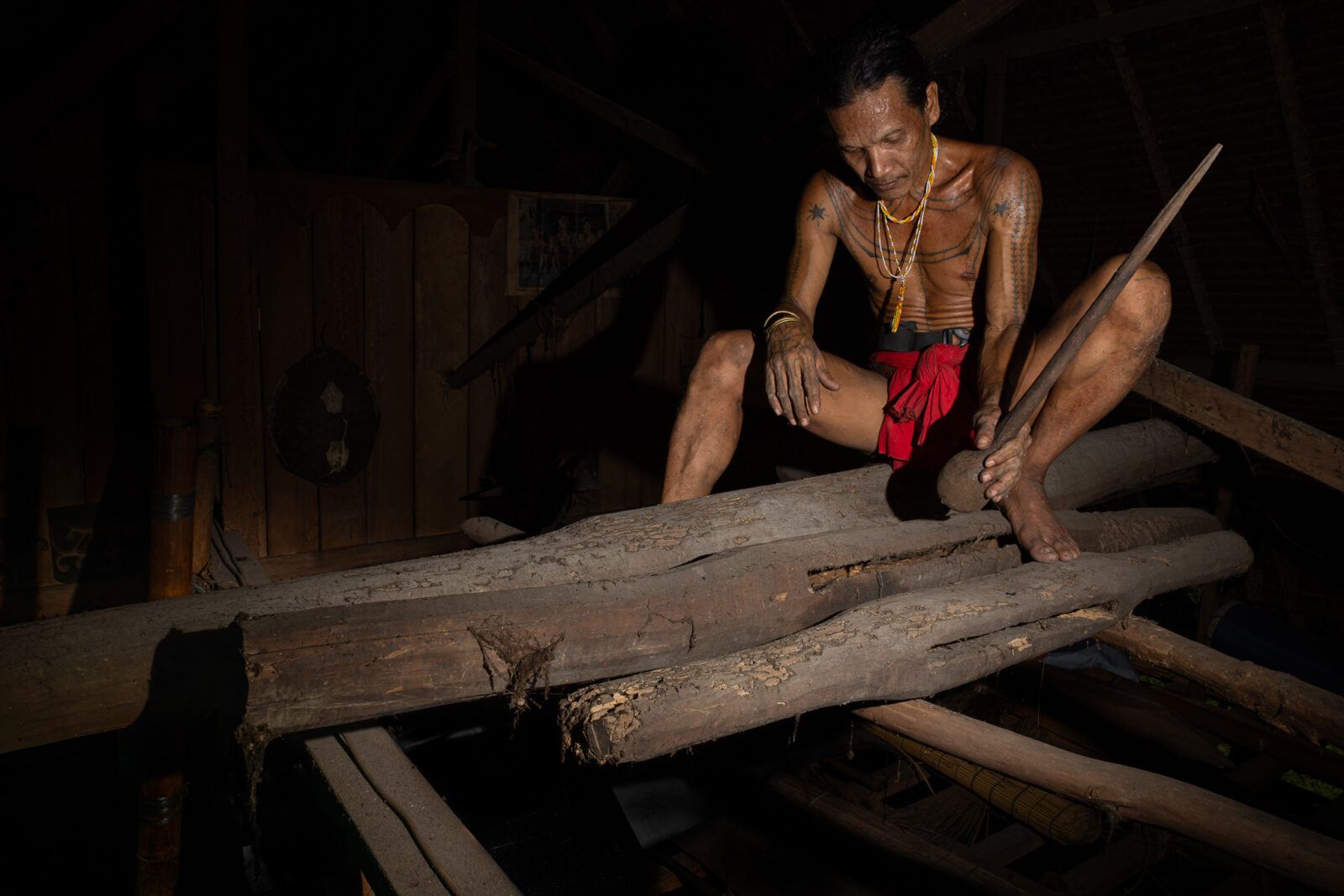
Those who hear the tuddukat gather at the uma: relatives, neighbors, and allied clans. They come to mourn, to remember, and to support the soul on its journey.
In the hours that follow, the family prepares what will be needed for the memorial after burial.
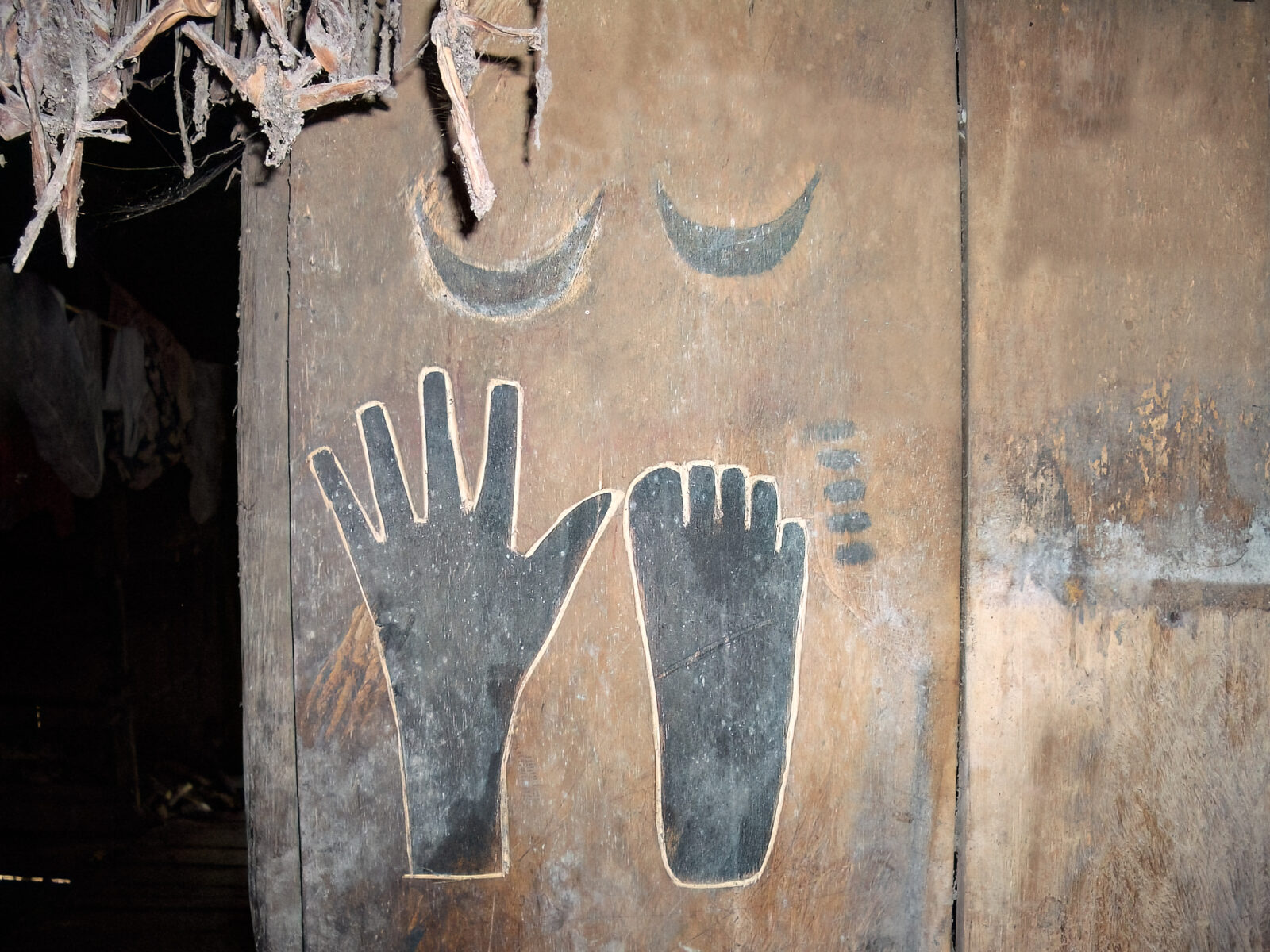
The dried base of a sago palm leaf is cut and shaped into the outlines of the deceased’s hand and foot, to serve as sacred templates.
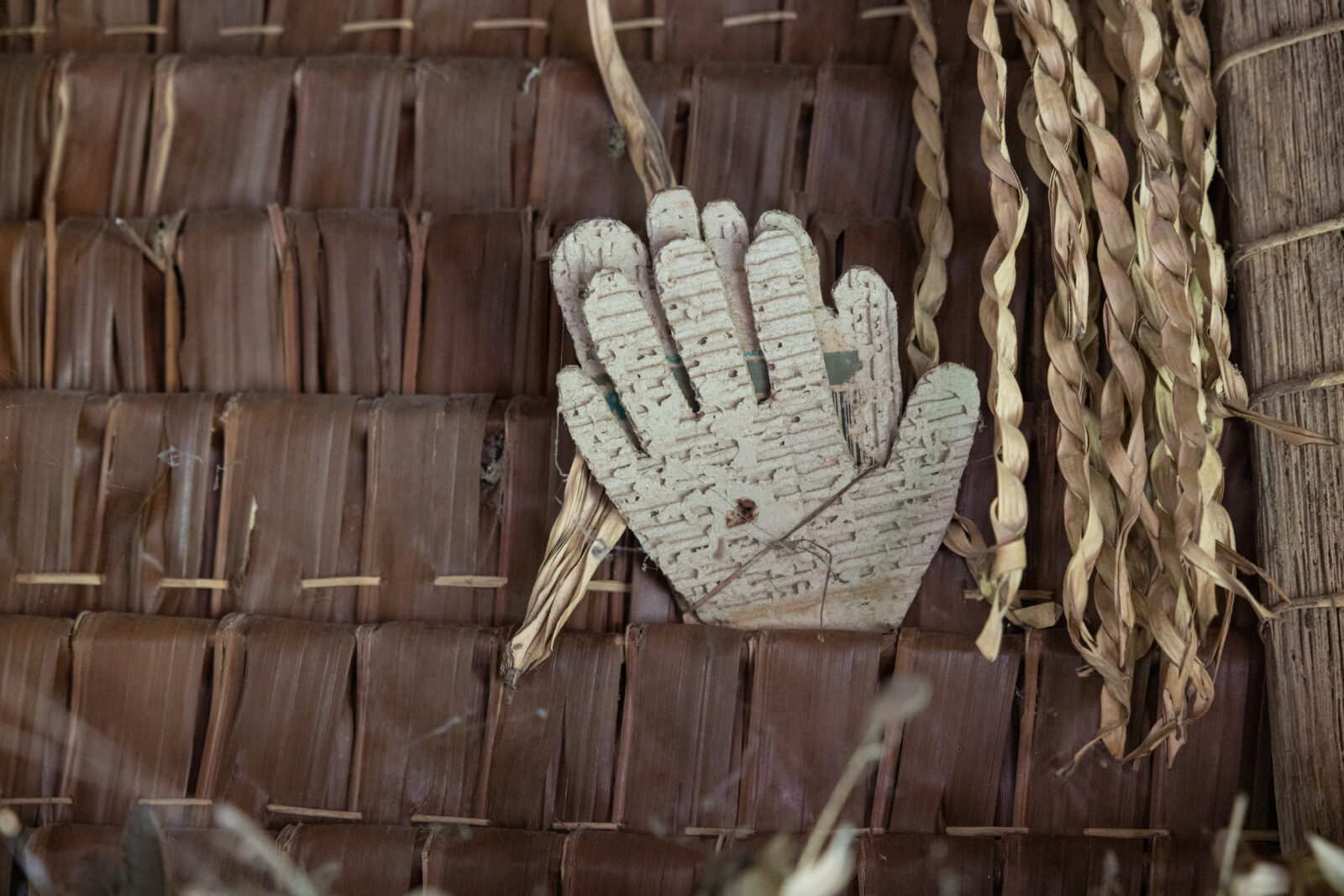
Specific ritual plants are collected and cut into six sticks, each trimmed to represent the height of different parts of the body — ankle, knee, waist, chest, neck, and crown.
Burial and the Vigil
Burial usually takes place the next day.
In earlier generations, the deceased were laid above ground in a canoe-coffin, resting on a platform beneath a towering tree — lifted toward the sky, closer to the realm of souls. Today, burials most often take place in the earth, but the reverence remains unchanged.
The body is wrapped, adorned, and blessed. The kerei guide the process with chants and ritual gestures, ensuring the soul departs gently and without obstruction.
Panunggru: Mourning
The community enters a mourning period of one hundred days — a time of restraint, quietness, and deep respect.
During this time, life in the uma becomes subdued. Only essential work is carried out, while unnecessary tasks and noisy activity are put aside. The household moves quietly and deliberately, giving space for grief and allowing the soul of the deceased to detach and settle among its ancestors.
Family members remove all body adornments, and the men closest to the deceased let their hair hang loose, tying it only lightly halfway with a piece of white fabric. A widow or widower also wears a white textile band around the head.
Some mourners cut their hair according to kinship and traditional obligation:
Close family members trim the ends of their hair straight.
A wife cuts her hair straight across the forehead when her husband dies.
A mother cuts her hair diagonally across the left forehead when a child dies.
These acts express love, loss, and the painful severing of earthly ties, marking the family’s visible passage through grief.
A canoe belonging to the family is also ritually altered — a powerful Mentawai expression of loss.
When a husband dies, the wife cuts a piece from the head of the canoe (utet abak) — a sign that she has lost the head and guide of her family.
When a wife dies, the husband cuts a piece from the back of the canoe (muri abak) — a sign that he has lost his companion in life.
When a child dies, the parents cut a piece from the side of the canoe (tok-tok abak) — a sign that they have lost a part of their family.
These acts do not damage or harm the canoe. They transform it — marking grief on an object central to daily life and mobility, ensuring the memory of loss travels with the family through river and forest.
Meanwhile, the names of the parents of a deceased child, as well as those of a surviving spouse, are changed, because calling the name of someone who has died is taboo.
Takep & Kirekat
Carved to Remember — Marks of the Departed
During the first days of mourning, the family creates a lasting memorial — a union of carving, planting, and remembrance that anchors the spirit to both forest and the uma.
in the forest
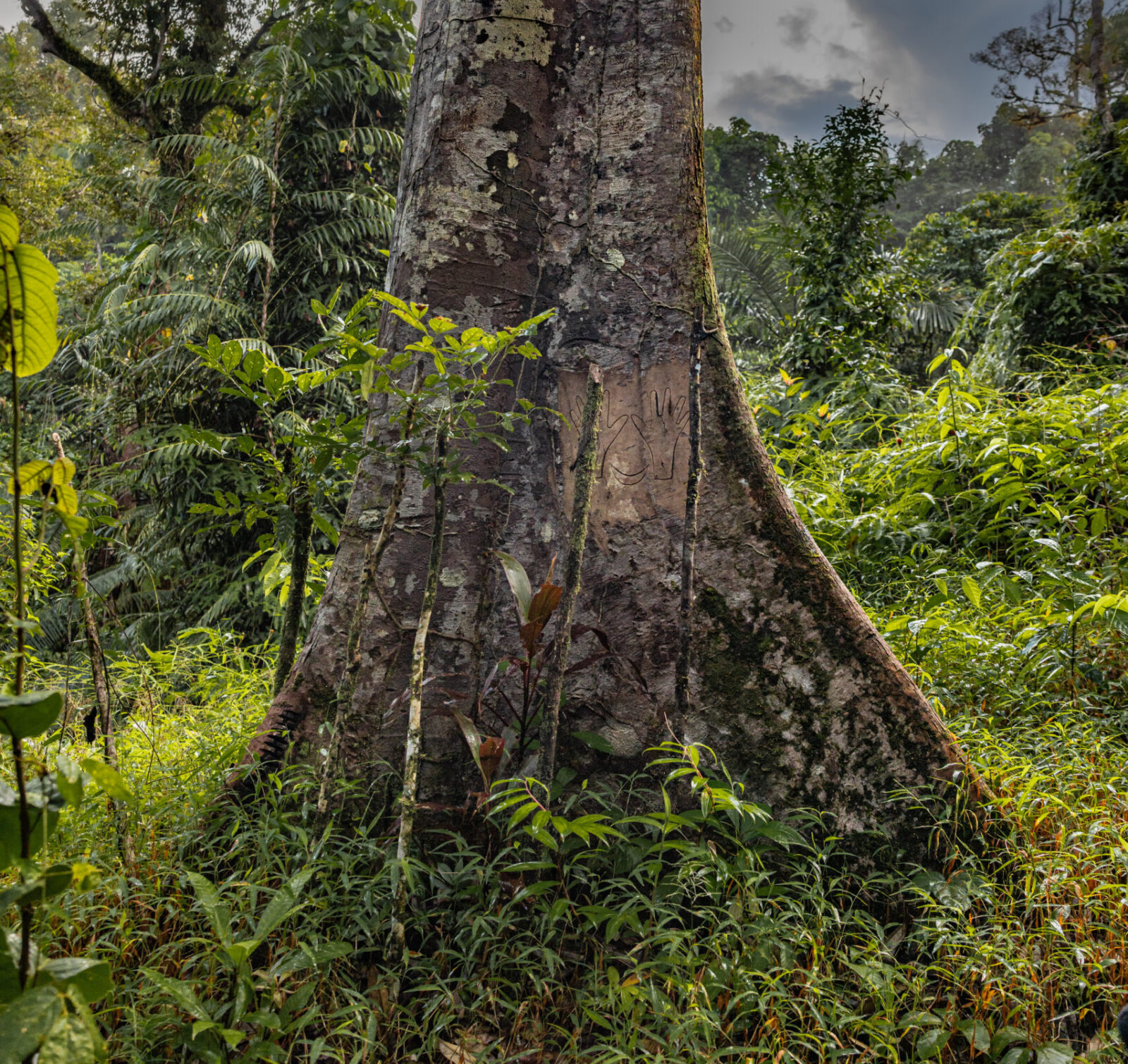
Using the earlier cut-out templates, a kerei from the family carves a takep — the outline of the deceased’s hand and foot — onto a large durian tree belonging to the family.
This tree becomes the central pillar of remembrance.
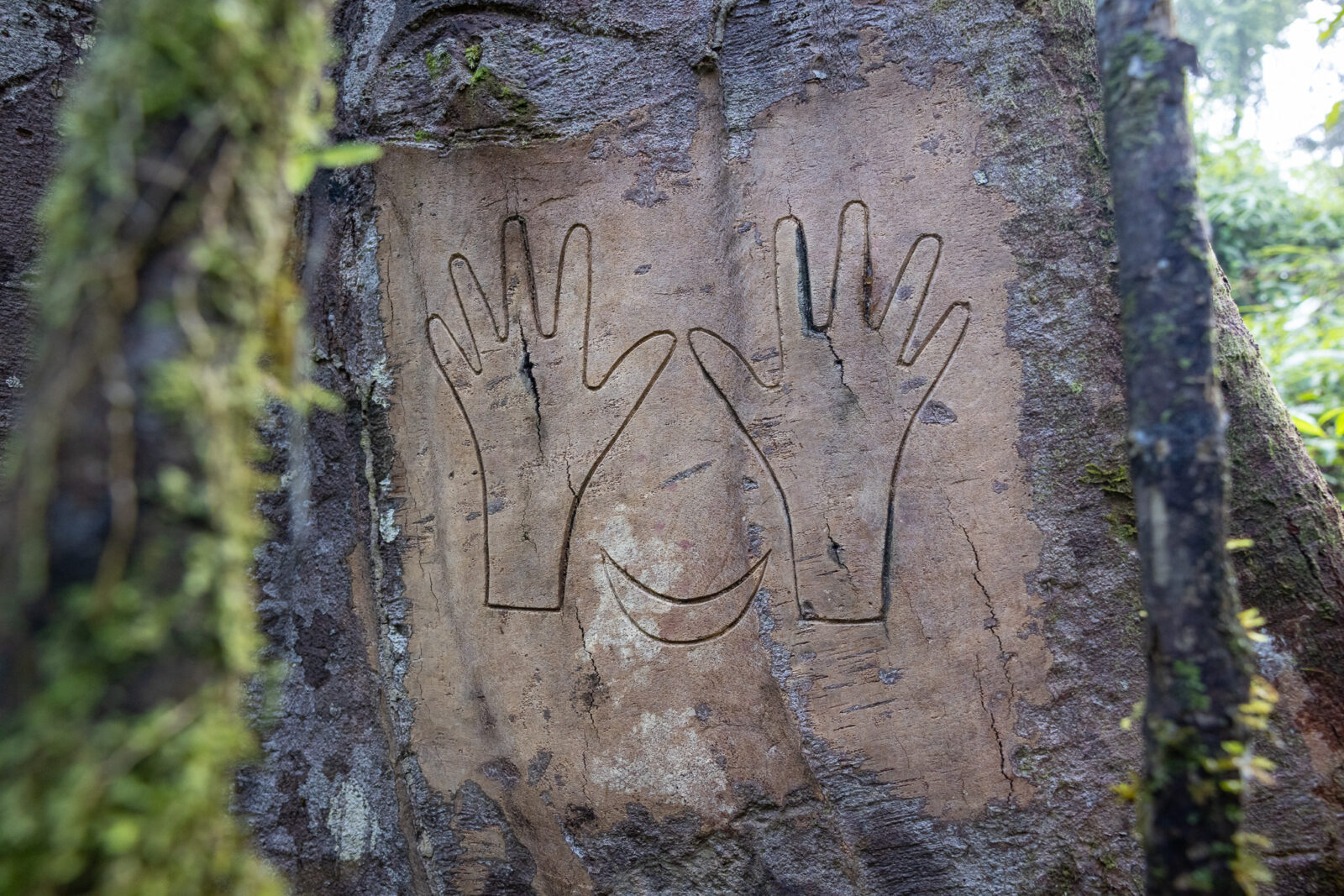
At the base of the durian tree bearing the newly placed takep, the kerei plants six ritual cuttings known as kirekat, each prepared earlier and matched to the height of a different part of the deceased’s body. The cuttings take root and grow into ornamental plants that sanctify the site.
As they flourish, the tree becomes a living memorial, permanently adorned and never to be felled. It stands as a guardian and a testament—a rooted remembrance of one who has passed into the unseen world.
IN the Uma
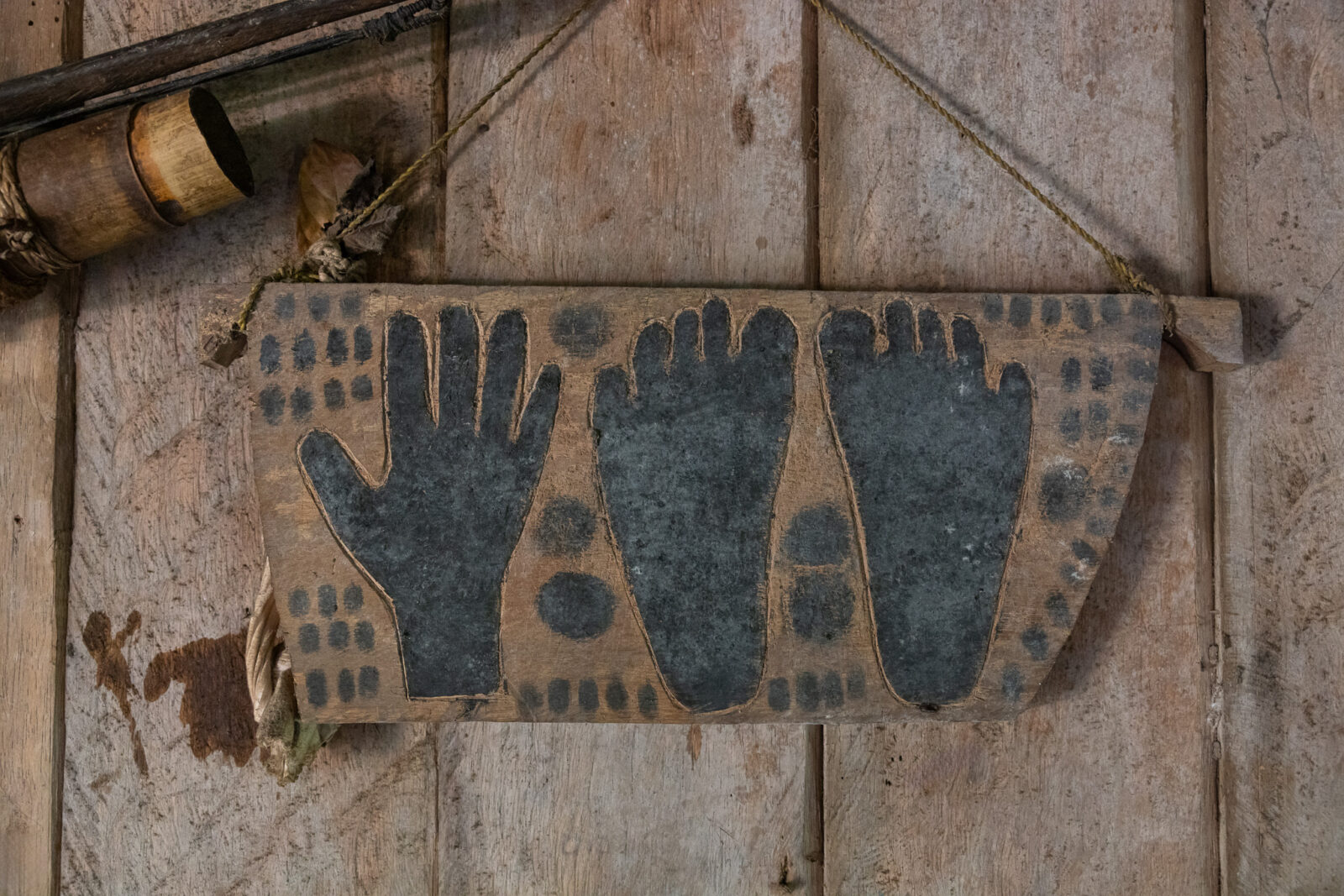
A second takep is often carved inside the uma, on the back wall of the first inner room, and darkened with soot so that its outline stands out.
Today, this carving is often placed on a removable wooden plank so it can be carried to a new house when the old uma is abandoned or rebuilt — ensuring memory and spirit move with the family.
Together, the takep and kirekat fix the memory of the departed in both the forest and the home, inscribing presence into the places where they lived and loved.
Pa’eruk
Cleansing and Reconciliation — the End of Mourning
When the hundred days of mourning come to an end, the family and clan gather for the great pa’eruk ceremony. Through chants, offerings, and acts of purification, the community affirms the complete passage of the deceased’s soul, releases any remaining imbalance, and invites the spirit to join the ancestors in peace. In doing so, harmony between the living and the unseen world is restored. For the first time since death, the soul is called into the ritual — not to return, but to acknowledge its new place in the spiritual realm and to reconcile with those who remain.
Pa’eruk reconciles human and spiritual worlds after a period of rupture.
It is both closure and renewal — a reaffirmation that life may continue in balance, watched over by a new ancestor in the unseen.
Shamanic Healing
Restoring a Disturbance of Relationships
For the Mentawai, health is never purely physical. It is a condition of balance: between body and soul, humans and animals, ancestors and forest spirits, the living and the unseen. Illness arises when this balance is disturbed — when a soul wanders, an ancestor feels neglected, a taboo has been broken, or an unseen force has entered the household.
The kerei is the mediator in these moments. His task is not simply to treat symptoms, but to understand where relationships have frayed and to restore harmony so the body may recover its strength.
Calling the Soul Back
One of the most common causes of illness is the distant wandering of the soul. A frightened soul may flee during a fall or accident; a grieving soul may drift toward the ancestors; a weary soul may simply wander too far from the body.
The kerei sings softly, ringing his bells as he calls the soul to return. His chants travel across the threshold between worlds. Sometimes he follows the soul in vision, guided by ancestral spirits who reveal where it is hiding. When he finds it, he persuades it gently, promising safety, comfort, and renewed harmony in the uma.
Dialogue With Spirits
When illness is caused by an aggrieved spirit — a disturbed forest being, a neglected ancestor, or an offended animal soul — the kerei’s work becomes a negotiation.
He makes offers through mediators and speaks directly to the unseen presence, asking it to step back from the body it troubles. Through chants and trance, he listens for its response. Sometimes the presence speaks through him; sometimes through a possessed member of the family. The kerei interprets these messages, guiding the ritual toward reconciliation.
The Role of Sacrifice
When words and persuasion are not enough, a sacrifice may be required.
A chicken, or even a pig — not as payment, but as a gesture of respect toward the unseen. Sacrifice restores balance where imbalance has taken root. Its purpose is not death but transformation: a way to reweave the threads that connect humans to the spirit world.
Reconciliation
Shamanic healing is not domination of spirits, nor an attempt to force outcomes. It is reconciliation. When the soul returns, when the spirit withdraws, when fear subsides and balance is restored, the healing is considered complete.
Health, in the Mentawai world, is the natural consequence of harmony.
The kerei simply helps the community find its way back to it.