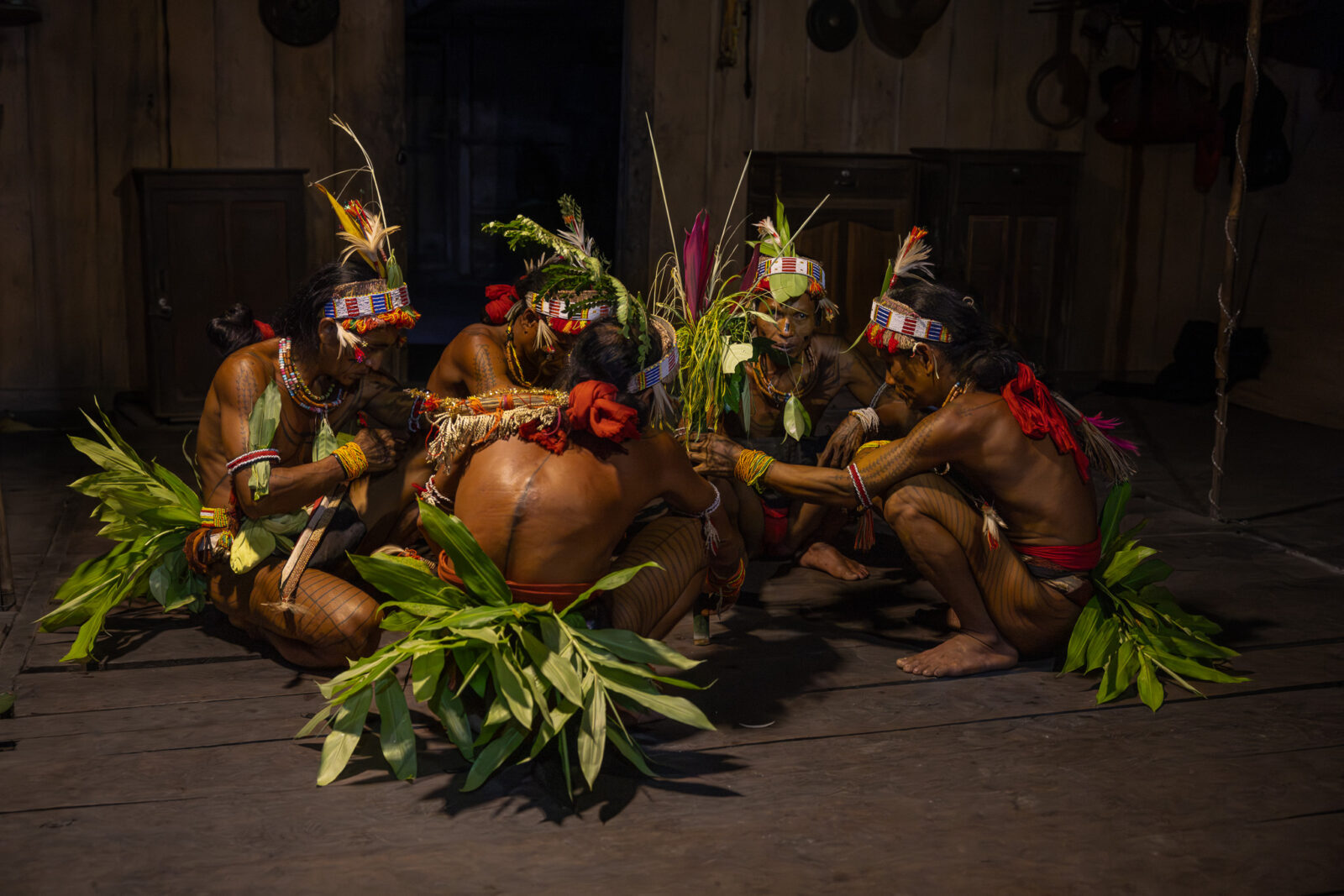
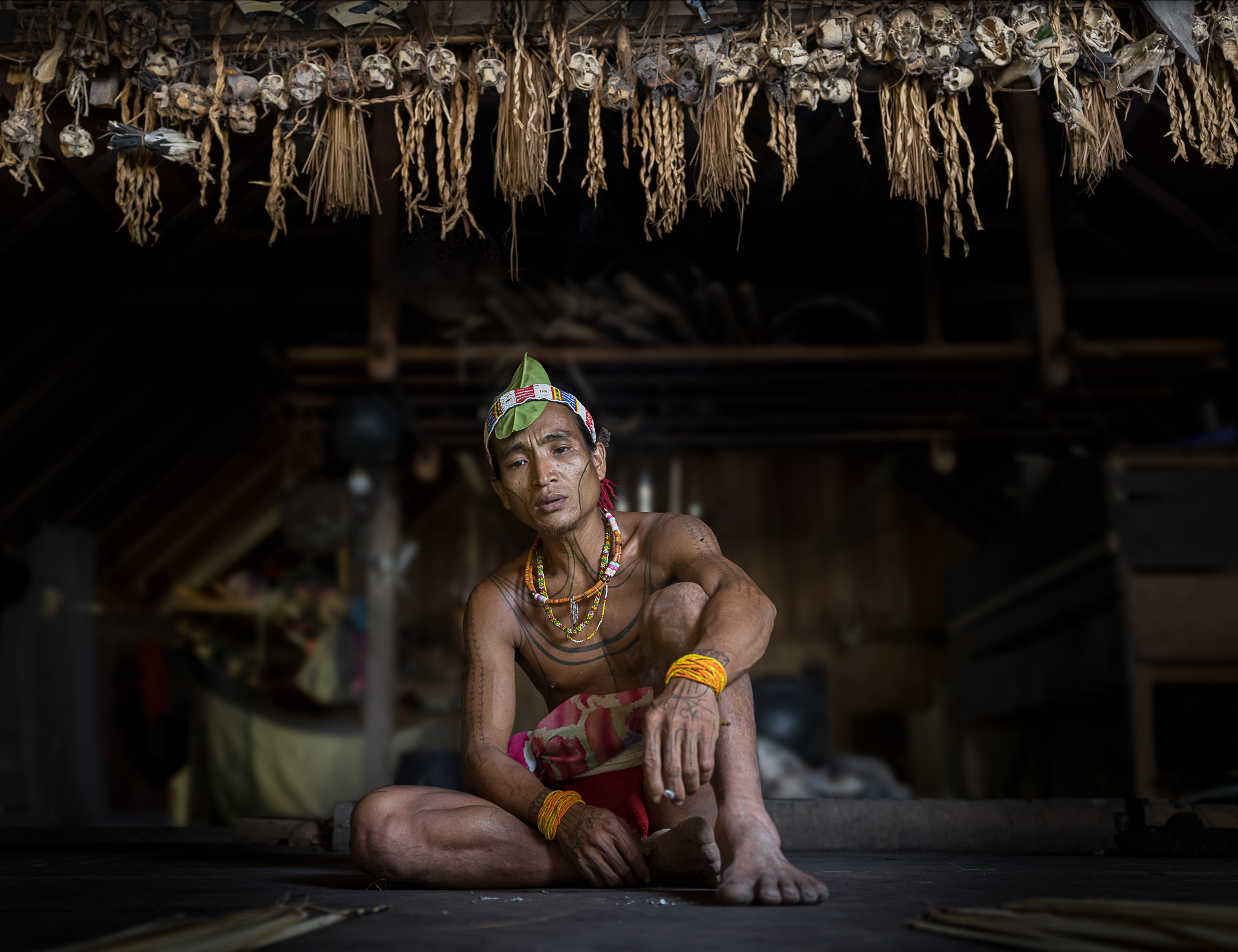
For the kerei, singing is a sacred act. Urai are not performances but spiritual speech — the language that calls ancestors, soothes troubled souls, and guides healing.
Most urai are sung in the ancient shamanic language, known only to kerei and taught during apprenticeship. These songs are a living archive of stories, invocations, and teachings passed orally from master to novice.
In healing, urai summon helping spirits, calm the afflicted soul, and remind it of its home in the body. During initiation rites, the songs weave a pathway through which novices meet ancestral forces. In ceremonies, urai fill the uma with layered, rhythmic voices that signal to spirits that humans are gathered in respect.
Aman Sasali singing a sacred song
No urai is ever sung the same way twice.
Each rendition responds to the moment — its needs, its dangers, its presence of spirits. The melody shifts with breath, emotion, and the movement of dancers. The song becomes a living, adaptive bridge between human intention and the unseen.
In Mentawai belief, to sing is to reach across worlds. Through urai, the kerei speak — and the spirits listen.
Paruak
A Vocal Ritual — Songs of Reunion
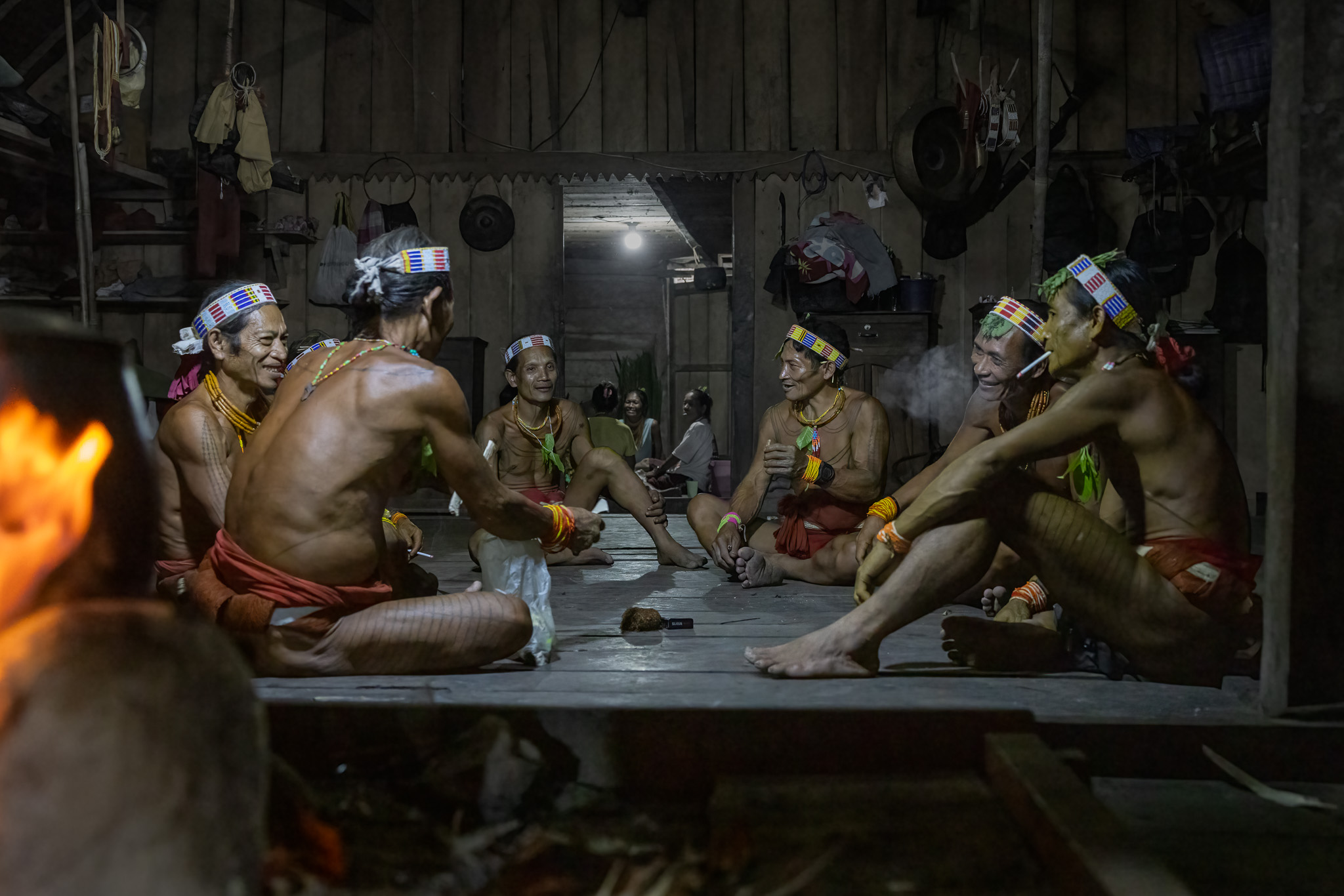
Paruak is one of the most important forms of shamanic singing — performed when shamans visit an uma they have not entered before, or when kerei from different communities meet after long absence.
These songs are acts of purification and reconnection. When visiting shamans enter the uma, they join the resident kerei in long, interwoven chants that may continue deep into the night. Their voices overlap, creating a tapestry of sound that welcomes ancestral spirits, dispels lingering imbalance, and affirms peaceful relations.
A paruak ritual - shamans singing together to strengthen spiritual harmony and balance
Paruak is both dialogue and offering.
It clears the path for collaboration. It resets any tension or unfamiliarity between shamans. It signals to the unseen that these kerei stand together with shared purpose and open hearts.
For the hosts, paruak reestablishes the harmony of their uma. For the visitors, it announces their presence with humility and respect. For the spirits, it is a reminder that humans remember their obligations.
Through paruak, barriers dissolve. Voices braid together. Communities become kin once more.
Turuk & Lajo
Shaman Dances of Invocation and Imitation
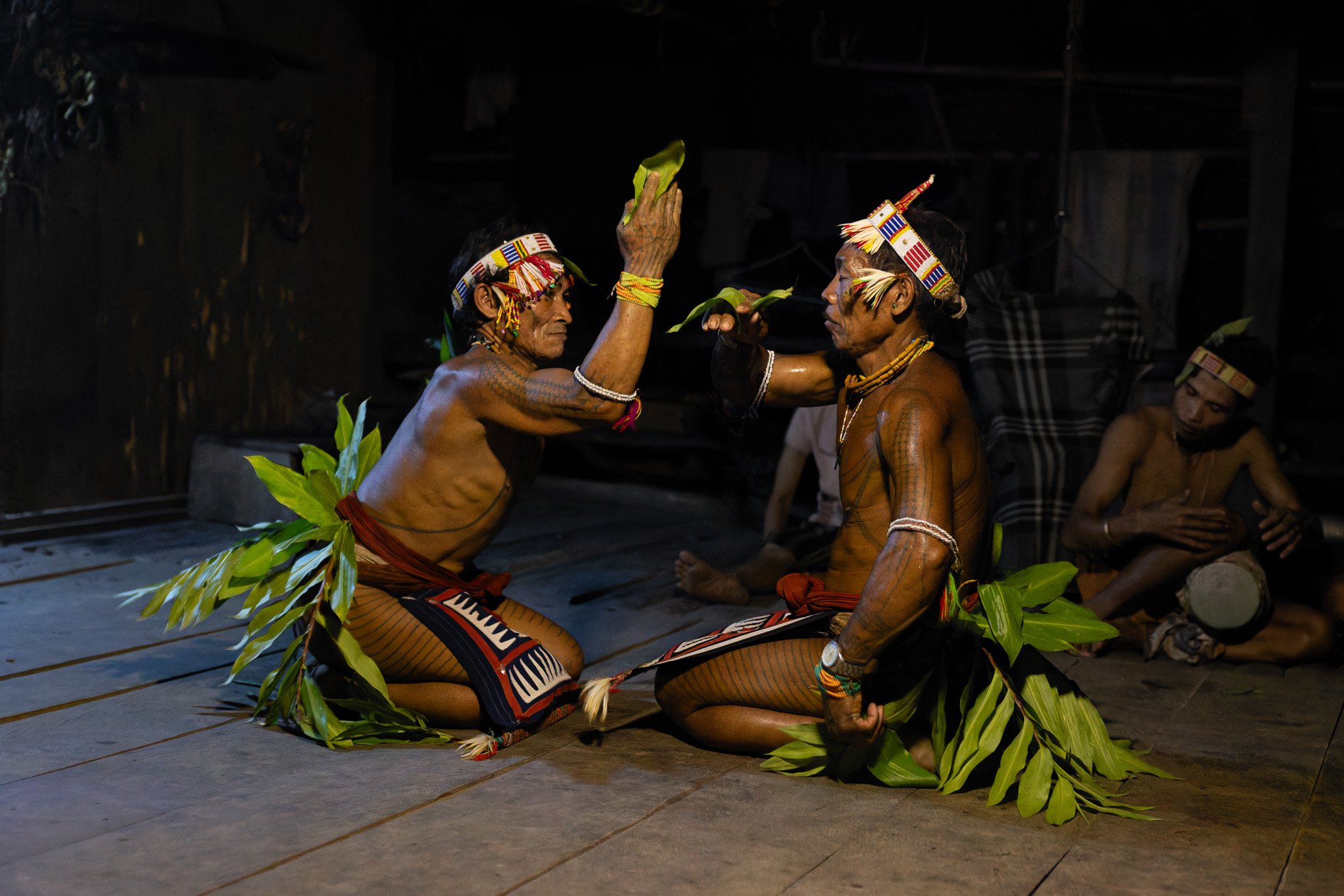
For the Mentawai, dance is not performance; it is a language. Through turuk and lajo, the kerei speak to spirits, honor the forest, entertain the community, and channel ancestral presence.
Turuk — Dances of Imitation
Turuk are dances of mimicry — playful, expressive, yet spiritually grounded.
In turuk, kerei imitate the movements of animals: birds spreading their wings, gibbons swinging through the canopy, butterflies drifting between flowers, cocks fighting over chickens.
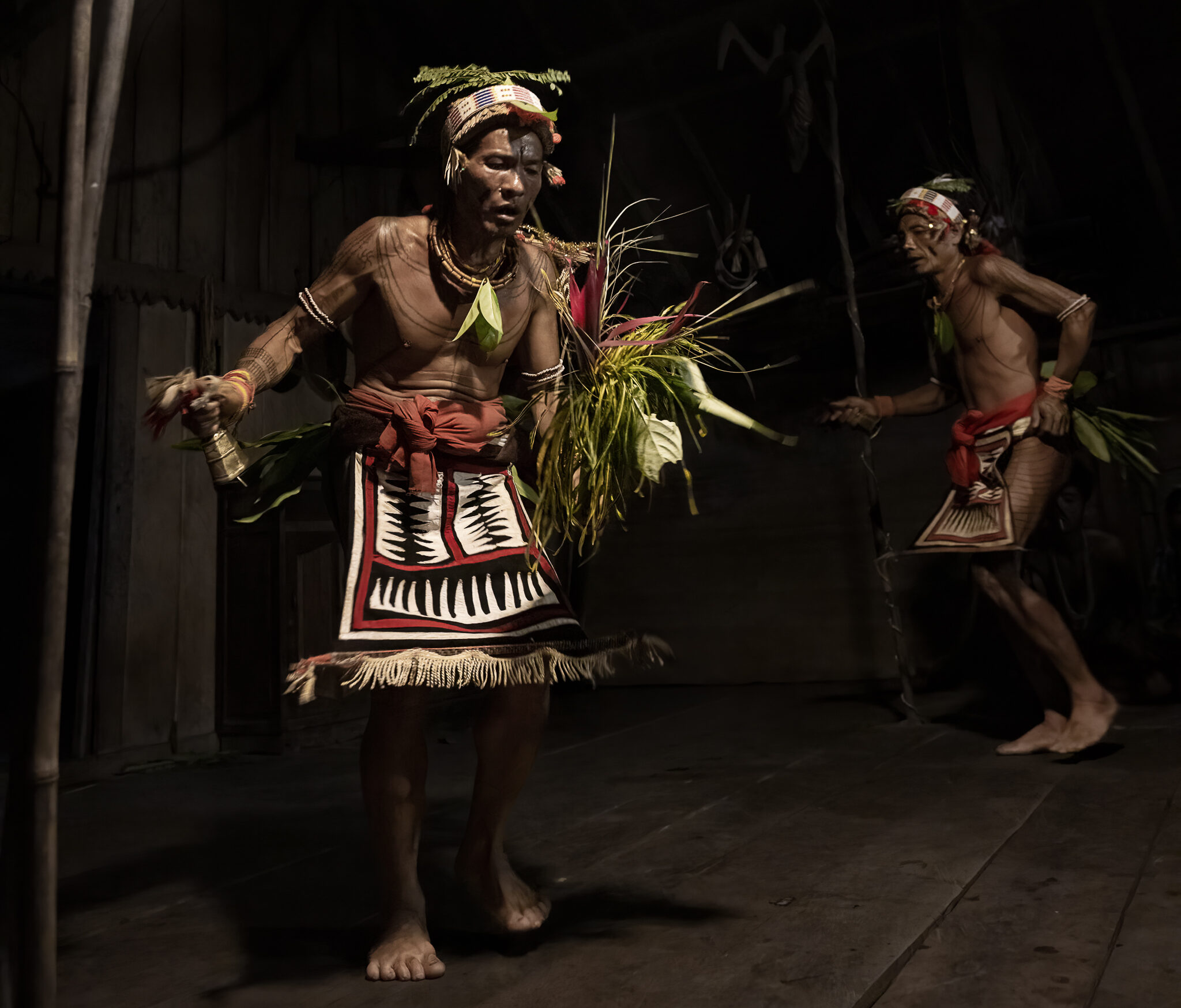
Shamans Aman Raiba and Aman Jagaumanai performing a chicken dance
The purpose of imitation is connection.
By embodying these creatures, the kerei draw on the animal’s qualities — strength, agility, alertness, protection, vitality — and invite these attributes to bless the ritual and those gathered within the uma.
These dances delight the community. Children laugh, women call out in recognition, and elders observe with quiet appreciation. The forest itself seems to echo in the gestures — a reminder that humanity is only one species among many.
Lajo — Dances of Invocation
Lajo, by contrast, are solemn and sacred. They are danced to please the spirits, to summon ancestors, and to negotiate balance between worlds.
Every movement in a lajo is intentional. Hand gestures invite or calm spirits. Footwork strikes the specially built dance floor of the uma, sending resonant vibrations through the house — vibrations that the unseen can sense. The kajeuma drums intensify, their python-skin heads beating out ancestral rhythms that call the spirits closer.
In lajo, the kerei’s moving body becomes an offering.
Leaves and feathers worn as decoration amplify the dancer’s presence, making him visible to the spirits in the way bright plumage makes a bird visible in the forest.
Aman Naru during lajosimagere - inviting the souls to join
Together, turuk and lajo create a complete dialogue — imitation for harmony with nature, invocation for communion with the unseen.
Through them, the kerei maintain balance between the worlds, reminding the community that dance is not entertainment, but a bridge.
Kerei as Healers
Restoring Balance
Among the Mentawai, health is understood as balance — between body and soul, between humans and the forest, between the living and the unseen. When illness appears, it is rarely viewed as physical cause alone. Something has shifted, wandered, or been disturbed.
The kerei are guardians of this balance — healers, mediators, and interpreters of the spiritual landscape.
Understanding Illness
When confronting illness, a kerei looks beyond physical symptoms and works much like a detective, carefully tracing invisible causes. He considers whether the person’s soul —simagere — may have wandered, whether a spirit has been offended, or whether a taboo has been broken. He asks if a harmful bajou, or vital force, has been transmitted through contact with an object, plant, or animal, or if another soul may have influenced the patient during sleep. Each diagnosis is therefore relational — an inquiry into how the patient’s inner life and the surrounding spiritual world have fallen out of harmony.
Healing Through Ritual
The heart of healing is reconciliation.
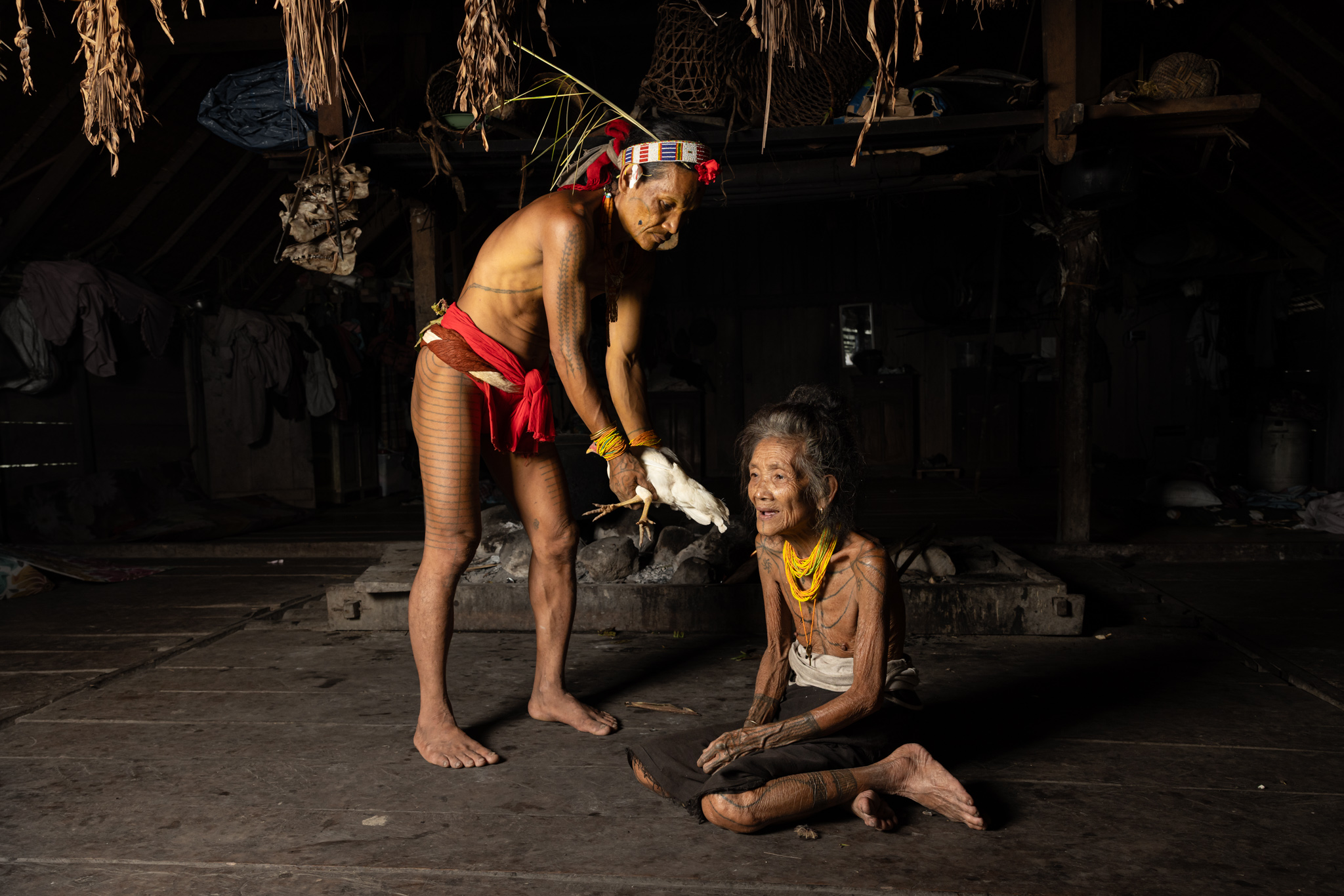
Through chanting, invocations, and offerings, the kerei negotiates with the spirit world to restore balance. He may stroke a chicken along the patient’s body to absorb illness; he may use plants as mediators to send petitions across realms; he may address wandering souls and call them home.
A healing ritual often includes the sacrifice of a chicken or pig, whose soul carries the request into the unseen and returns with a response — later read in the veins of the animal.
Aman Manja striking a chicken against Teteu, to absorb any illness
Healing Through Plants
The forest is the kerei’s pharmacy.
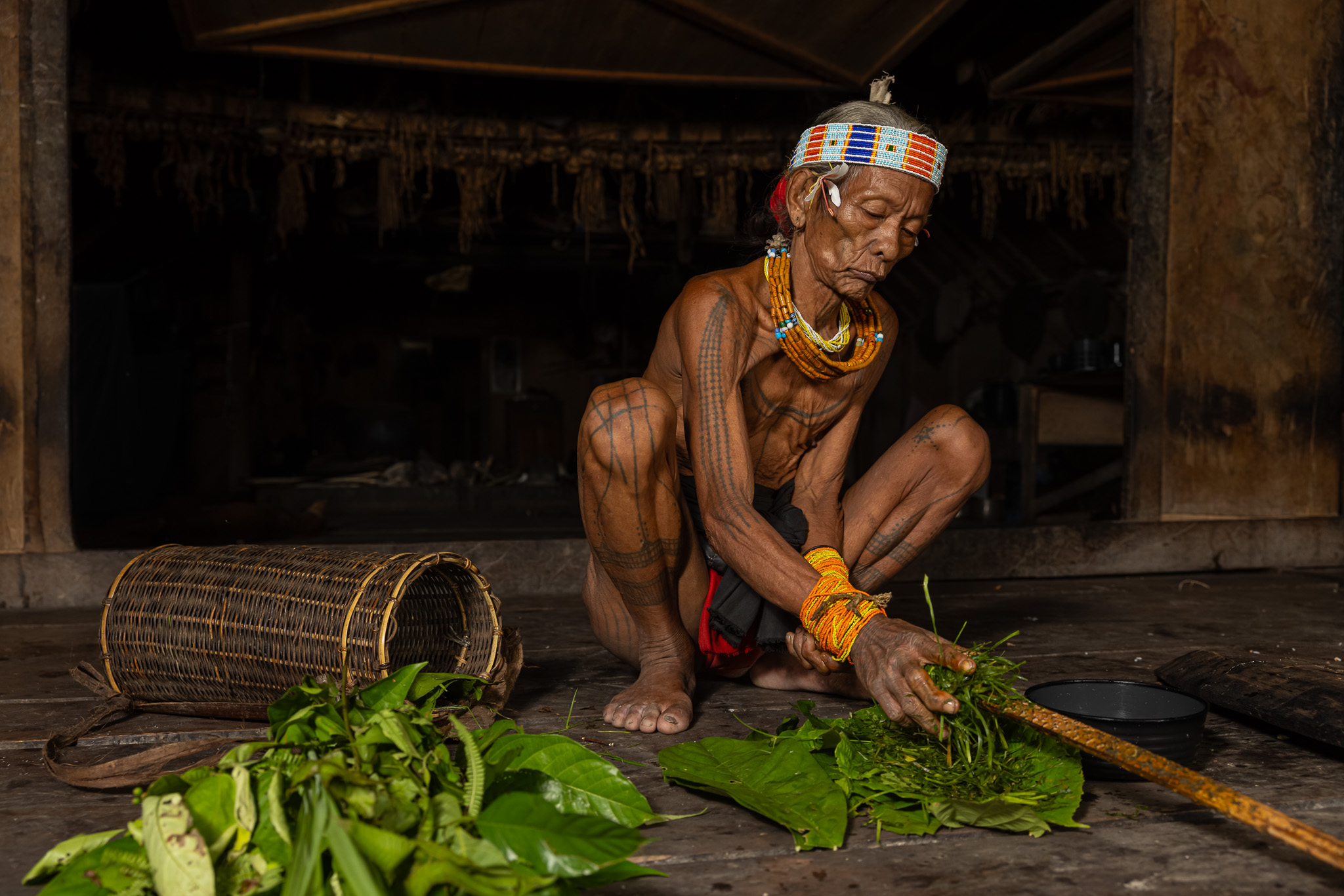
He knows hundreds of medicinal plants — which leaves reduce fever, which roots stop bleeding, which barks calm stomach pains, which vines ease childbirth or muscle strain.
Shaman Teu Nasi Kunen preparing a herbal medicine
These remedies are prepared as poultices, infusions, or compresses.
But plant medicine is never taken casually. Before cutting or picking, the kerei addresses the plant’s soul, explains the purpose, and asks permission. A healing plant works only when its soul agrees to help.
The remedy therefore carries both physical and spiritual potency.
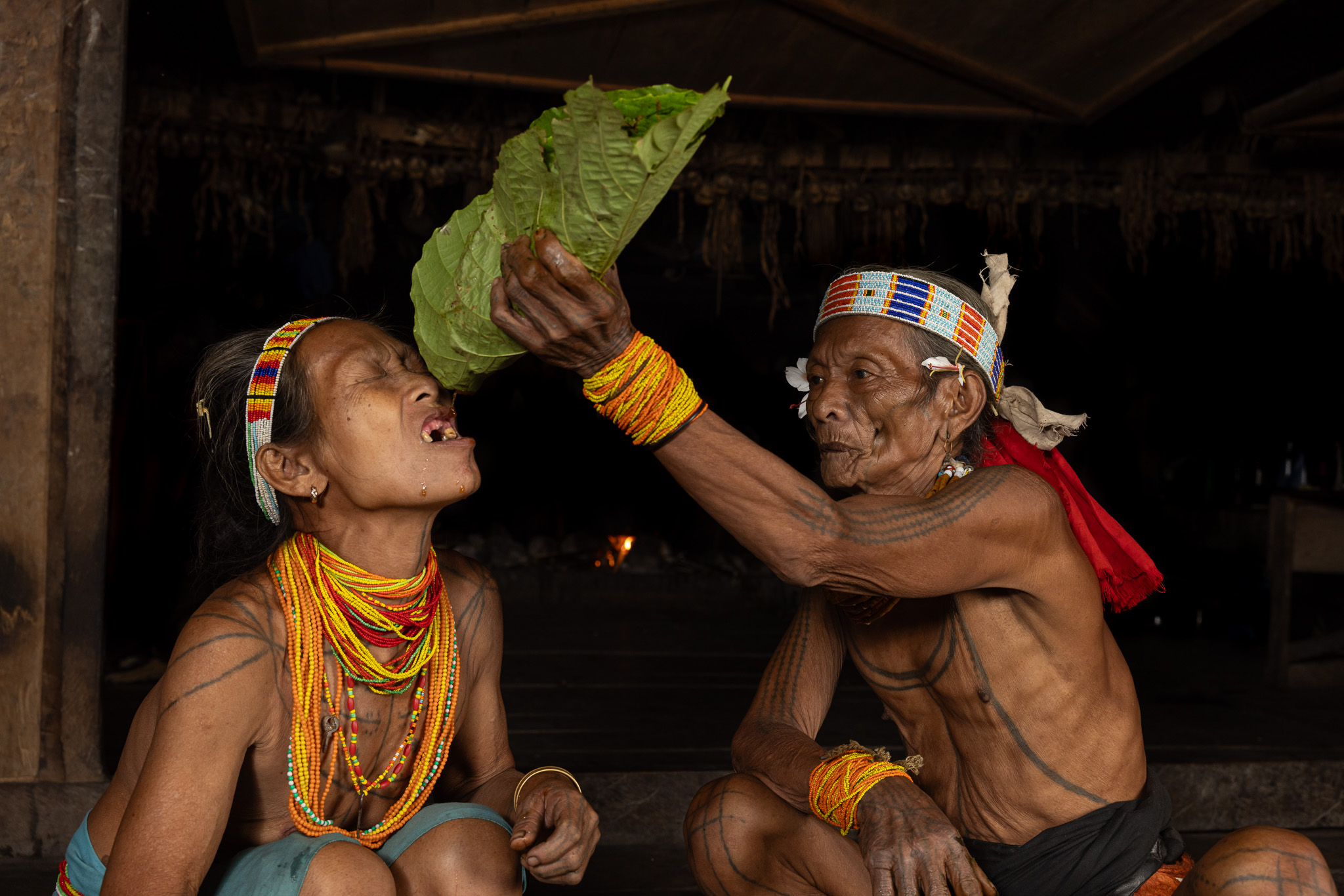
Shaman Teu Nasi Kunen giving herbal medicine to his wife
Healing as Relationship
For the Mentawai, healing is not a transaction but a relationship. A patient may owe thanks to the spirits, corrections to his behavior, or apologies to offended souls.
Healing often requires changes in conduct, renewed care for one’s soul, and alignment with taboos that maintain balance.
In this way, the kerei does not cure illness alone — he restores harmony and balance. And in restoring harmony, he protects not just the patient, but the community, the forest, and the unseen forces that surround them.
Animal Sacrifice
Mediators Between Worlds — Carrying Prayers to the Unseen
For the Mentawai, chickens and pigs serve as powerful mediators between humans and spirits. While leaves are often used for small blessings or daily rituals, animals carry deeper petitions, heavier concerns, and more urgent prayers.
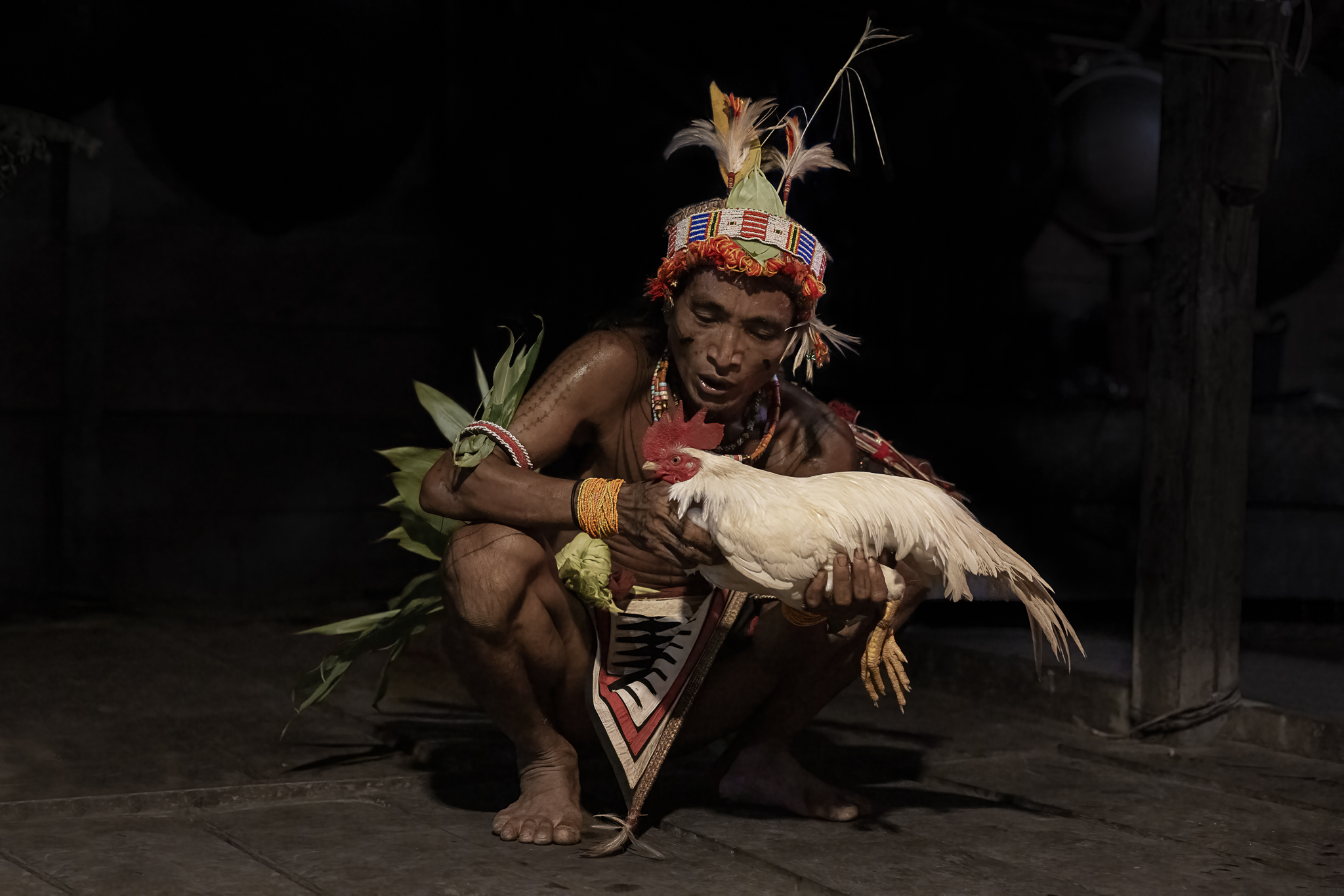
Before sacrifice, a chicken is gently stroked along the body of everyone involved in the ritual. In this act, the bird absorbs illness, misfortune, or imbalance. When sacrificed, its soul carries these afflictions away, restoring harmony to those who remain.
Aman Sasali chanting petitions for the spiritual realm, using the chicken as a mediator
Pigs play a central role in major ceremonies.
Their sacrifice is not taken lightly. Their souls travel farther, carrying petitions for healing, protection, prosperity, or reconciliation. The offering of a pig is a statement of sincerity — a costly but necessary gift to the unseen.
After sacrifice, the meat is shared equally across the community, reinforcing kinship and ensuring that the ritual benefits all. But spiritually, it is the soul of the animal that matters most. It becomes a messenger — moving between worlds, delivering requests, and returning signs.
Through animal sacrifice, humans communicate with forces beyond their reach. Through animals, the spirits respond.
Reading Signs
Messages from the Spirits
When a ritual sacrifice is complete, the kerei reads the animal’s body to understand whether the spirits have accepted the offering.
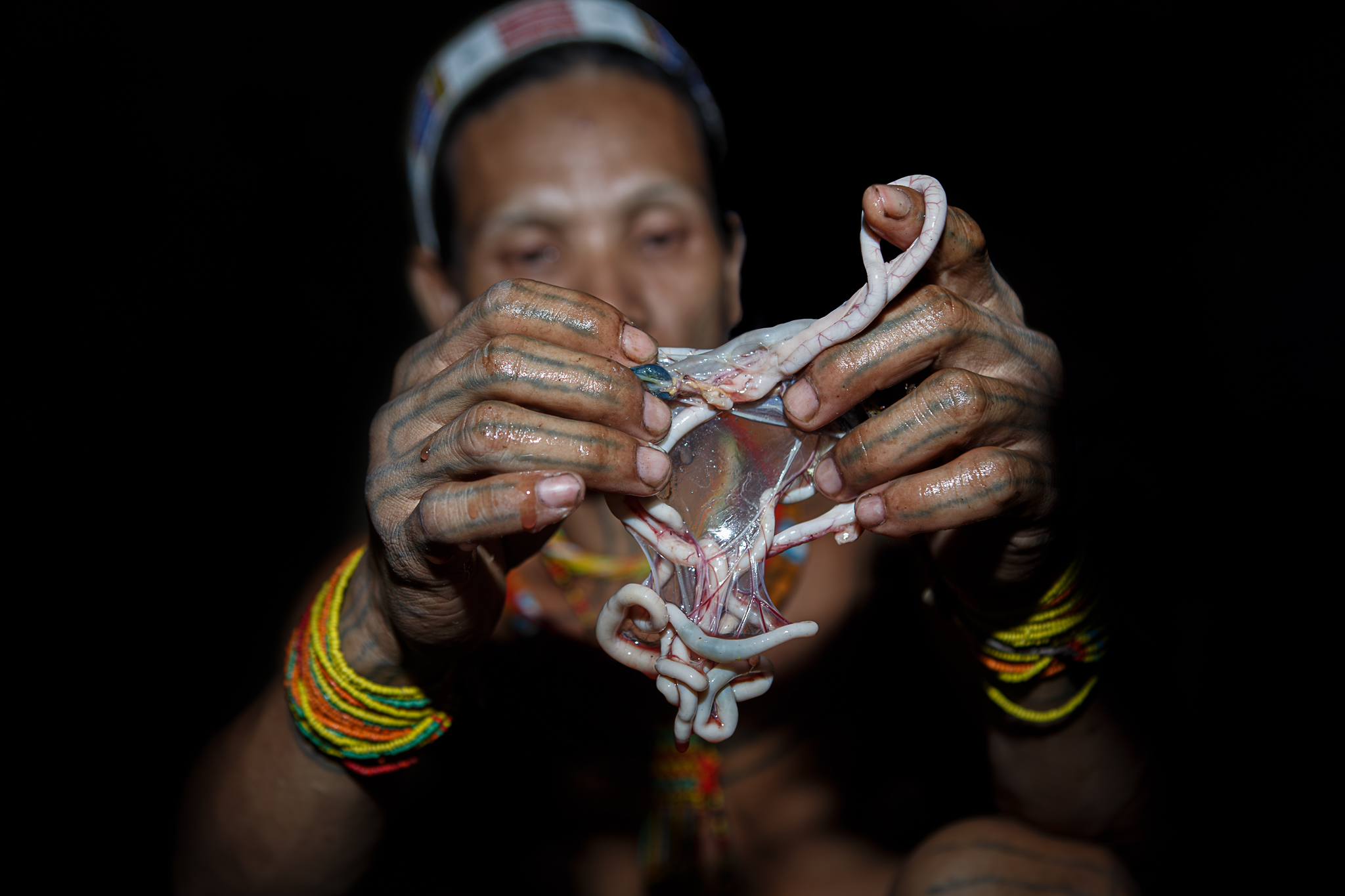
For chickens, he examines the delicate network of veins along the thin membrane of the intestines. These patterns — their clarity, their form, their breaks or curves — are interpreted as messages from the unseen. A clear, strong pattern means acceptance; irregular lines or discolorations may warn of unresolved imbalance.
Aman Manja reading the veins in a sacrificed chicken's intestinal membrane
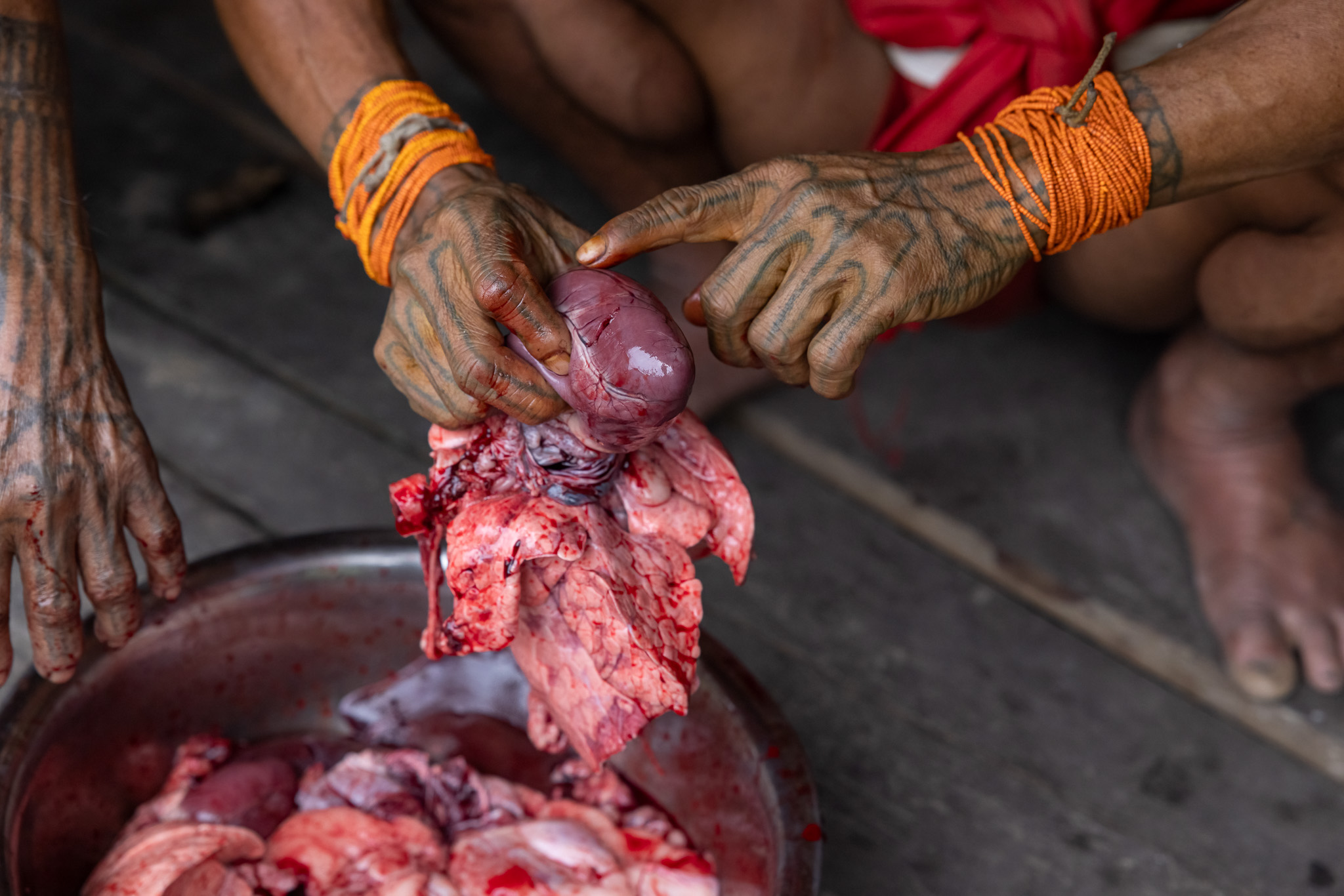
For pigs, the heart becomes the oracle. Its veins, firmness, color, pattern, and texture reveal the spirits’ answer. A healthy, unblemished heart affirms success. Troubled markings may indicate refusal — meaning further offerings or ceremonies are needed.
Shamans reading the veins on a pig's heart
Animal Skulls
Silent Witnesses — Bridges to the Unseen
Animal skulls are woven deeply into the spiritual and social life of the uma. Each one is a record of relationship, a reminder of offerings made, hunts undertaken, and the bonds that link humans, animals, and spirits.
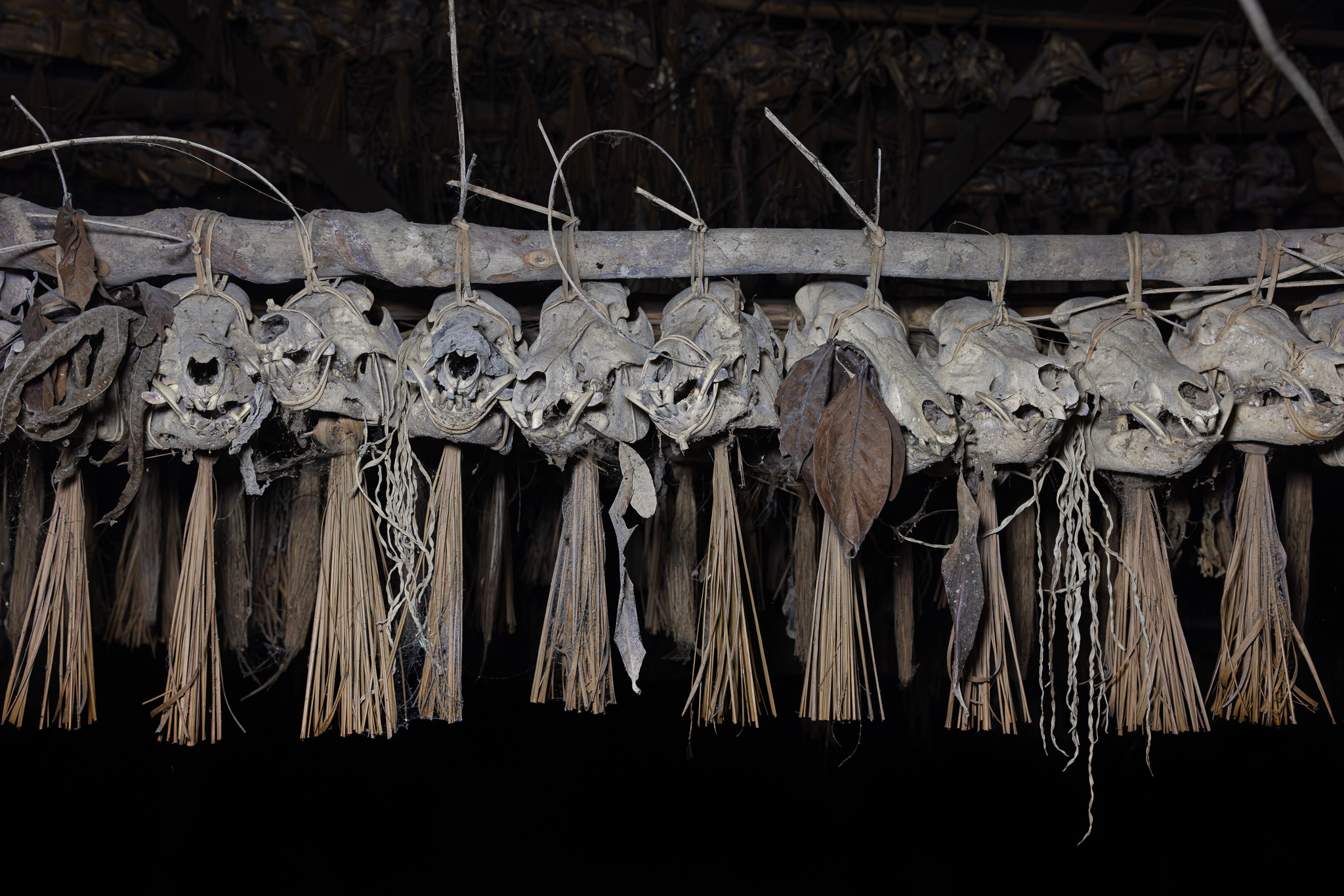
Above the veranda, at the front of the uma, hang the skulls of domesticated pigs sacrificed during major ceremonies. They always face inward — toward the community — encouraging living pigs not to wander too far and signaling the prosperity and ritual history of the household.
Skulls of sacrificed semi-domesticated pigs
Inside, in the central hall, the skulls of wild game hang from the beams.
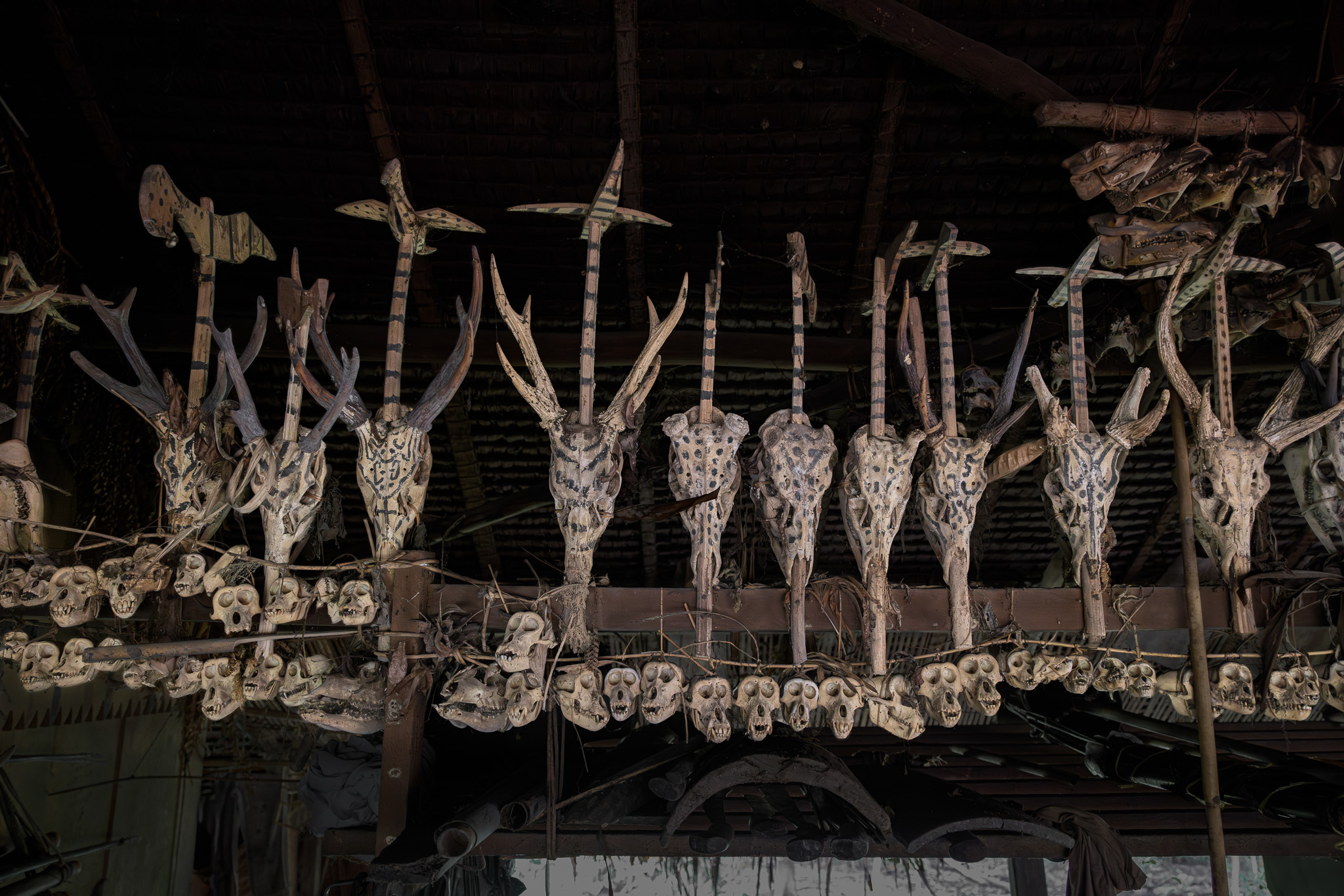
Monkeys, deer, wild boar — each skull is cleaned, tended, and often adorned. Deer and boar skulls may be decorated with small wooden carvings or beads, transforming them into attractive toys for the souls of the animals. These decorations invite their wandering spirits to linger and remain connected to the uma.
Decorated skulls of hunted game: deer and monkeys
All game skulls face outward.
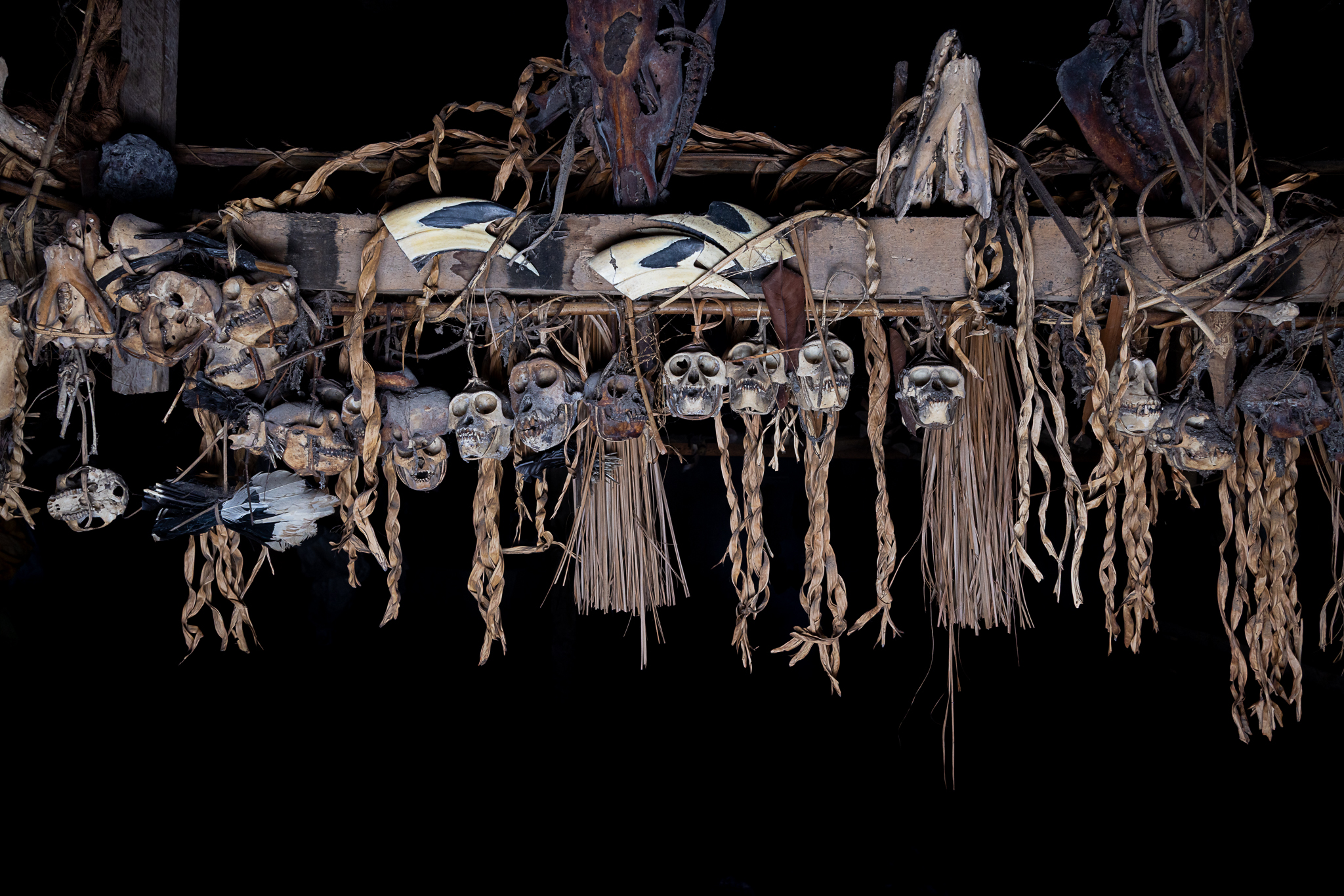
They “show themselves” to the living animals in the forest, demonstrating that life in this uma is abundant and respectful. Before hunts, shamans address these skulls, asking the souls of past animals to help call their living kin closer — not as coercion, but as part of the reciprocal relationship between humans and the forest.
Decorated skulls of monkeys and other game, including beaks of hornbill birds
For the Mentawai, the uma is a place where every relationship is acknowledged — human, animal, ancestral, and spiritual. The skulls are not trophies; they are witnesses. They speak of meals shared, rituals completed, balance restored, and of the ongoing dialogue between people and the living landscape that sustains them.
Together, these skulls form a silent archive — a memory of the forest inside the house, reminding all who enter that harmony between worlds is the foundation of Mentawai life.
Umat Simagere
Wooden Carvings — Toys for the Souls
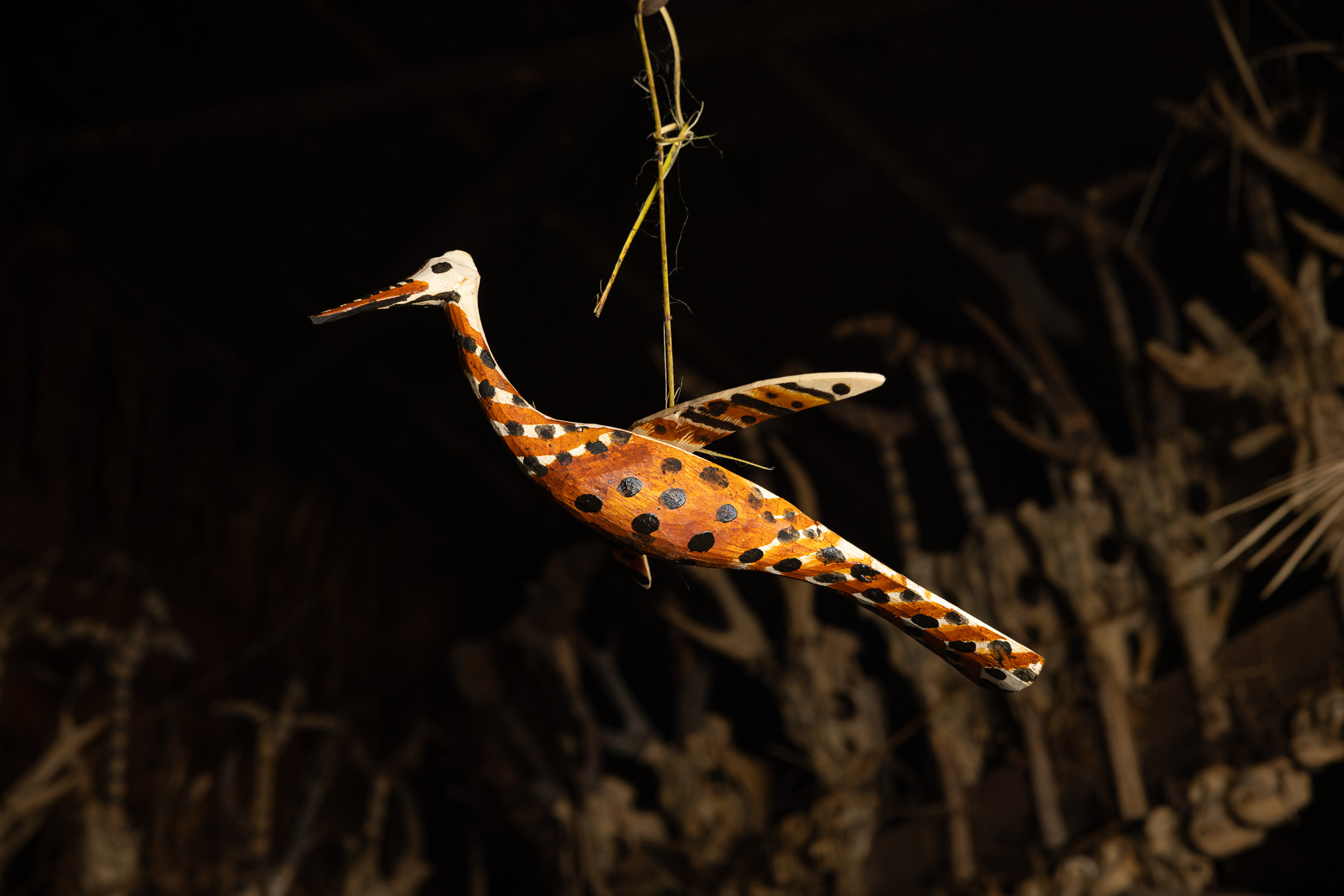
Among the Mentawai, carving umat simagere — small wooden figures — is an act of care for the soul. These carvings, most often shaped as birds but sometimes as fish or human forms, are created during major ceremonies, especially those surrounding a shaman’s initiation.
They are not decorations. They are invitations.
Umat simagere: a bird wood carving, a toy for the souls
In Mentawai belief, illness often arises when a person’s soul drifts away. To coax it back — or to keep it close during periods of ritual intensity — the kerei carve objects that the wandering soul will recognize as comforting and familiar, much like giving a child a toy to soothe and guide it home.
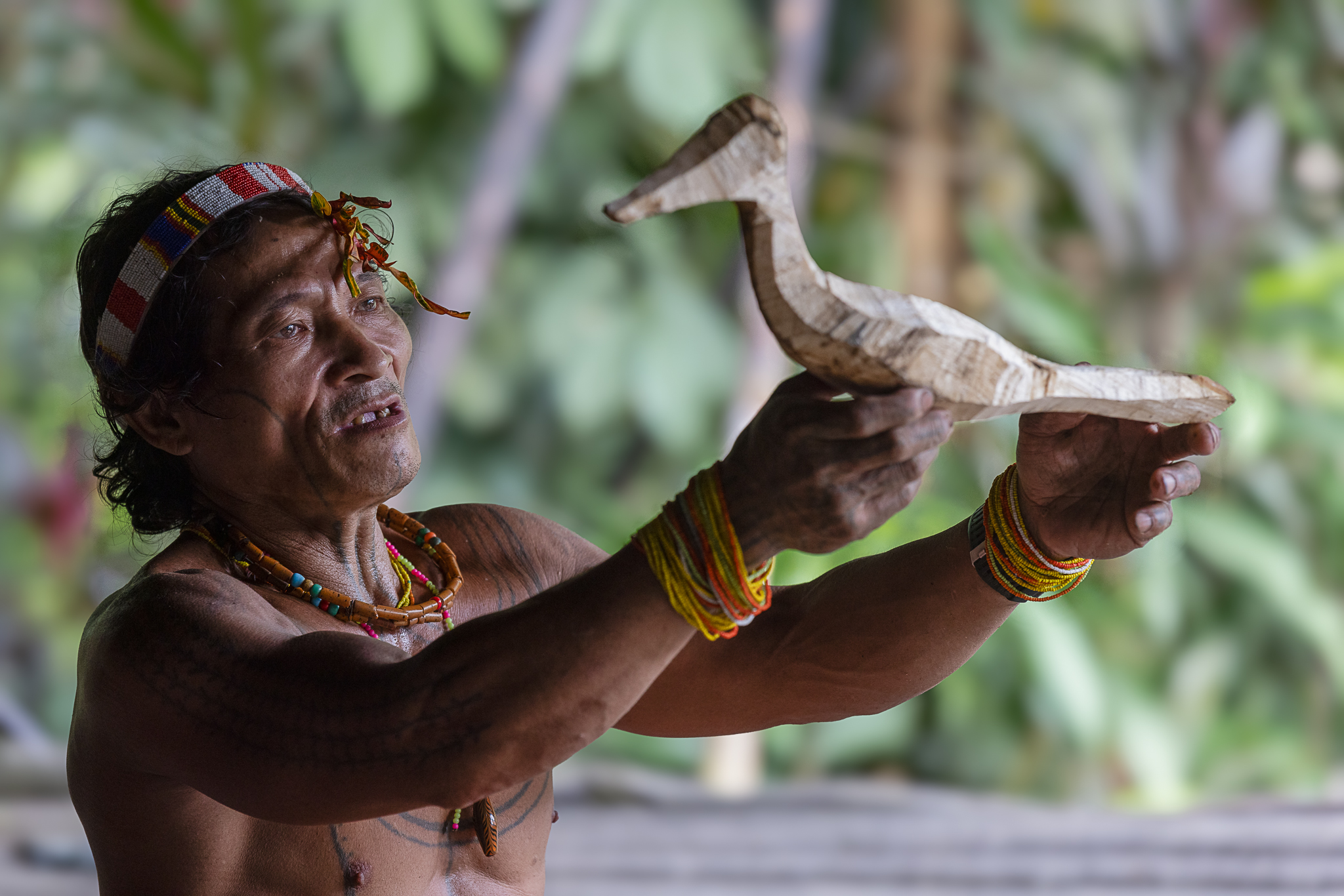
Using simple tools such as the balugui, shamans and elders shape these soft-wood figures with quick, practiced cuts. When finished, the toys are hung from the rafters of the uma, where they sway gently in the open air. Their movement, form, and presence call to the soul, reminding it of its place among kin.
Aman Jagaumanai working on his wood carving.
During initiation ceremonies such as Alup, umat simagere play an even deeper role. They are placed above the entrance of the uma and suspended from tall bamboo poles along the river — signaling to spirits, ancestors, and wandering souls that a great ritual is underway and that all are welcome.
These small carvings hold an extraordinary tenderness. They are humble, almost playful, yet they embody one of the deepest truths of Mentawai cosmology: that the soul is sensitive, curious, and in need of care — and that even a simple wooden bird can help maintain the balance between body, spirit, and the unseen.