When the Forest Fell Silent
Making sago flour, changing traditions, and the growing need for money
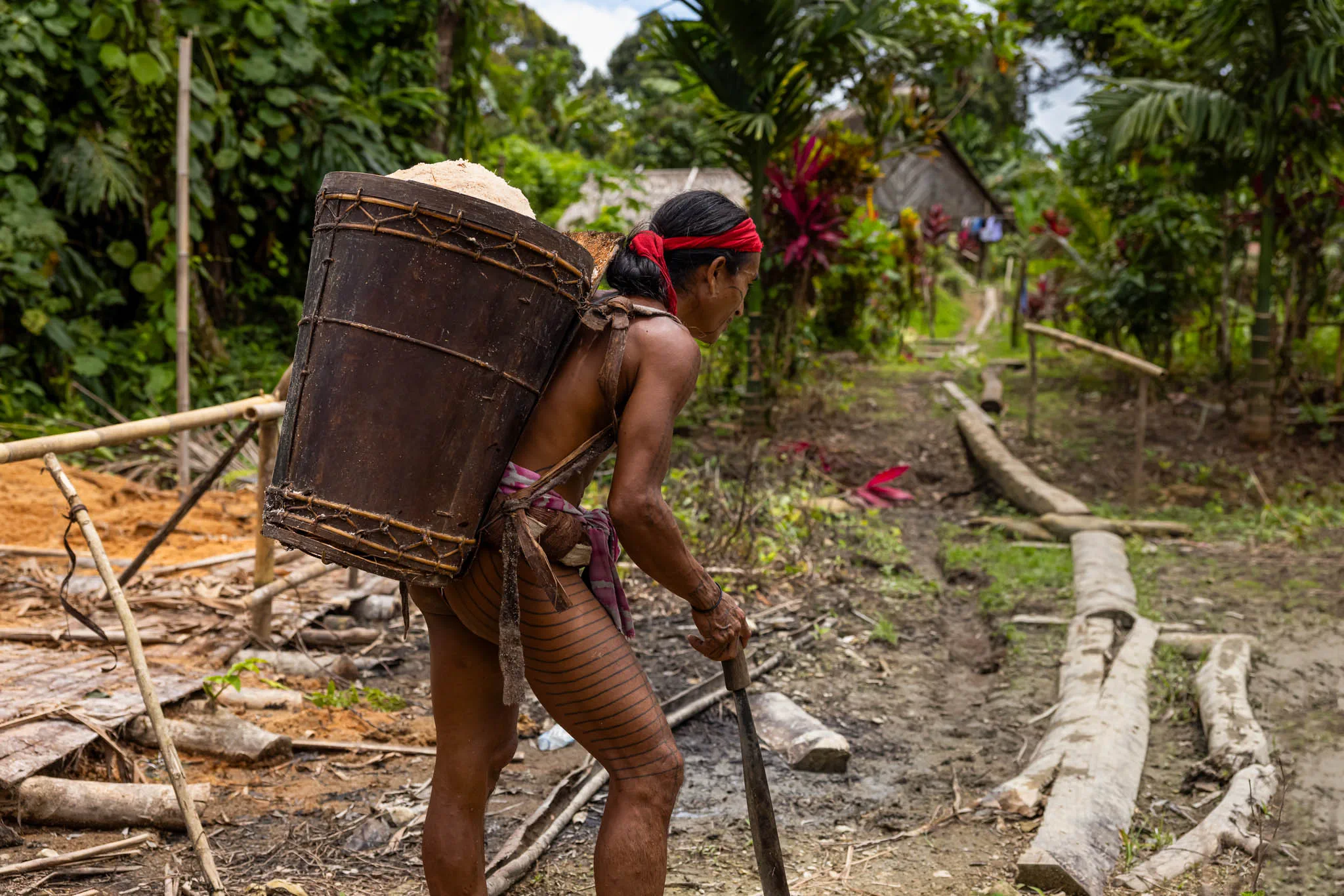
When walking the forest trails of Siberut, I used to regularly hear the sound of stamping feet and splashing water. It was the sound of people processing sago, one of the traditional staple foods of the Mentawai.
Following the noise was also a way of finding people. You could leave the trail, follow the sound and find a family working in the forest. There was usually time for a chat, and visitors were welcome to watch the process. Nobody seemed to be in a hurry. Moile moile — slowly, slowly — is a Mentawai expression that captures something of the traditional pace of life.
Over the years, however, those familiar sounds have become increasingly rare.
From palm to flour
Sago palms grow abundantly in the rainforest. They require little attention and take roughly ten years to mature. When a palm is ready for harvesting, there is traditionally a small ritual before it is felled, acknowledging the tree and the spiritual world and explaining the need for food.
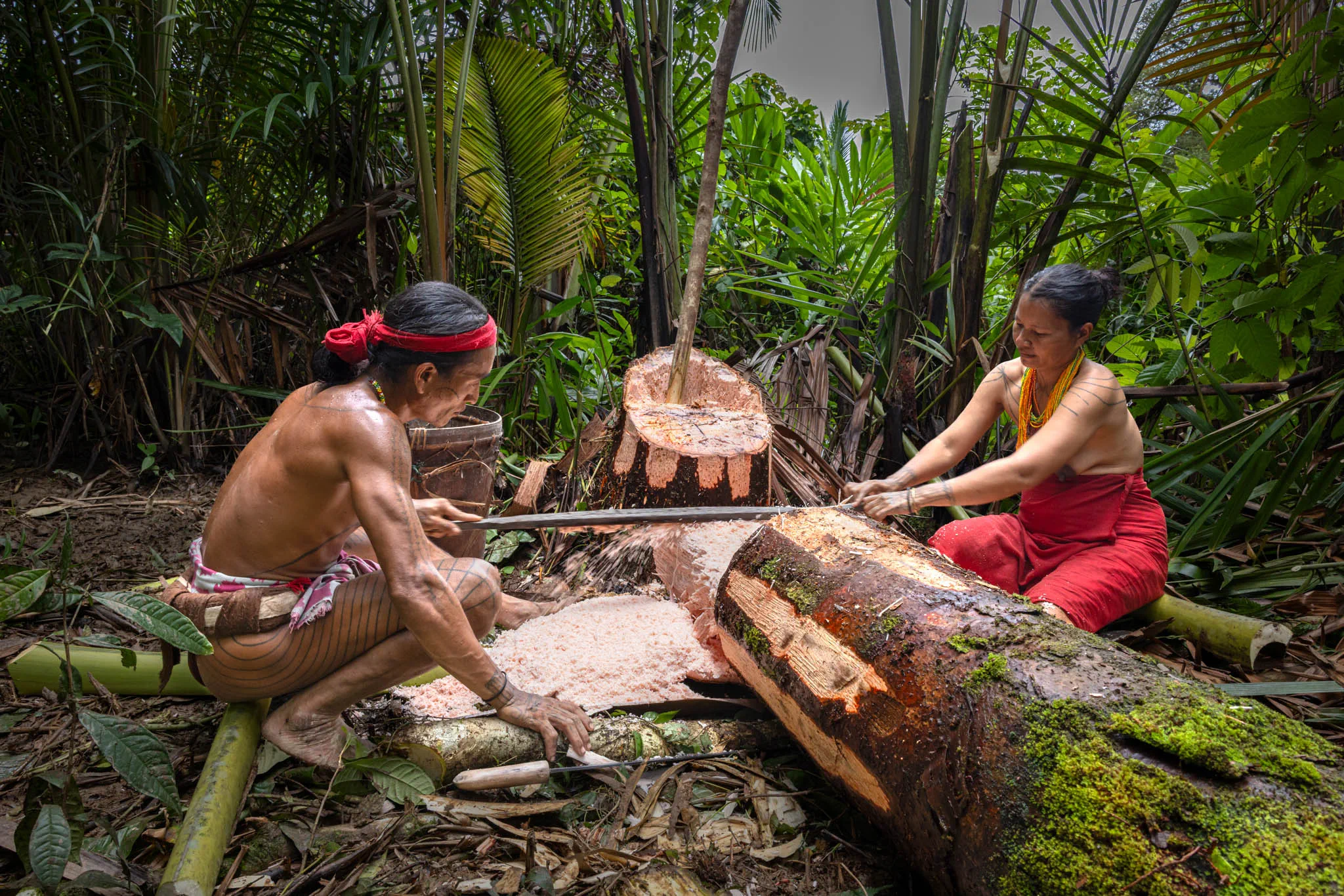
Once the trunk has been opened and the bark removed, the soft pith inside is grated. Traditionally, this was done by hand, often by a husband and wife sitting opposite each other, working a long wooden grater fitted with nails. The grated pulp was collected in baskets and taken to a sago-processing setup nearby.
In the past, the palm was processed where it fell. The processing plant was built using the nearest suitable water source. Once the starch had settled and was ready to be stored, the containers were carried back to the uma, the traditional family house.
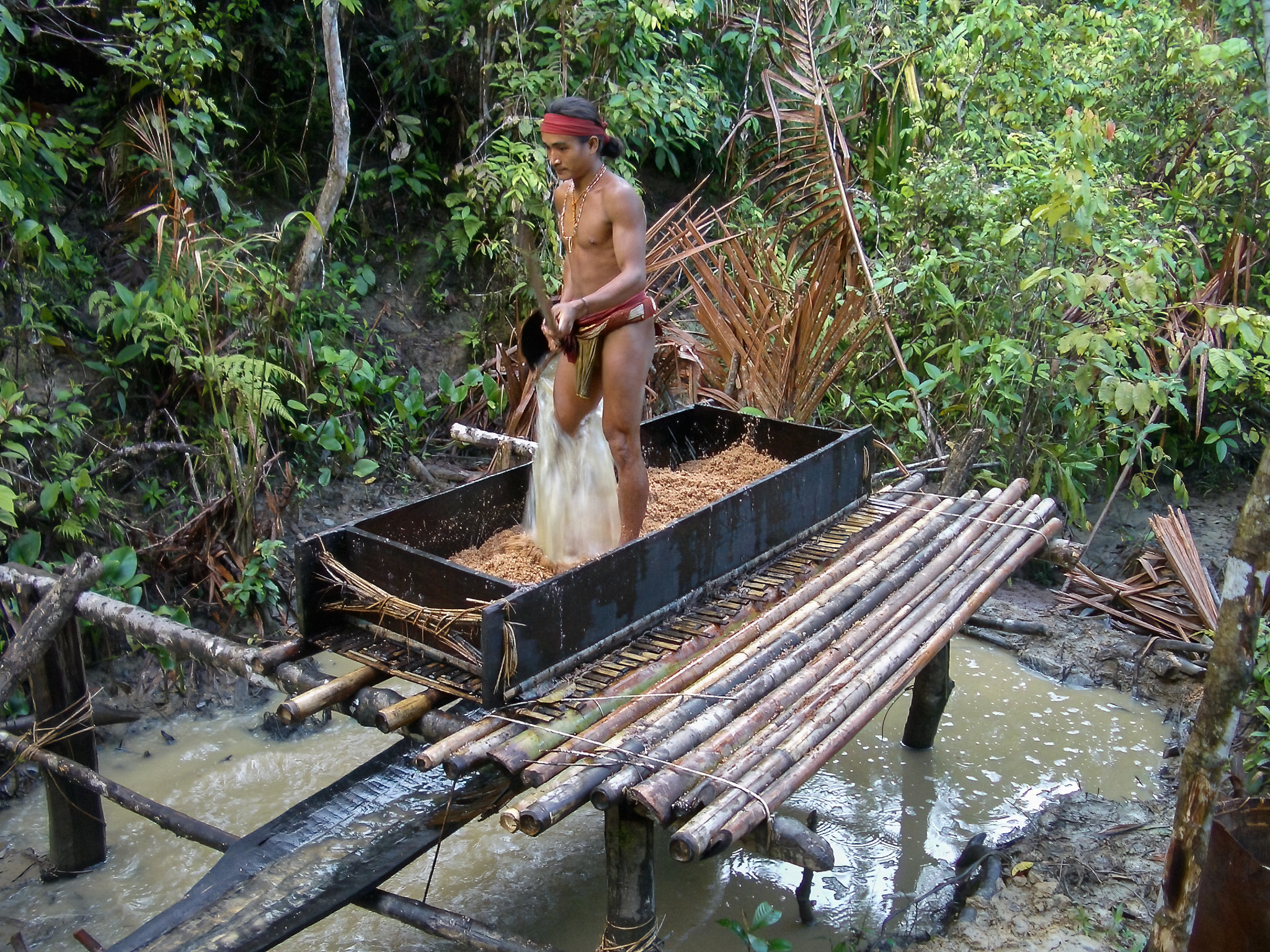
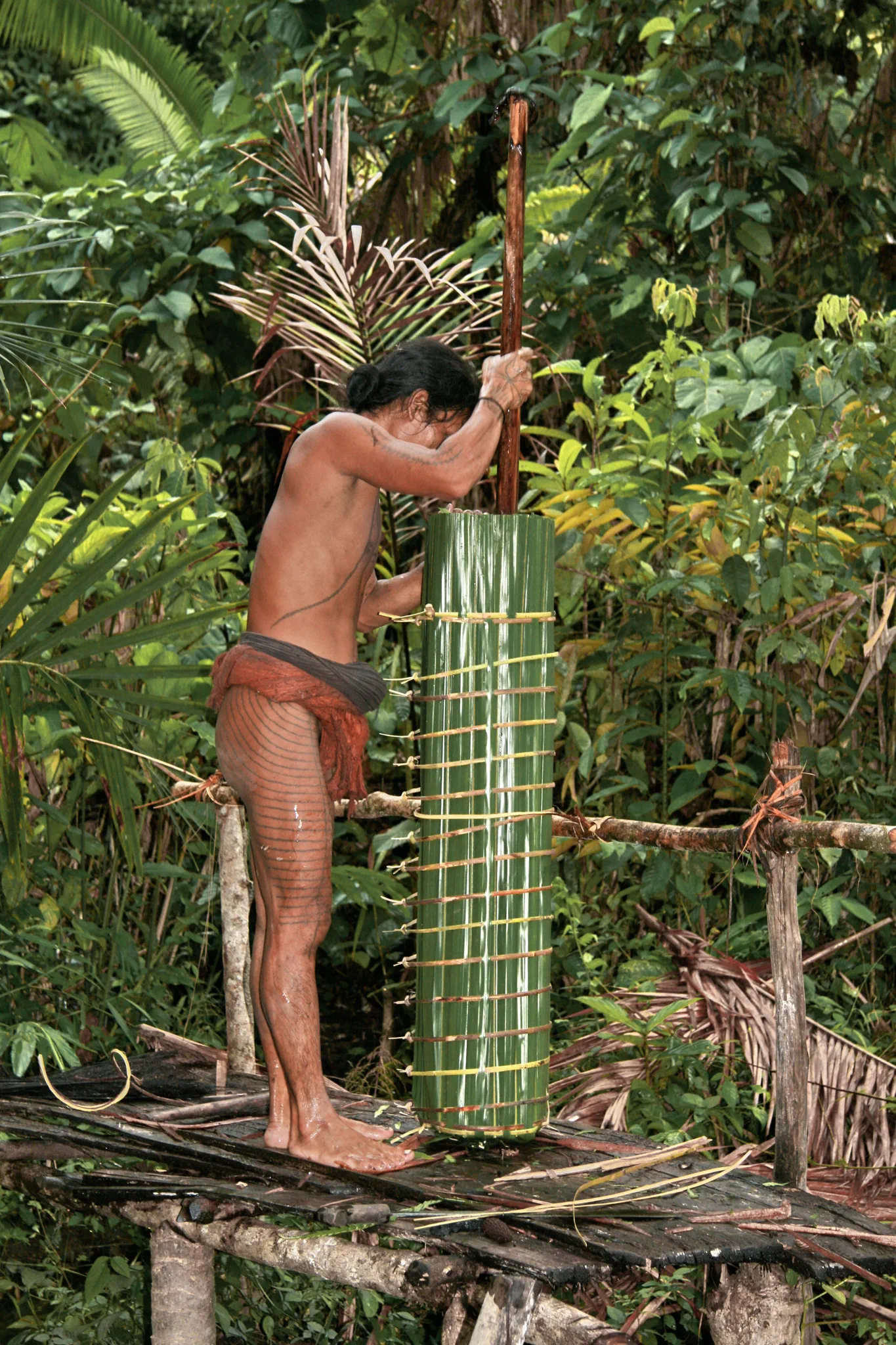
The traditional processing setup was often an impressive structure. A large sieve, sometimes up to two metres long, was mounted on a wooden frame above a small stream or pool. The grated pulp was spread across it. Someone, often a shaman, stood barefoot in the pulp, lifting water with a long bamboo pole and pouring it over his thigh. As the water ran down onto the pulp, he stamped rhythmically with his feet, helping the water work through the mixture.
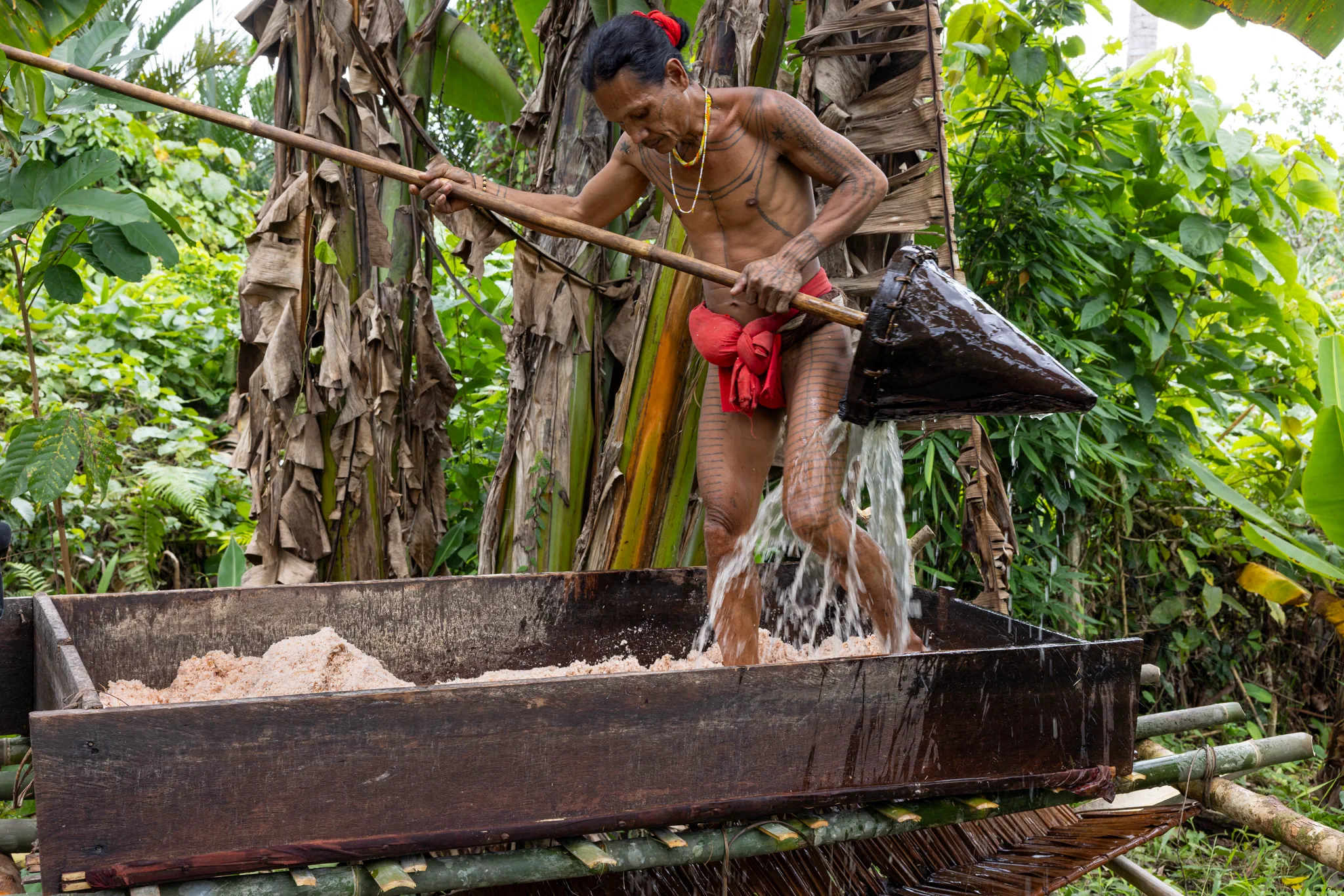
The starch-rich water drained through a channel into a small canoe underneath. After settling for several days, the starch could be collected and stored. Traditionally, it was packed into tall containers made from sago palm leaves, where it could keep for months. The starch paste was later prepared into flour and steamed or roasted in sago-leaf wrappings or thin bamboo containers.
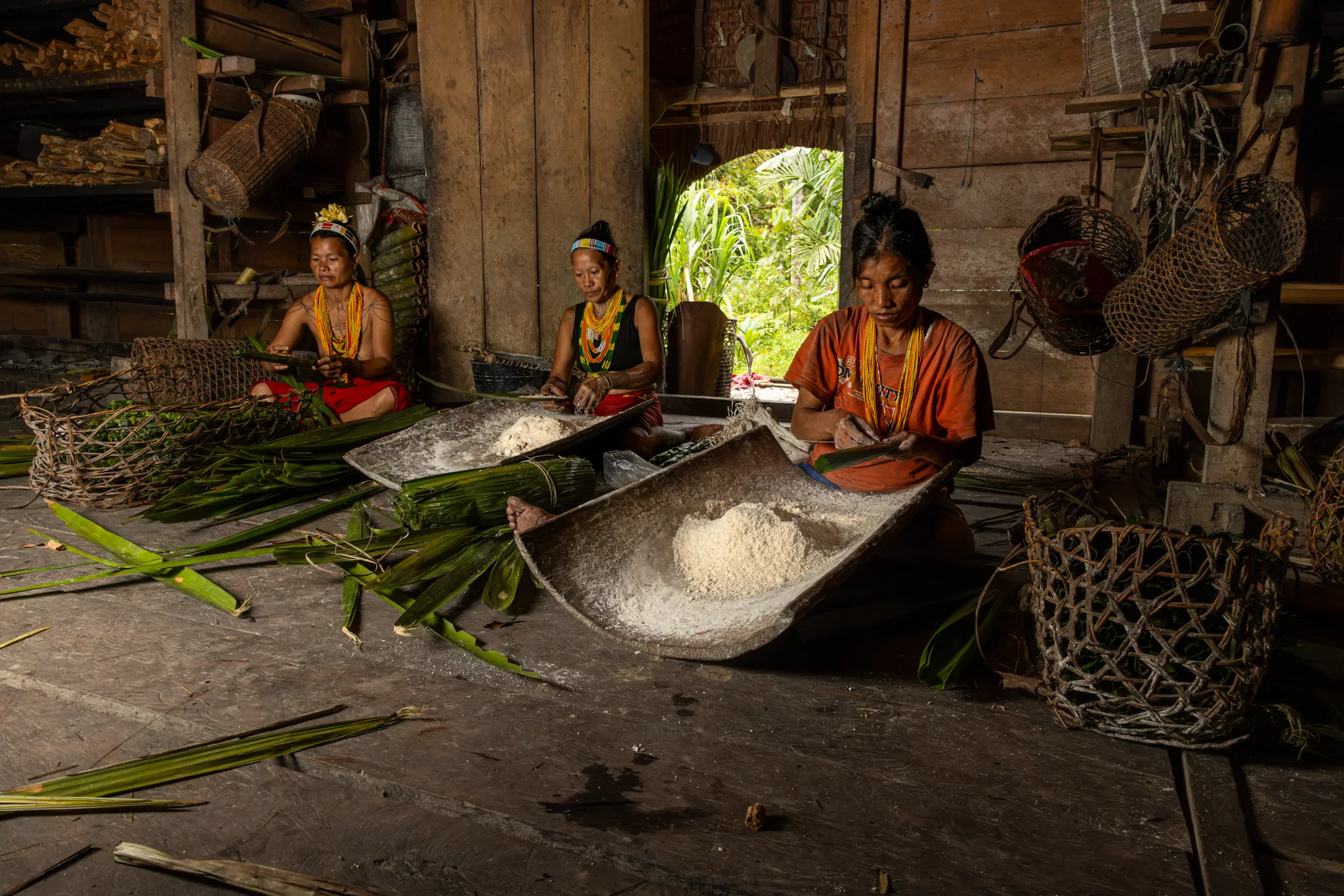
Processing an entire palm was a major undertaking. It meant roughly a week of continuous work, involving several people and a sequence of tasks that had to be organised together. But the result was enough starch to last a family for two or three months.
A machine changes the rhythm
The first time I encountered a motorised sago grater, I was in one of the social villages where many Mentawai families had moved after leaving their settlements deeper in the forest. I understood why a machine might be attractive, but I wasn’t happy about what it represented.
It was only a few years ago, while walking through the forest in the valley of the Buttui River, that I discovered a grater machine hidden in a small hut beside the trail. The machine was covered with leaves and tarpaulins. I hadn’t known the family had one.
The machine itself was fairly simple: an old modified car engine driving a rotating grating mechanism, protected by a wooden casing. Instead of manually grating the pith, people feed sections of the trunk into the machine. The grated pulp is collected in baskets and carried to the processing area.
It made me upset…
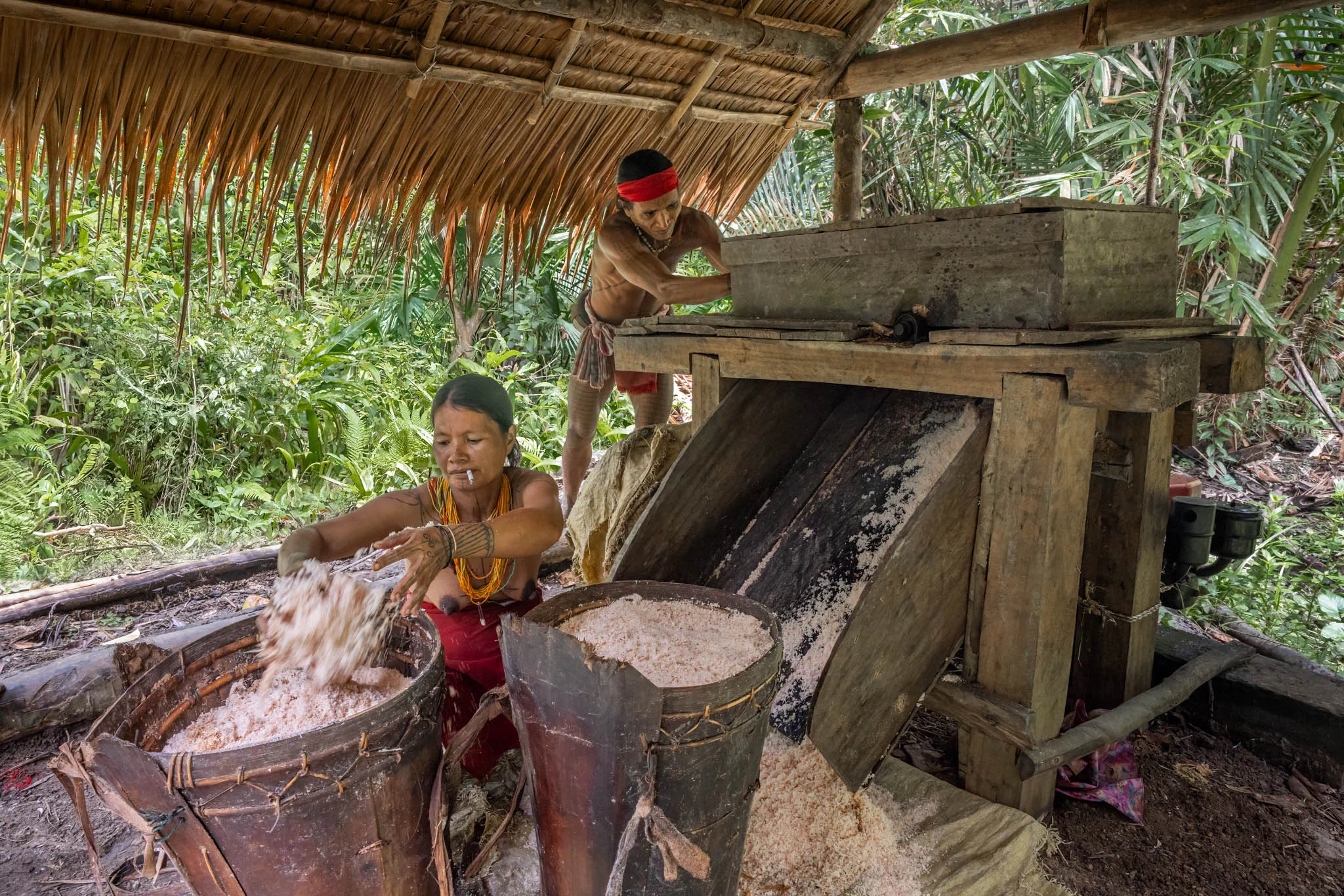
At first, the motorised grater did not fundamentally change the way the pulp was processed. The grated material could still be washed and stamped in the traditional large sieve. But the machine made it practical to work with smaller sections of the trunk rather than having to grate an entire palm at once.
The way the processing was organised changed along with it.
Nowadays, sections of trunk are brought to the grater, usually set up near the uma, close to a water source. The pulp can then be processed in a smaller, more permanent setup nearby. Rather than building a processing plant in the forest wherever a palm has fallen, families can bring the trunk sections to a place where the equipment is already set up.
A felled palm is cut into sections about a metre long. Sections that are not needed immediately can be placed in the river, where they can remain usable for up to a few weeks. Instead of organising a week of continuous work around a whole palm, a family can process a few sections in a day and repeat the work about once a week.
The processing setups have often become smaller, too. Instead of the large sieve mounted high above a water source, there may be a smaller sieve on a lower frame, with a makeshift trough collecting the starch-rich water. Women may knead the pulp by hand with water rather than having someone stamp it underfoot. The water can drain into improvised troughs made from large bamboo, or into a small canoe.
These methods are not mutually exclusive. A motorised grater can be combined with the traditional large sieve, just as manually grated pulp can be processed in a smaller setup. The machine changes one stage of the work, but it does not determine how the starch is subsequently extracted.
What has changed is the scale and rhythm of the work. Processing smaller quantities more frequently fits more easily into the daily routine of a smaller household.
The small things that add up
Other changes follow the same pattern. Instead of weaving tall containers from sago palm leaves to store the starch, families increasingly use synthetic bags bought in town. They are relatively cheap and convenient. But they replace something that could previously be made from materials available in the forest with something that requires money, however little.
On its own, a bag is hardly a major change. Neither is a motorised grater necessarily a bad thing. Both can save time and effort. But when I look at the changes I have witnessed over the years, I see a growing number of things that now have to be bought.
This is connected, at least in part, to changes in the way the Mentawai live together. Traditionally, several generations shared an uma, with parents, married sons and their families, and unmarried children living under one roof. There were many adults to share the work, whether processing sago or building a new house.
Today, married sons increasingly establish their own households. Families are smaller, and there are fewer people available to share major tasks. Work that was once organised within a large family or community may now require paid help. The work itself has not necessarily become more efficient; it is simply organised on a smaller scale.
These changes have happened alongside one another, rather than in a straightforward sequence. But together they help explain why money has become more important in everyday life.
The Mentawai were never entirely cut off from the outside world. Trade has long been part of life here. Iron machetes, axes and chisels gradually replaced stone tools. Beads, textiles for clothing and mosquito nets, and tobacco were also obtained through exchange. Forest products and animals could be traded for things that were not available locally.
The difference I notice today is the growing need for cash.
I remember when family members asked me to bring things such as machetes, chisels, beads, traditional tobacco and textiles for loincloths and skirts. Later, the requests increasingly included things that required money to maintain or replace: a canoe engine, school expenses, modern cigarettes, a toilet or solar energy.
Some of these changes have made a real difference. A canoe engine, for example, can turn a journey to the harbour that once took a full day of rowing into a much shorter trip. That is not a small benefit. And although schooling in Indonesia is free, families still have to find money for uniforms, shoes and books.
Lighting has changed too. Natural oils and resins once provided light. Petromax lamps came later, bringing their own need for fuel and spare parts. Now solar panels offer another option, but they too are something that has to be acquired.
Tourism brings its own expectations. Visitors may expect a toilet or other facilities that were not part of traditional life in the forest. Cigarettes provide another example: locally available tobacco, often rolled in taro leaves, has increasingly given way to shop-bought cigarettes.
None of these changes, taken individually, tells the whole story. But together they mean that more aspects of everyday life depend on having money.
Part of the change
I cannot pretend to be an outside observer of all this. I have been part of this family for decades, and I have also introduced changes. I built a toilet at the family uma for visitors, for example. And I am working with my family to reconstruct a complete traditional sago-processing setup so that visitors can see how the process works.
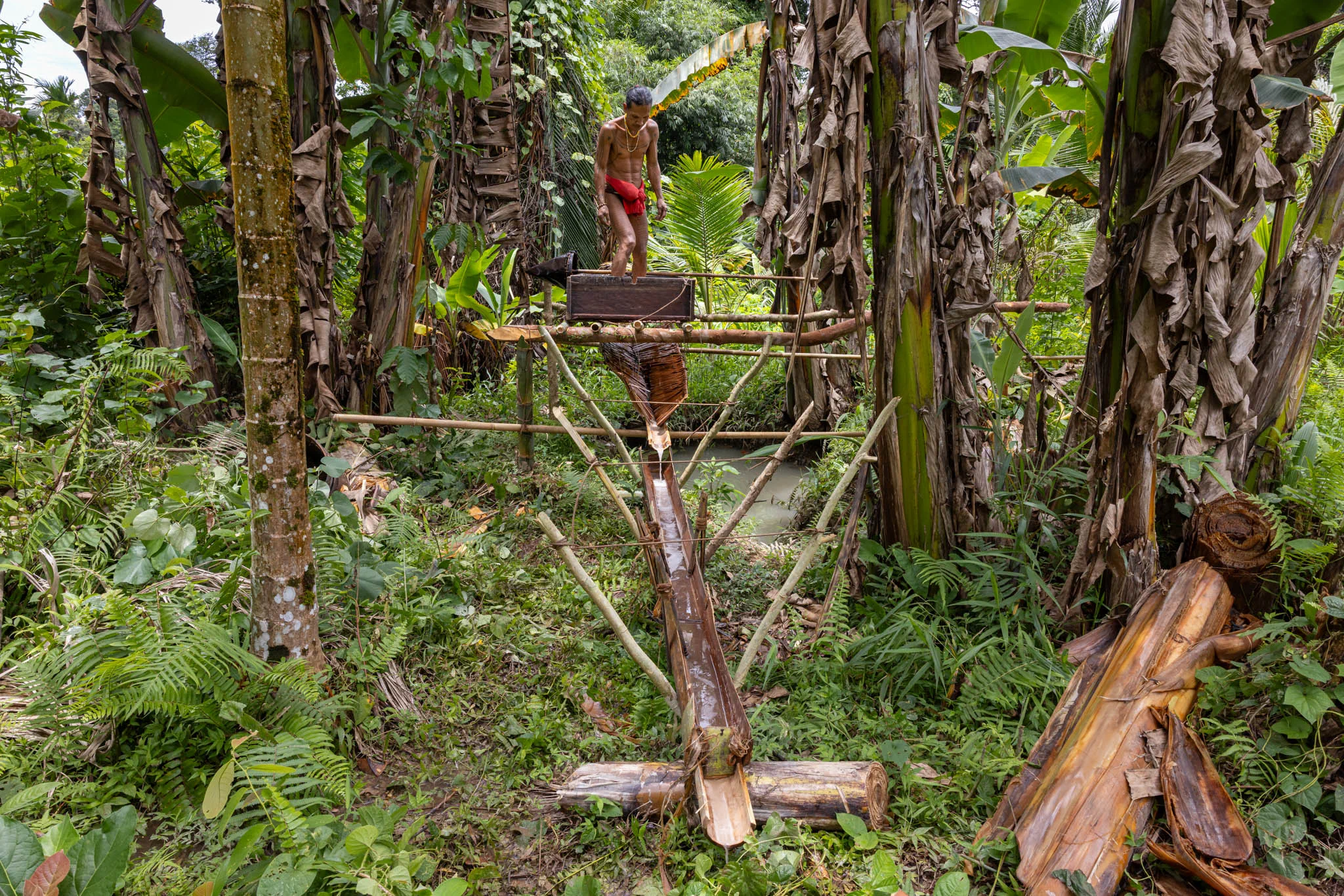
That may seem contradictory, but I don’t think it is as simple as choosing between tradition and modernity. People have every right to decide how they want to live, and there are good reasons to make difficult work easier. I understand that.
Still, I feel the loss when I walk through the forest and no longer hear the familiar stamping and splashing as often as I once did. Those sounds meant more than the production of food. They were part of a way of working and living together, and a reason to leave the trail and spend time with people.
I sometimes wonder where the line lies between making life easier and becoming dependent on things that require money to buy.
The forest is still there. Sago palms still grow, and the knowledge of processing them has not simply disappeared. But the sounds that once drew me towards people working in the forest have become much less common.
And I miss them.