Mentawai Spirituality
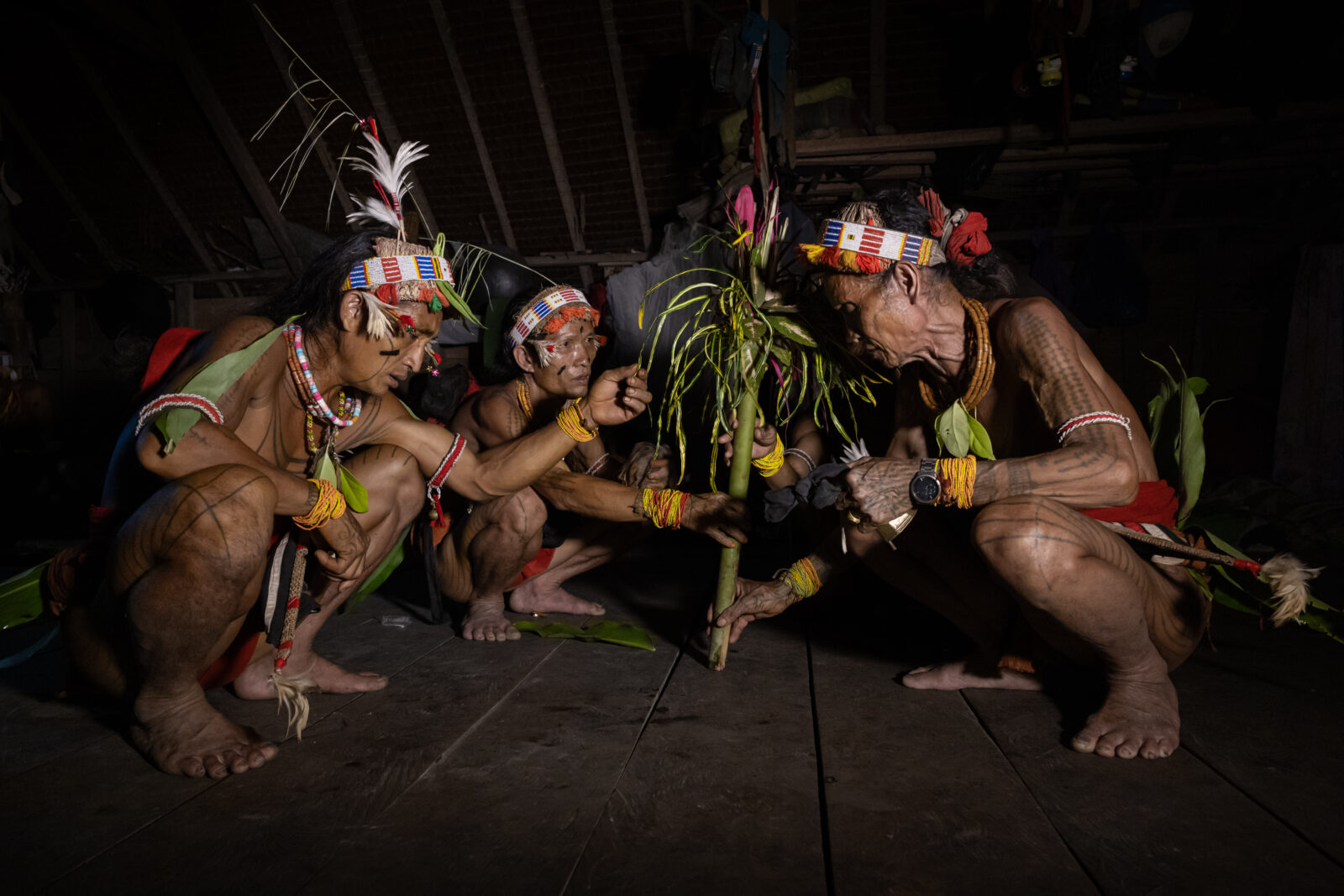
Mentawai Spirituality & Cosmology
Interconnected Worlds — The Practice of Balance
From the living Mentawai culture unfolds a deeper understanding of their world: a spiritual landscape where all beings possess souls, and where life revolves around maintaining balance between the visible and invisible realms.
The Mentawai believe that all that exists is alive. Humans, animals, plants, stones, crafted objects, places, and even temporary phenomena like rainbows or drifting clouds possess their own simagere or kecat, a soul or spirit. Souls and spirits inhabit their own domain but remain connected to their visible bodies, influencing them and being influenced in return. Human souls continue after death, joining the ancestors while still maintaining a relationship with the living.
The universe consists of three interconnected layers: the sky above, the human world in the middle, and the realm beneath. These domains are inhabited by countless beings — ancestral spirits, animal-souls, plant-souls, and forces that may be protective, indifferent, or dangerous. A good life depends on maintaining respectful relations with all of them.
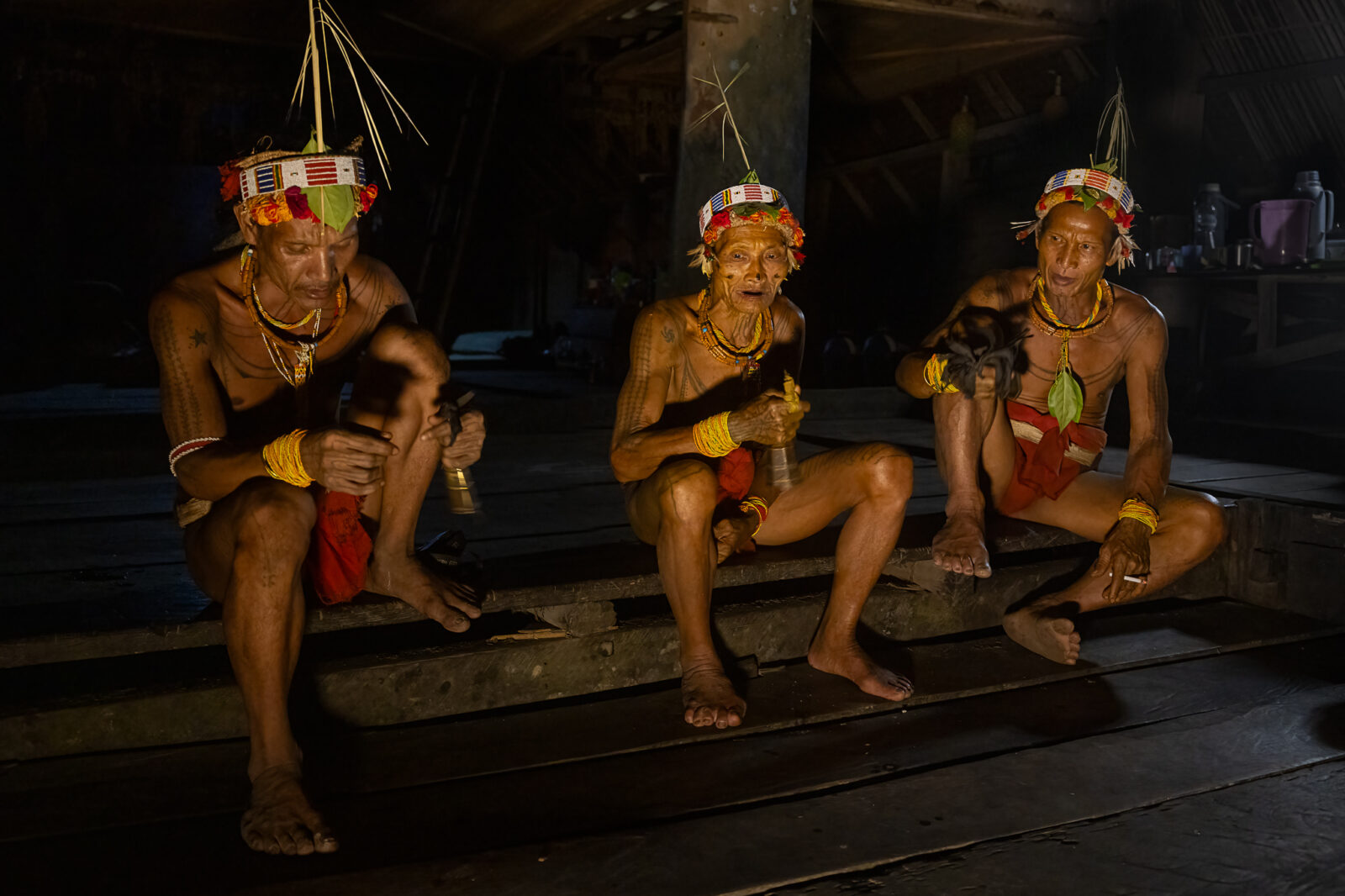
Simagere & KECAT - Souls & SPIRITS
Movement and Vulnerability
Souls and spirits wander freely in their own realm. As they travel, they encounter other souls and spiritual beings whose influence may be helpful or harmful. What a human soul experiences often appears in dreams, which for the Mentawai are glimpses into the soul’s nightly journey. Emotions felt during the day — fear, unease, sudden joy — may reflect what the soul has encountered.
If a soul feels neglected or distressed, it may drift too far from the body, leaving the person vulnerable to illness or misfortune. If it becomes welcomed by the ancestors before its time, life may end.
Bajou
The Soul’s Radiating Vital Force
Every soul emits bajou — a kind of vital force, a radiating presence that flows outward from all beings. This vital force is neutral in itself. It becomes helpful or dangerous only through interaction.
When the bajou of two beings meet suddenly — especially if one is much stronger — the encounter can disturb or weaken a more fragile soul. Spirits of the unseen world have powerful bajou, and careless contact with them can be harmful. This is one reason why relationships with the forest’s inhabitants, both visible and invisible, must be approached with respect and caution.
Care for the Soul
Living Beautifully
A Mentawai must live in a way that keeps their soul close, content, and strong. Souls enjoy beauty and calm: flowers, beads, jewelry, good food, fine adornments, and an unhurried pace of life. The expression moile, moile — “slowly, slowly” — reflects this value. Rushing unsettles the soul, and forcing others to hurry is equally disrespectful.
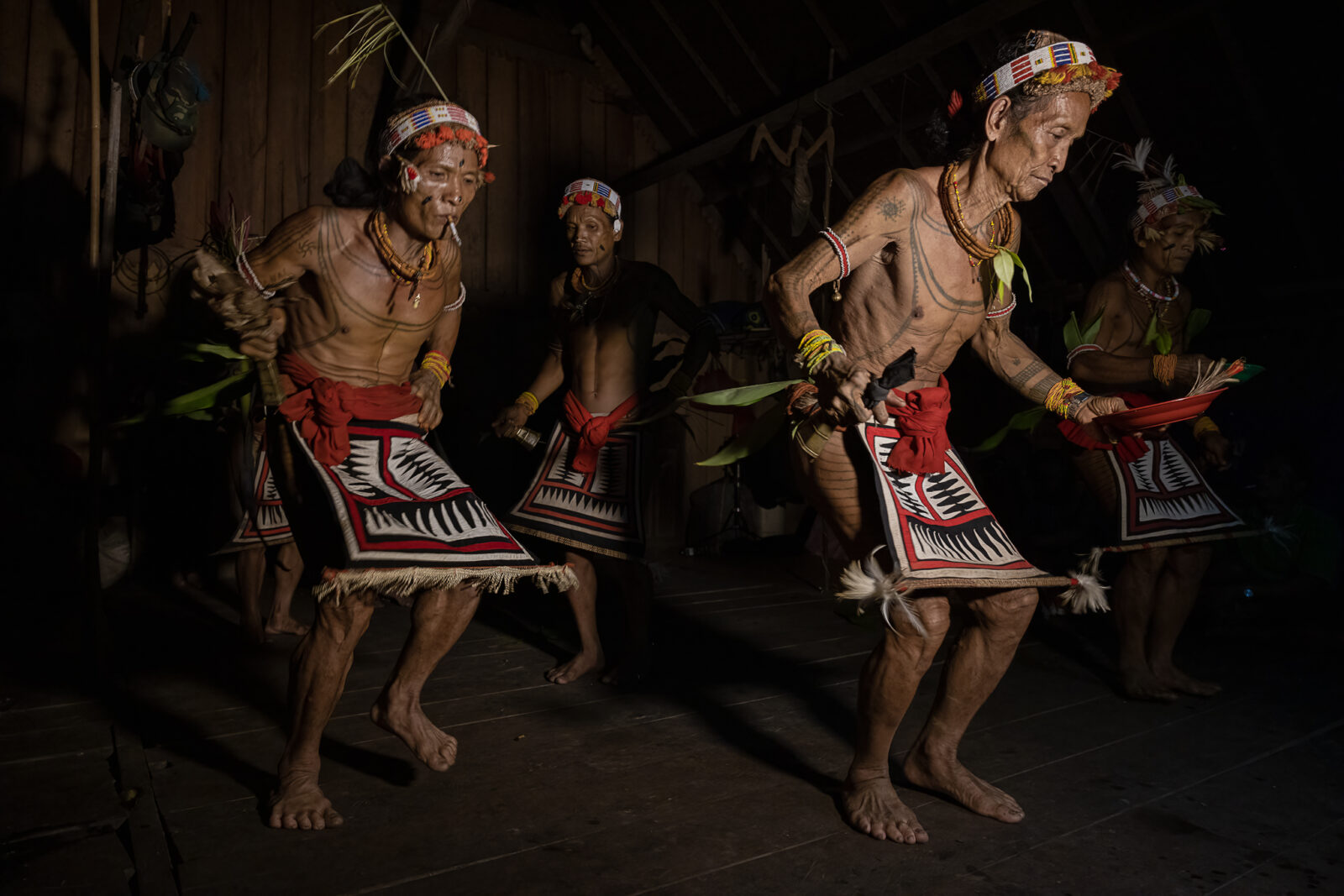
Rituals, dancing, singing, and music nourish the soul, strengthening its bond with the body. A strong bond brings health and stability; a weakened bond invites illness and danger.
Taboos
Preventing Harmful Crossings of Meaning and Bajou
Many behaviors are guided by taboos shaped by symbolic and relational logic. These taboos protect the soul by preventing situations where meanings — or bajou, the vital force radiated by all beings — could collide in harmful ways.
During hunting preparations, sour foods are avoided because “sour” relates metaphorically to “sharp”, and a sharp association could draw injury toward the hunters.
A man does not carve a canoe while his wife is pregnant; hollowing out a tree trunk mirrors the hollowing of a womb, and the bajou involved are considered incompatible.
When a family is raising a sow with piglets, delousing oneself is taboo — the act of flicking lice away could symbolically “scatter” the piglets and unsettle their souls.
These rules reflect a worldview in which metaphor has real consequence, and where the soul’s well-being depends on avoiding dangerous crossings of meaning or bajou.
Mediators — Plants, Pigs & Chickens
Bridges Between the Visible and Invisible Worlds
In ritual work, words alone cannot reach the spirit realm. Communication requires mediators, or gaut — selected plants, pigs, and chickens whose souls can carry messages across the boundary between worlds.
Plant mediators are chosen for their qualities. Some attract helpful forces; others repel harmful ones. Their shapes, textures, or scents often signal their function: a branching leaf may open pathways; a fragrant leaf may soothe or “cool” a troubled soul.
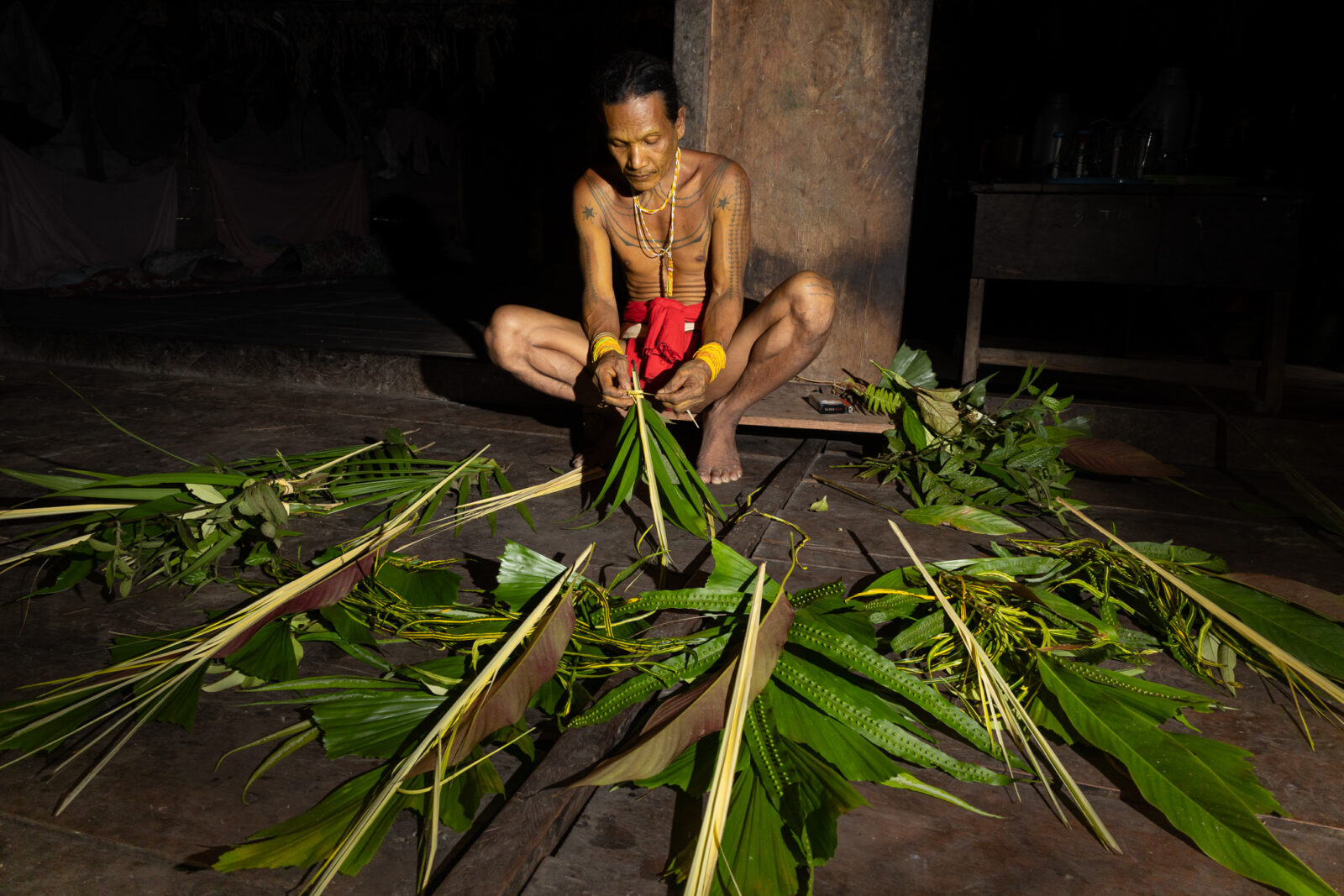
Animal mediators hold a special role. When a chicken or pig is sacrificed, its soul carries the shaman’s petition outward and returns with an answer from the spiritual world. This answer can be read from the animal’s body: in chickens, from the membrane over the intestines; in pigs, from the heart. If the signs are unfavorable, another petition and mediator is chosen.
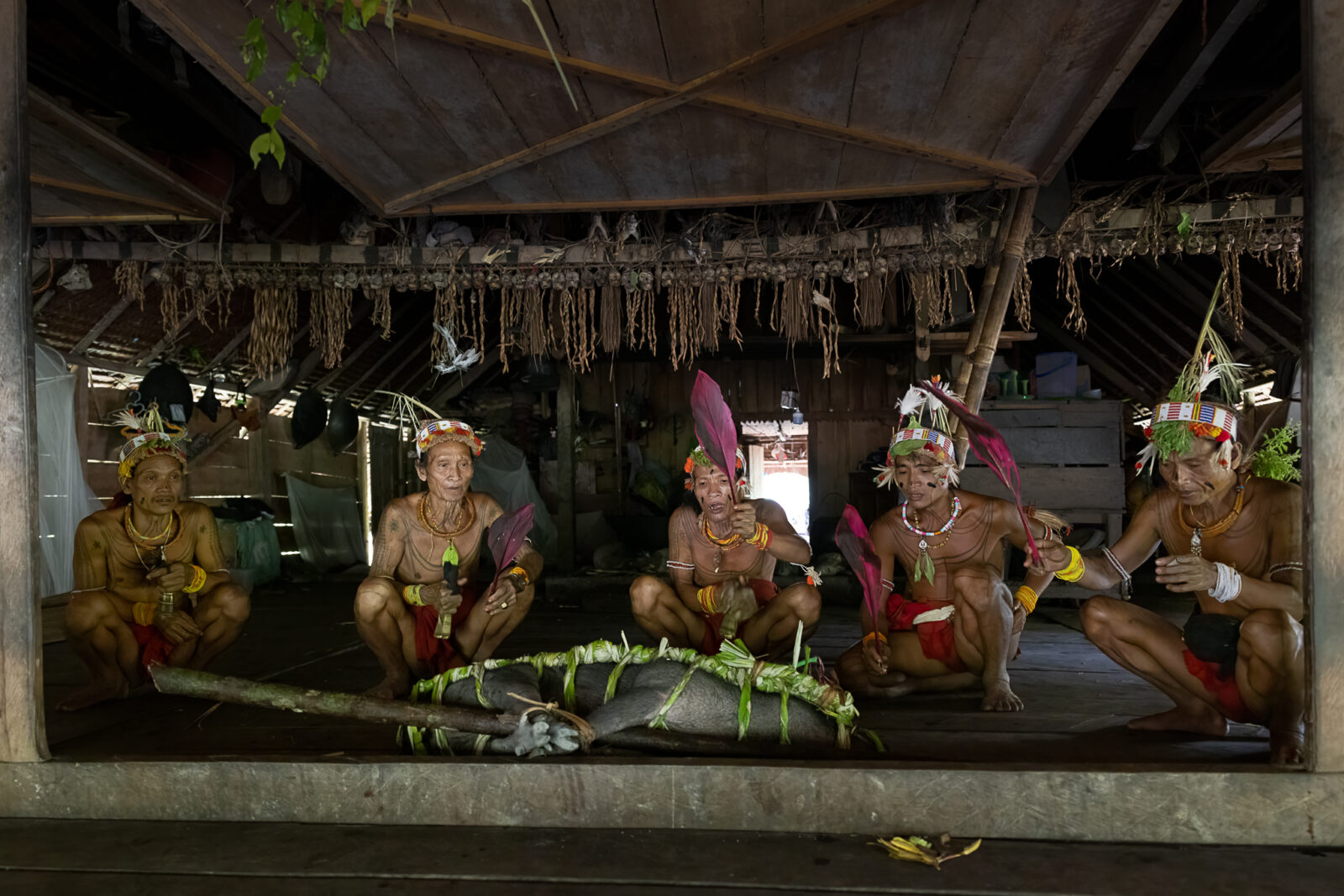
The success of communication with the spiritual realm depends on choosing a mediator suited to the task and the beings addressed.
GAUT: Fetishes
Long-Term Allies in the Spirit World
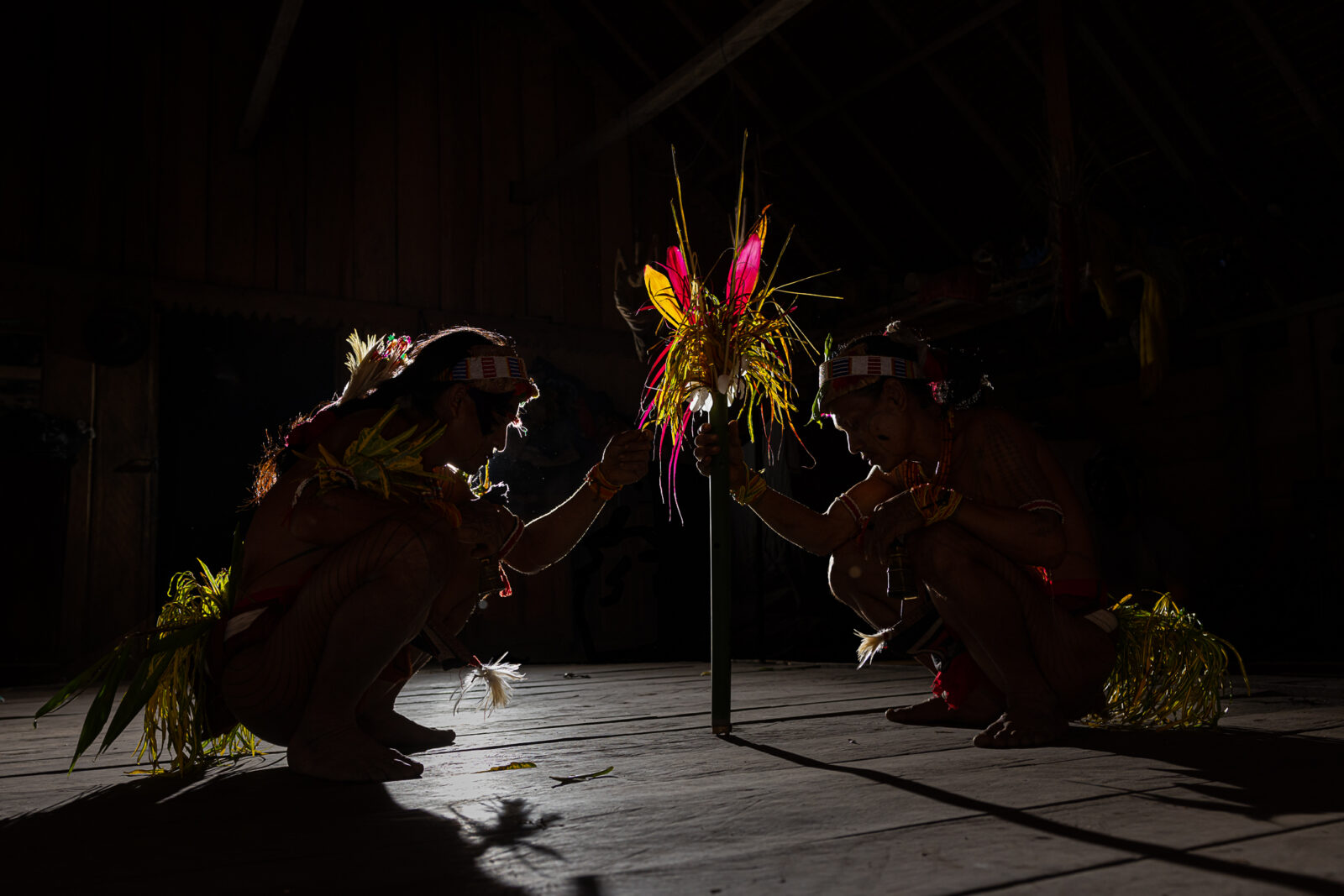
Some mediators become long-term spiritual helpers. During special ceremonies, selected plants are bound together and transformed into fetishes. Once consecrated, these objects possess their own soul and their own bajou, enabling them to influence the unseen world on behalf of the family or community that keeps them.
Fetishes protect infants, guide hunters, shield households, and support major rites. They must be fed with offerings so that their soul remains active and well-disposed.
The most important is the bakkat katsaila, the guardian fetish of each uma.
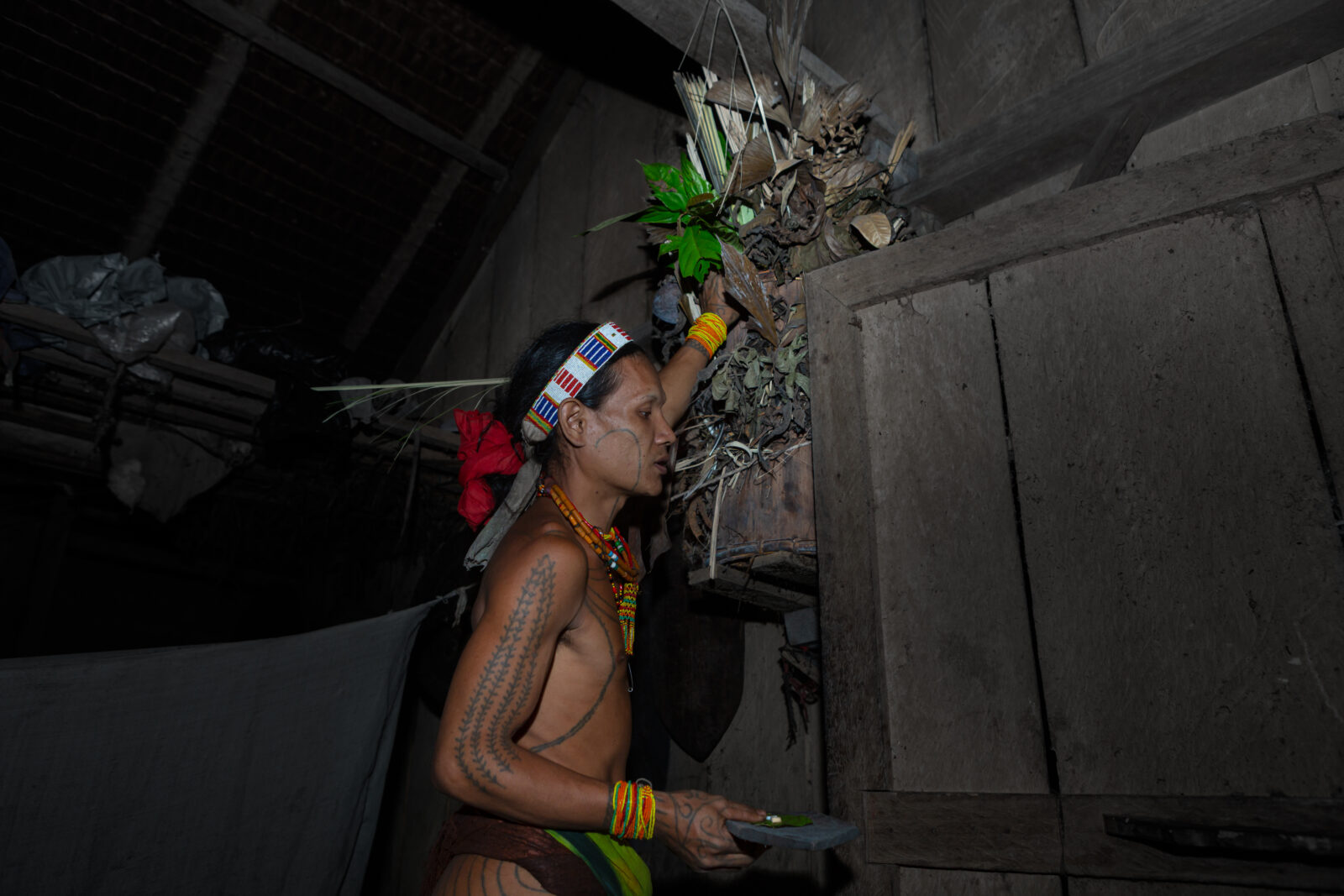
Created when a new uma is built, it becomes the spiritual heart of the house. Suspended from the main pole, it repels harmful forces and draws in beneficial ones. With each ceremony, new plants are added, strengthening its soul and its bajou.
Through fetishes, the relationships between humans and the unseen world continue across generations.
JARAIK
A carving to protect — guardian of the community and its sacred core
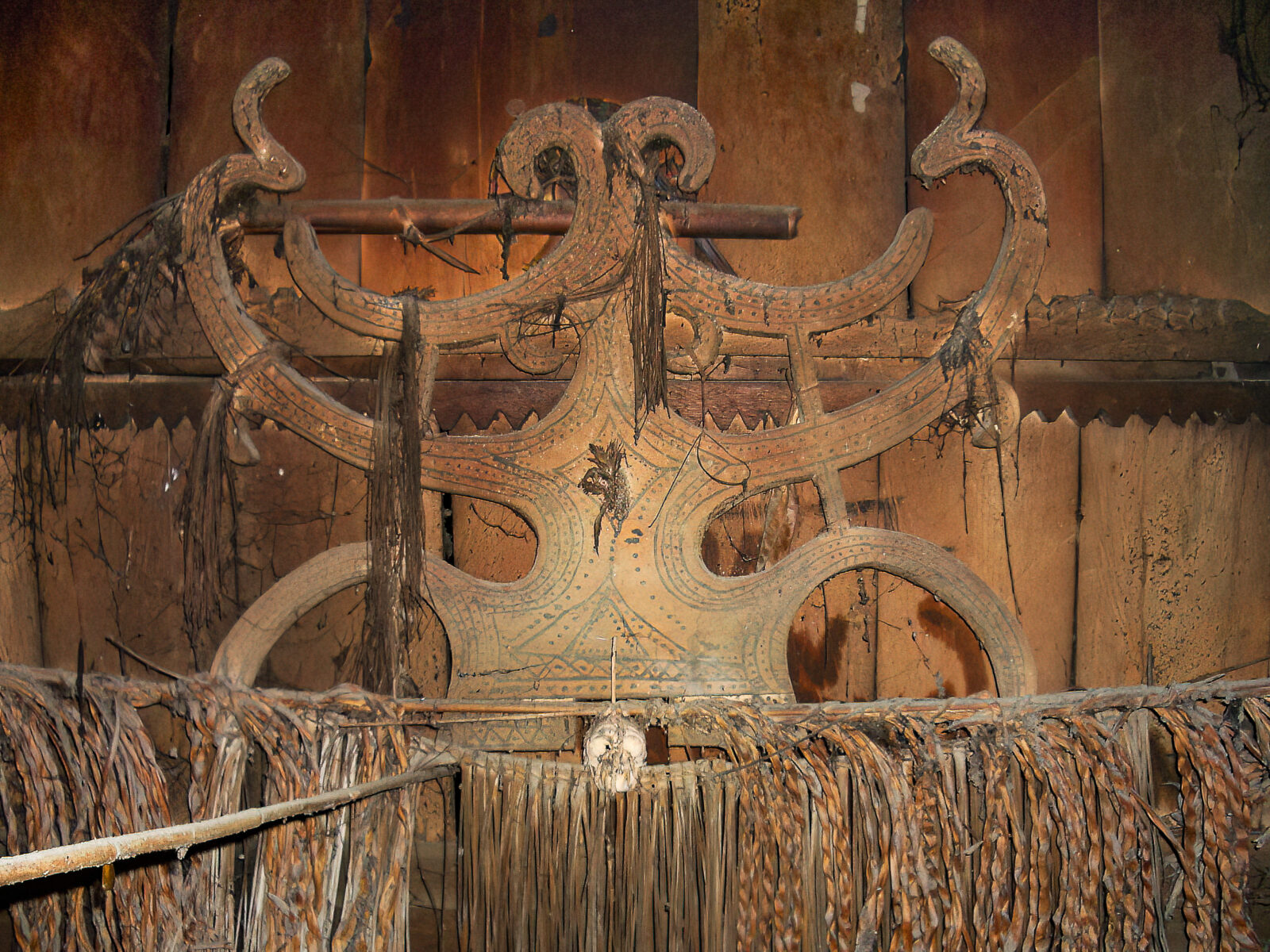
In a traditional uma, a powerful carved object once marked the most sacred threshold of the house. Known as the jaraik, it was mounted above the doorway leading into the rear chamber, where women and young children sleep and where the spiritual center of the uma is located in the form of the bakkat katsaila, the most important fetish of the community. Positioned at this threshold, the jaraik served as a guardian, a powerful spiritual shield, standing between the outer world and the deepest, most sacred interior of the uma.
While the exact shape of a jaraik varies, its basic form includes at least one pair of arms bending upward and one pair of smaller arms bending downward. These are said to connect sky and earth, a concept that can still be seen today in a shaman’s most important tattoo, the sarepak abak, worn across the back.
A jaraik was made only in connection with the construction of a new uma. If the jaraik from the previous house remained intact, it was moved to the new building rather than replaced. Its creation was considered especially demanding and required large and costly rituals.
Before carving began, a communal hunt was organized with the specific aim of killing an adult male bokkoi macaque. Its skull, regarded as the most impressive of all game skulls, formed a central element of the jaraik. Once the hunt was successful, carving could begin. The jaraik was made from the buttress root of a large tree, shaped with adzes and knives, then dried, painted, and richly decorated with mother-of-pearl, glass, feathers, and dyed plant fibers. The process took several days of communal work.
When completed, secret protective substances were affixed to the carving with wax and concealed beneath mother-of-pearl or glass, forming an amulet (gaut), giving the jaraik its protective powers.
The carving was then mounted above the doorway, and the macaque skull attached and ornamented. Offerings were made, and ceremonies and further hunting followed. From that point on, the jaraik received sacrifices during major rituals, its power increasing over time as the protector of the most sacred space of the uma.
Decline & Return
Because of the strong spiritual powers attributed to the jaraik, its creation required considerable ritual knowledge, time, and resources. Its primary purpose was to protect the community from other clans, at a time when adversity and conflicts between clans were common. As Mentawai society changed over the course of the twentieth century, the conditions necessary to create a true jaraik gradually disappeared. Cultural cleansing campaigns in the late 1950s and early 1960s further accelerated this process, and many older jaraik were destroyed. Today, only a small number of original examples survive, most of them held in museum collections.
While jaraik endowed with full ritual power are no longer made, their form has not vanished entirely. In recent years, carved jaraik-like ornaments — without skulls, secret substances, or ritual activation — have begun to reappear in some uma. These decorative versions do not function as protective amulets, but they reflect a renewed interest in ancestral aesthetics and identity. In this way, the jaraik continues to exist not as a spiritual guardian, but as a visual reminder of an older world and the values once embedded in the heart of the uma.
Caring for Souls & the Environment
Spiritual Ecology and Continuous Reconciliation
Because all beings possess souls and radiate bajou, the environment is understood as a single interconnected community. Every action — cutting a tree, building a canoe, extracting sago, killing a pig — affects this balance and may disturb the souls involved.
This disturbance can be dangerous if left unresolved. The Mentawai address it through continuous reconciliation.
Before felling a tree, they speak to its soul, acknowledge its bajou, and offer respect.
Before killing a pig, they explain why it must die and remind it of the care it has received.
Blessings “cool” the animal’s displeasure, easing its soul’s transition and preventing harmful reactions of bajou.
These acts are not symbolic courtesies. They are practical steps in a worldview where actions have spiritual consequences, and where harmony must be renewed through respect, intention, and ritual.
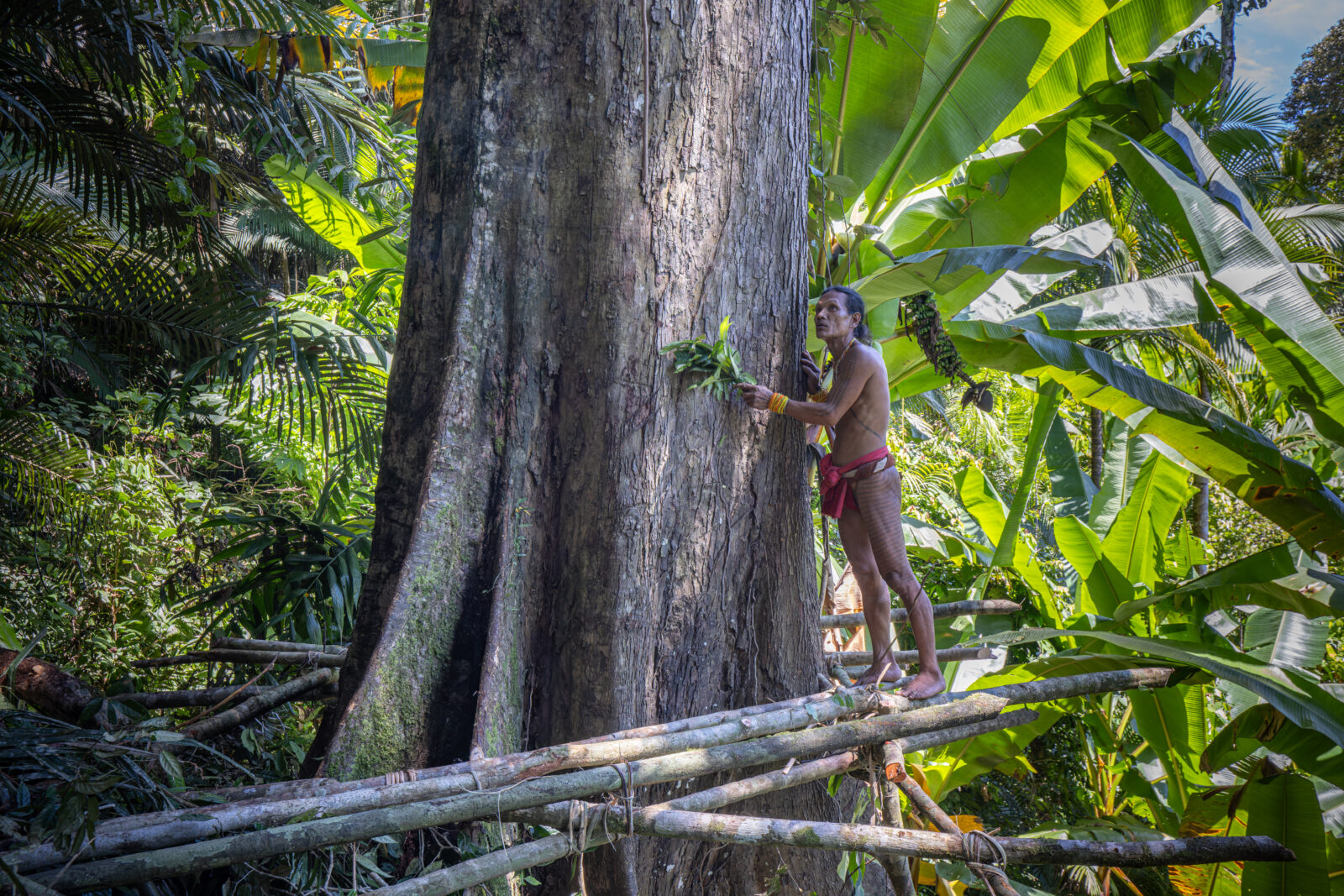
Maintaining balance with the forest and all its beings — human and non-human, visible and invisible — is essential for health, well-being, and the continuation of life itself.