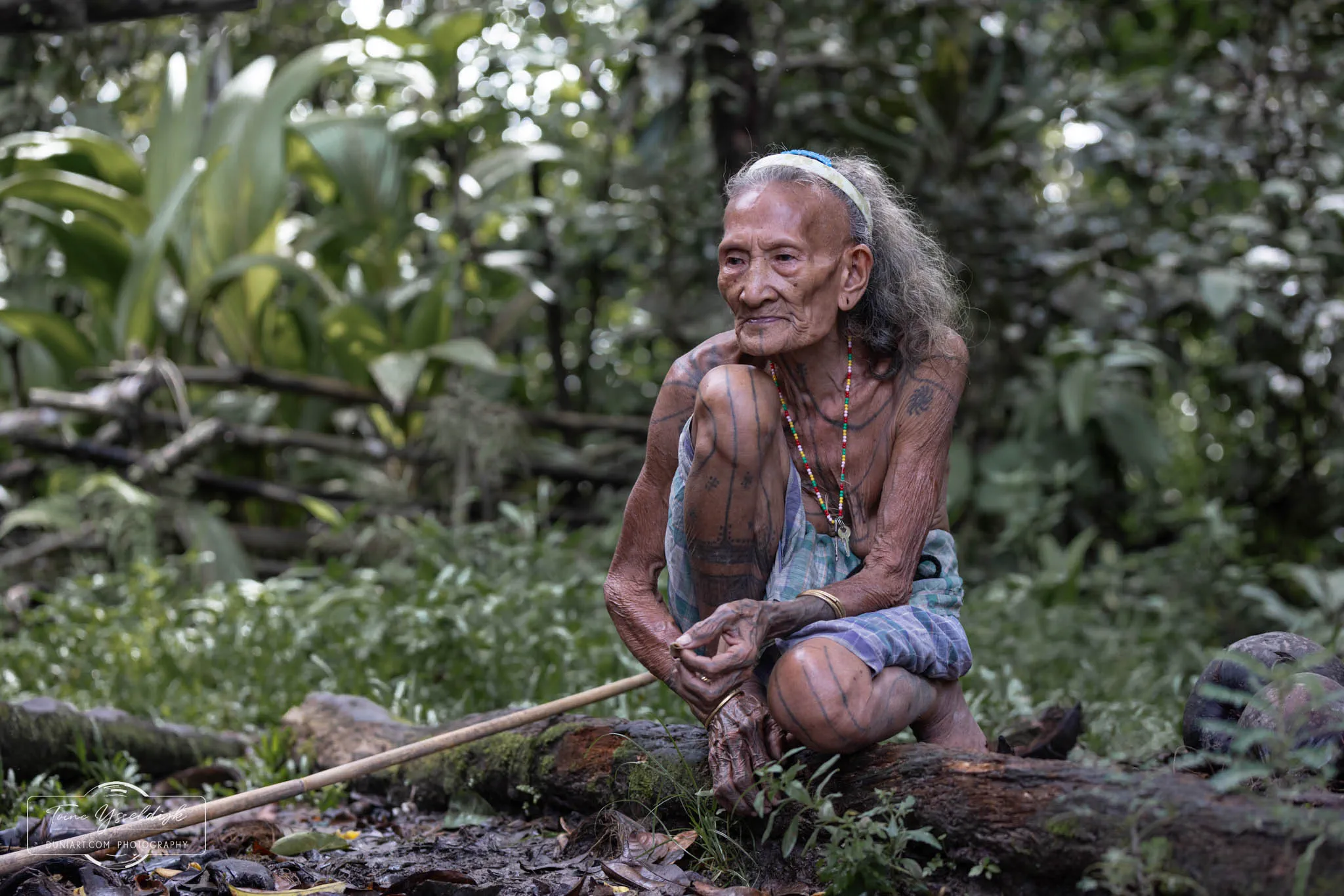
One woman’s memories, the origins of a clan, and a remarkable connection across generations.
My first encounter — 1995
I first visited the Sakuddei in 1995, accompanied by my late friend Domino, whom I had known since my first visit to Siberut in 1990. By then, I had already spent considerable time with a Mentawai family in Buttui, the river valley from which the Sakuddei trace their origins.
Reaching the Sakuddei was an adventure in itself. We crossed the hills and rainforest of Siberut until we eventually reached the upper tributaries of the Kuddei River. We had entered the traditional territory of the Sakuddei clan, but their uma, the traditional communal longhouse, was still a long way downstream.
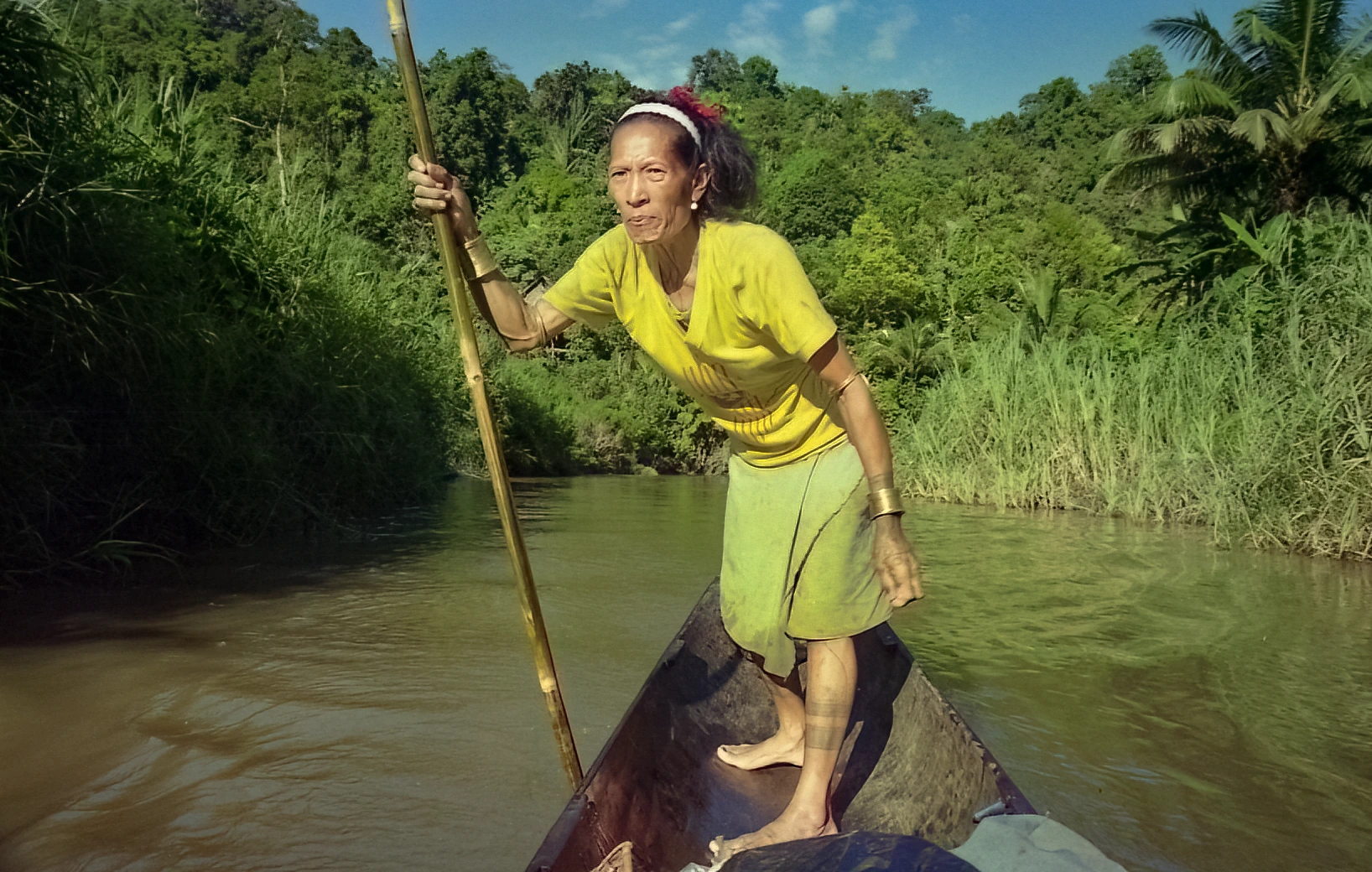
We followed the riverbanks through the forest until we came across a middle-aged woman standing upright in a canoe, pushing it downstream with a long bamboo pole. We called out to her and asked if we could join her canoe. We knew she must belong to the Sakuddei, as this was their territory.
She welcomed us aboard and slowly pushed the canoe downstream towards the uma. It was a fortunate encounter, and one I would remember for years to come.
Her name?
Elaugege.
At the time, I had no idea that I would meet her again almost thirty years later, or that this brief encounter would eventually reveal a much more personal connection to the history of the Sakuddei.
Returning to the Sakuddei — 2024
In October 2024, I returned to the Sakuddei. Almost thirty years had passed since my first visit, and I was pleased to be back.
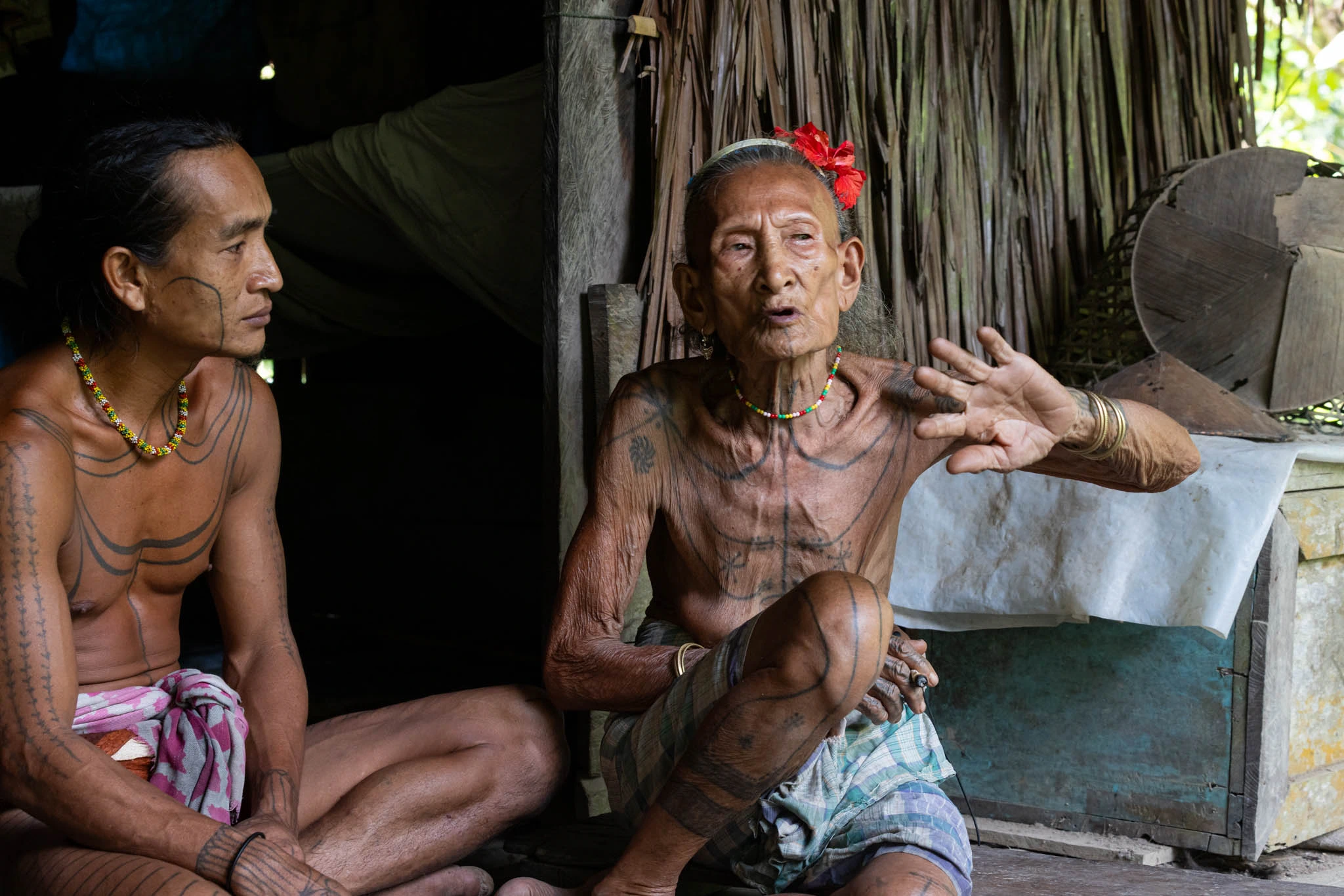
When I arrived at the uma, I was introduced to all the clan members, including a very old woman who was obviously still healthy and strong. She introduced herself as Bali.
We spent the rest of the afternoon talking with the adult clan members, while most of the younger children initially kept their distance. They rarely saw foreigners here and were still very shy.
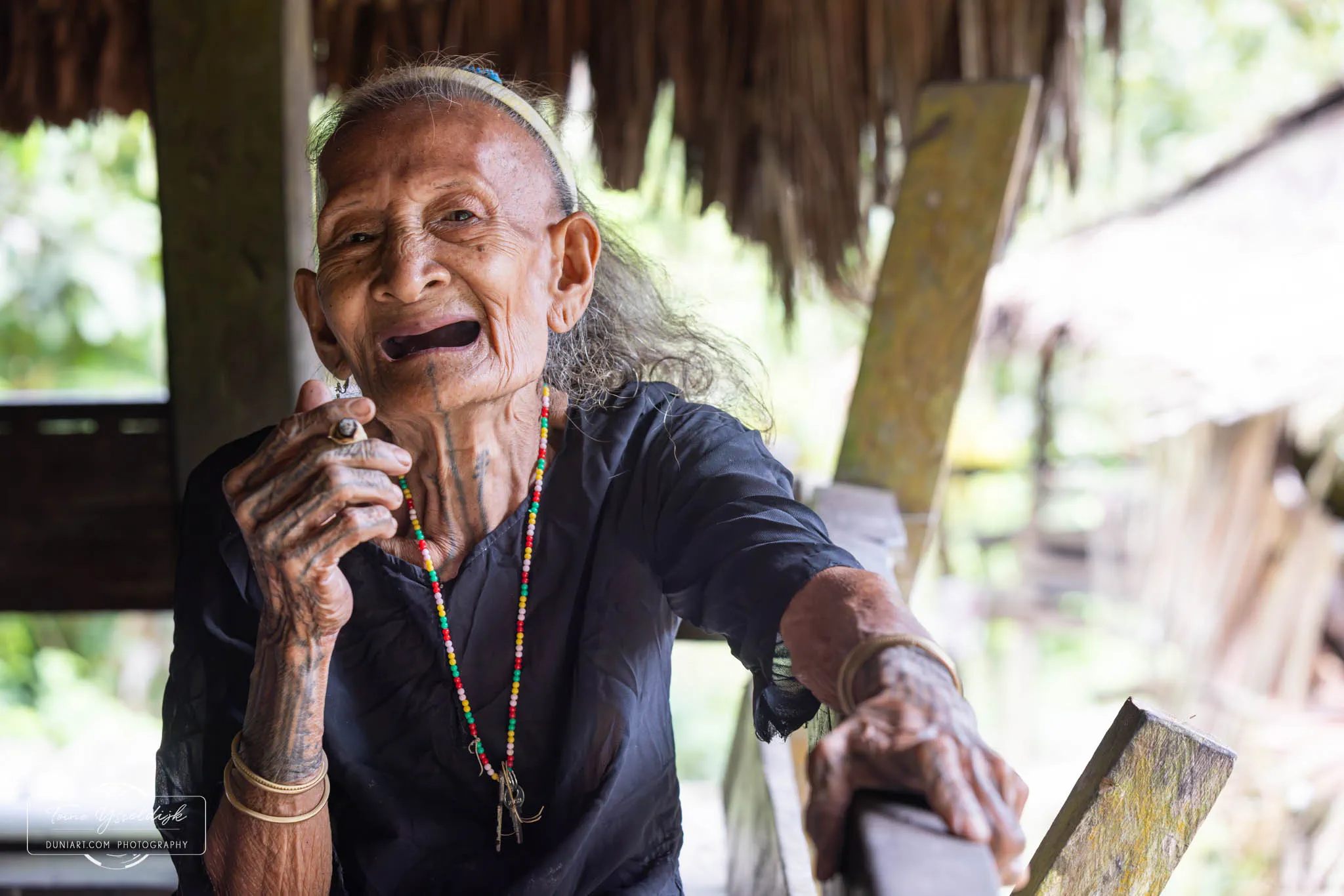
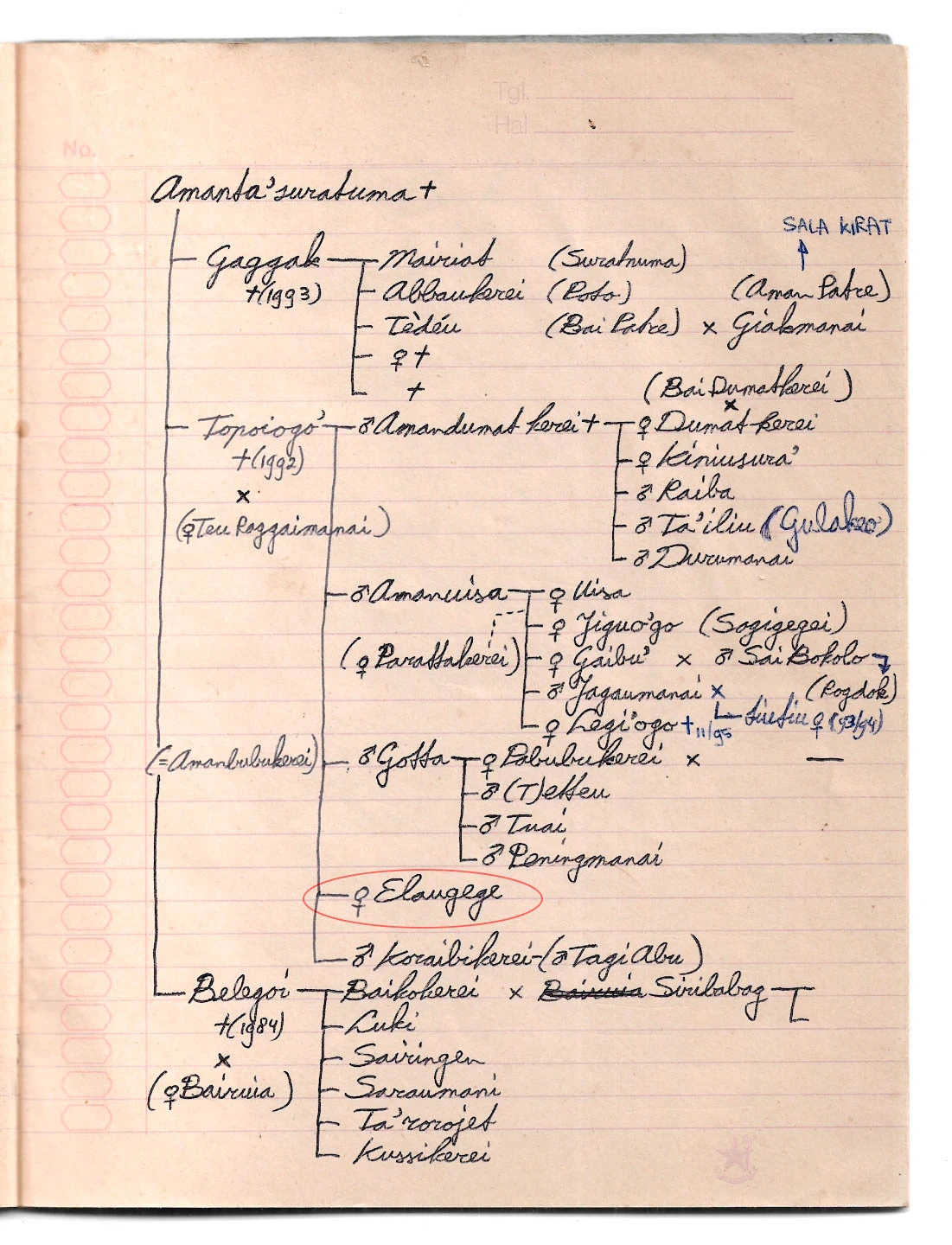
As I talked more with Bali and established that she belonged to the Sakuddei clan, I started thinking about my old notes. Since 1990, I had kept a notebook documenting my experiences in Mentawai, as well as the family trees of my Mentawai father’s and mother’s lineages. These included the Sakuddei clan, which is related to my mother’s clan, Sabetliake.
I took out my notebook and checked the Sakuddei family tree. There was no Bali. Was she perhaps adopted? Adoption is fairly common among the Mentawai. But I also knew that Mentawai people often change their names over the course of their lives. So I asked her what her name had been when she was young.
“Elaugege!”
Boom! There it was — in my old notes.
Elaugege, daughter of the younger brother of my Mentawai mother’s father.
All of a sudden, I saw the bigger picture!
The elderly woman I had just met as Bali was the same woman who had given Domino and me a ride in her canoe back in 1995! Not only had I encountered her before; she was also a relative whose place in the family history I had already documented.
It was an extraordinary feeling to realise that a chance encounter from almost thirty years earlier had brought me face to face with someone whose family connections I could trace through my own records.
Naturally, I wanted to know more about her. How old was she? Had she been born into the newly established Sakuddei clan, or had she been born in Buttui, before her family moved west?
These questions led to the story of her childhood and the origins of the Sakuddei themselves.
From Buttui to the Kuddei River
Bali told me that she was born in Buttui, where her family lived before moving to the western side of Siberut. Her father and his two brothers belonged to the Sabetliake clan. As the population in the Buttui River valley grew, pressure on the available land and resources increased. The three brothers eventually decided to move west with their families and establish a new settlement in a less populated part of the island.
Bali, or Elaugege as she was known then, was still a young girl when her father carried her through the forest in a rattan basket. Together with his two brothers and their families, they crossed the hills that form the backbone of Siberut and made their way towards the Kuddei River.
They eventually settled along the river, establishing a new community and naming their clan after the Kuddei River: the Sakuddei.
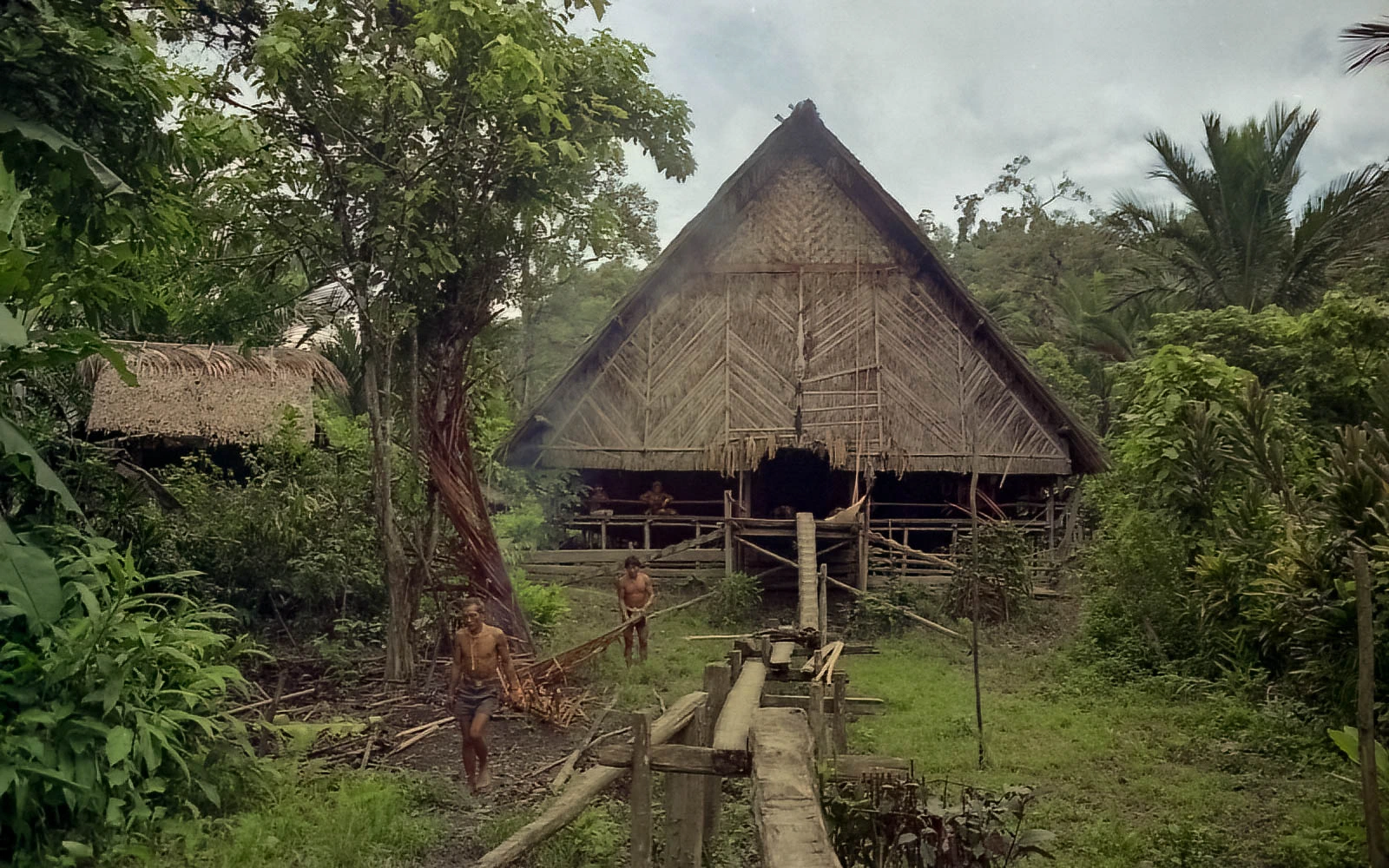
For Bali, this was more than the history of a clan. It was part of her own childhood, a journey she had made with her father and a connection to the origins of her community.
Bali could not give me an exact year of birth, but our conversations gave me a way to estimate her age. She told me that her family had moved to the Kuddei River before Indonesia gained its independence in 1945. The Sakuddei also remembered stories of a small Japanese military base near their traditional territory in Buttui in 1942. Taking these events into account, and estimating that Bali was around three years old when her family made the journey, I concluded that she was probably born around 1939, making her approximately 87 years old in 2026.
Bali’s story also connects directly with my own Mentawai family. The oldest of the three brothers eventually returned to Buttui and established his family there, as members of the Sabetliake clan. He became the father of Teteu, my Mentawai mother.
The history of this migration is known among members of both the Sakuddei and Sabetliake clans. For me, discovering Bali’s identity brought these family connections into sharper focus. What I had previously recorded in my notebook became a living history, shared by someone who was part of it.
A woman who followed her own path
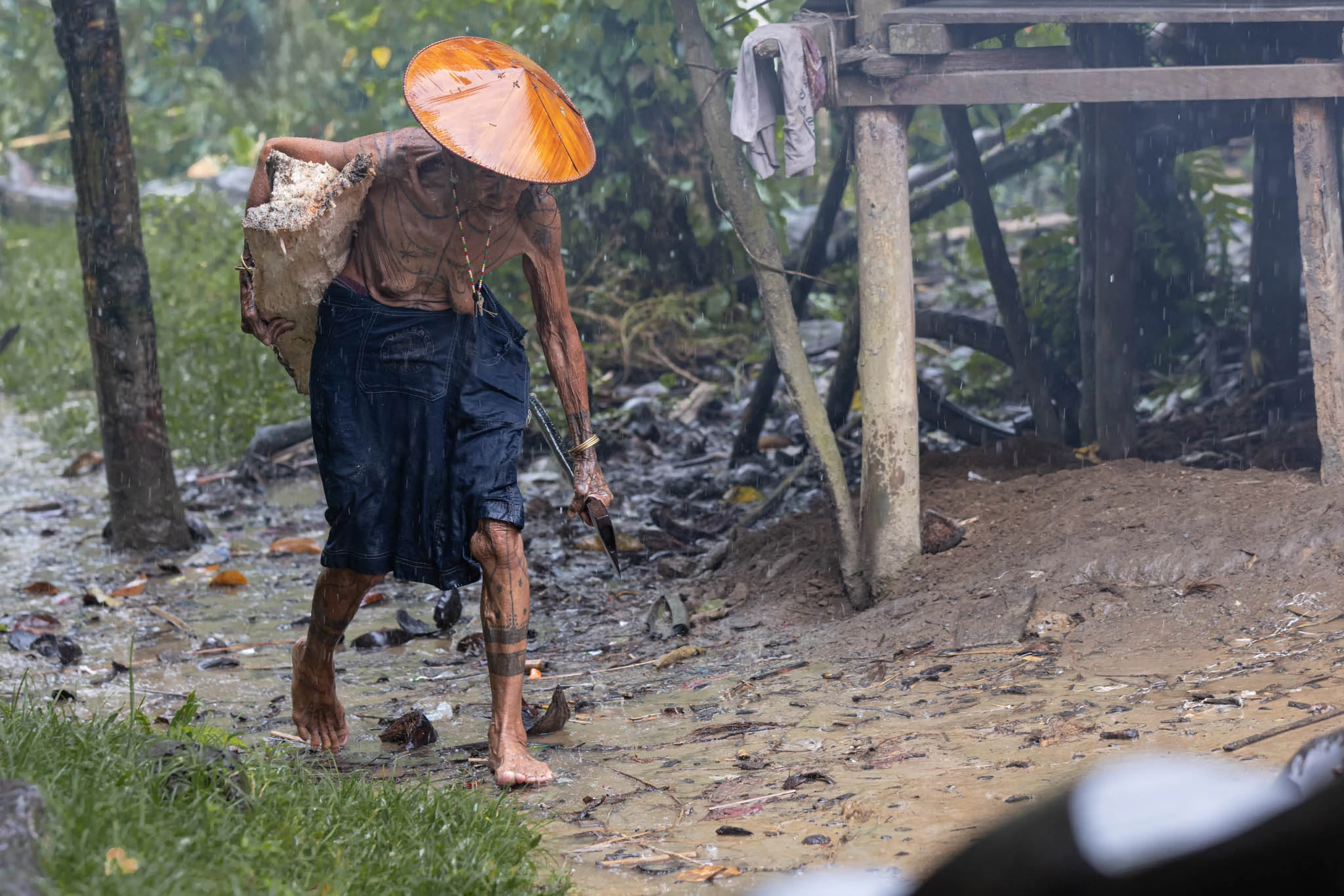
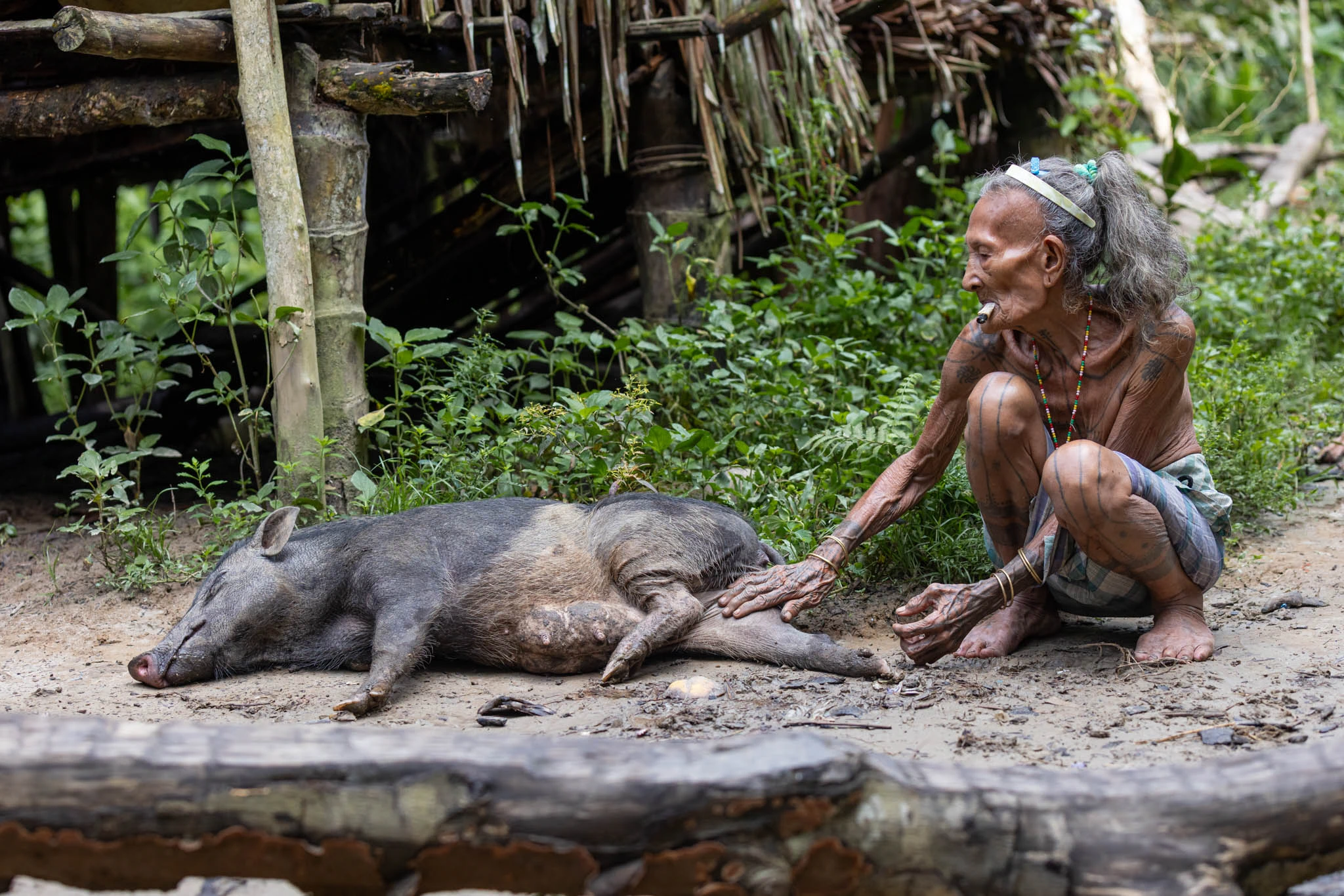
Bali was quite a character: witty, independent and full of humour. She tended to her chickens and pigs, paddled her canoe along the river and went to collect sago. She also enjoyed smoking traditional tobacco.
Her childhood had been unusual for a Mentawai girl. She loved hunting and regularly accompanied her father and brothers on their expeditions. Although women were traditionally not allowed to handle a bow and arrows, Bali was often ahead of the hunters, spotting monkeys and other game. She was even bold enough to chase wild boar towards the hunters.
Her brothers followed paths that brought them important positions within the Sakuddei community. Her eldest brother, Amandumat Kerei, was the father of Aman Raiba. Her second-oldest brother, Aman Uisa, became a respected Rimata, a traditional leader of the clan. He was the father of Aman Jagaumanai, who holds the same position today.
Bali herself never married. She had a strong personality and lived independently, following a path that did not fit the usual expectations of a young Mentawai woman. In her own words, young men were afraid of her and kept their distance.
Her story offers a glimpse of an individual life within a community often described through its collective traditions. Bali grew up within those traditions, yet she followed her own path, shaped by her character, her love of hunting and her independence.
A living connection to the past
Looking back, it is remarkable to think that a chance encounter on a river in 1995 would eventually lead me to uncover such a personal connection to the history of the Sakuddei.
At the time, Elaugege was simply the woman who helped Domino and me reach the uma. Almost thirty years later, meeting Bali and hearing her former name brought together a memory, an old notebook, a family tree and the history of a clan.
Through her story, the migration from Buttui to the Kuddei River becomes more than a historical account. It becomes the story of a young girl carried through the forest by her father, of families establishing a new home, and of the relationships that continue to connect the Sakuddei with their origins.
Bali’s life also offers a personal perspective on the changes taking place within her community. She has witnessed generations grow up, watched daily life evolve and carried memories of a time that younger members of the clan can know only through the stories of their elders.
For me, this is one of the reasons I continue to return to Siberut. Preserving Mentawai culture is not only about documenting ceremonies, traditional objects or skills. It is also about listening to the people who carry its history, understanding the connections between families and communities, and recording their experiences while they can still share them.
Meeting Bali again — 2025
When I returned to the Sakuddei in October 2025, I met Bali again. After the conversations of the previous year, I now knew much more about her background and the connection between her life, the history of the Sakuddei and my own family.
There is another connection that makes Bali’s story particularly close to my heart. Bali and my Mentawai mother, Teteu, were close friends when they were younger. As the Sakuddei and Sabetliake clans are so closely related, members of both communities regularly visit one another, whether for ceremonies or simply to spend time together. This is also how I came to know Aman Raiba and Aman Jagaumanai, whom I have regularly met in Buttui over the years.
But Bali and Teteu have not seen each other for a long time. Both are now too old to manage the long journey on foot between their communities.
Whenever I show Bali a photograph of Teteu, or show Teteu a photograph of Bali, I can see their eyes light up. For a moment, it seems as though their minds travel back to their younger years, to the times they spent together before age and physical limitations caught up with them.
Bali is the fitter of the two, and in 2025 I repeatedly asked her to join me on a visit to Buttui, so she could see Teteu again. I did not expect her to make the journey on foot. Instead, I proposed chartering a boat. It would still be a long journey, but far less physically demanding than crossing the island on foot.
I know Bali is capable of making the journey. But there is one obstacle I cannot overcome for her: she is afraid of the ocean and does not want to travel by boat.
Oh, how I would love to bring these two women together again. The thought of them sitting together, sharing memories of their younger days, is enough to give me goosebumps even now.
Perhaps next time?